Hajra Naz
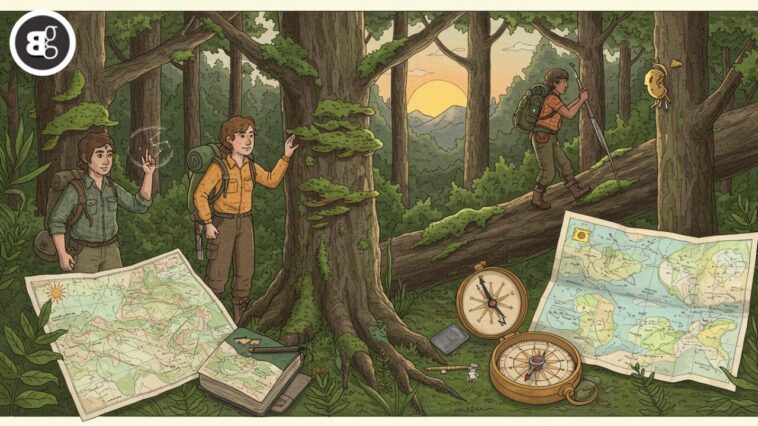
We live in a world that depends on technology for almost everything. Need directions? Just open your phone. But what if your battery dies? What if you lose signal miles from anywhere?
That’s when you realize how much we’ve come to rely on GPS. Finding your way without it feels strange now — but it used to be second nature.

People once read the land, the sky, and the wind. They didn’t need a map app to know where they were. You can still learn that skill. It’s simpler than you think. And it might even save your life one day.
What Is GPS?
GPS stands for Global Positioning System. It’s made up of satellites orbiting the Earth. Your phone or car connects to those satellites to find out exactly where you are.
It’s fast, easy, and usually right on point. GPS guides planes, ships, delivery drivers, and hikers. But it has one big weakness — it needs power and a clear signal.
Lose either one, and GPS becomes useless. That’s why old-school navigation is still worth knowing.
Why It Matters to Know Your Way Naturally
When you’re outdoors, things can change fast. Your phone dies. You wander off the trail. Clouds block the sun. Suddenly, you feel lost.
At that moment, panic kicks in — unless you know what to do. Navigation skills aren’t just about survival. They give you confidence. You stop feeling helpless.
Studies show people who depend too much on GPS use their brains less for direction. That means we’re slowly losing a basic human skill. But it’s one we can get back.
Read More: TrackR is a coin-sized GPS device to track your lost items, and it’s unbelievably cheap.
How Nature Helps You Navigate
The earth gives you clues all the time. The trick is learning to see them. The sun, stars, trees, rivers—they all tell stories if you pay attention.
Indigenous people, sailors, and explorers have done this for centuries. They could tell direction by wind, stars, or even bird flight.
Nature has a language. Once you start learning it, you’ll never look at the outdoors the same way again.
Reading the Land
The land itself is a map. Mountains, valleys, and rivers can help you understand where you are.
Rivers always flow downhill, usually toward bigger bodies of water. If you’re lost, follow a stream or river — it might lead you to a road or settlement.
Look at trees and moss too. In the Northern Hemisphere, moss often grows thicker on the north side of trees. It’s not perfect, but it gives a hint.
Animals can guide you, too. They often travel along safe paths and move toward water in the morning or evening.
Follow their signs and you’ll start to see the world like a tracker.
Using the Sun for Direction
The sun is your oldest guide. It rises roughly in the east and sets in the west. Around noon, it’s high in the south (if you’re in the Northern Hemisphere).
Want a simple trick? Use your watch. Point the hour hand at the sun. The halfway point between the hour hand and 12 o’clock shows south.
It’s an easy way to find direction — no batteries needed.
Finding North at Night
When the sun sets, the stars take over. In the Northern Hemisphere, the North Star — Polaris — stays almost fixed in the sky.
Find the Big Dipper. Draw a line through the two stars at the end of its “bowl.” That line points straight to Polaris. That’s true north.
In the Southern Hemisphere, use the Southern Cross constellation. Extend its longer axis toward the horizon — that direction is roughly south.
Old sailors used this trick for hundreds of years. It still works today.
Simple Natural Navigation Tricks
Here are a few ways to practice when you’re outdoors:
-
Shadow Stick Method: Stick a stick upright in the ground. Mark the tip of its shadow. Wait 15 minutes and mark it again. The first mark is west, the second is east.
-
Tree Growth: The southern side of trees usually gets more sunlight. It might look drier or have thicker bark. The north side is often damper or moister.
-
Follow Water: Streams and rivers lead downhill. They often guide you toward villages, lakes, or roads.
These tricks aren’t perfect alone. But together, they paint a clear picture.
Follow the Water
Waterways are natural paths. If you find one, follow it downstream. It will often lead to signs of life—bridges, farms, or even towns.
Stay beside the water, not in it. Wet rocks can be slippery, and moving water is stronger than it looks.
Also, remember — where there’s water, there’s life. You can refill, rest, and think clearly again.
What to Do If You Get Lost
The most important thing: don’t panic. Stop walking. Take a breath. Sit down and think.
Mark where you are — stack a few rocks or hang something bright so rescuers can spot it. Look around. Notice the sun, trees, wind, and sounds.
Decide carefully before moving. If you go, leave markers behind. And remember the universal distress signal: three whistles, three flashes of light, or three fires in a triangle.
Staying calm gives you the best chance of being found.
Tools That Still Help
Even if you love natural navigation, a few tools can make life easier:
-
A map and compass—reliable, simple, and never needing charging.
-
A watch helps with the sun trick.
-
Trail tape — to mark your route.
-
Signal mirror or whistle — for emergencies.
-
Offline maps — download before you lose service.
Nature and tech can work together. It’s not one or the other.
How to Get Better at It
Like anything else, this takes practice. Try guessing north or west before checking your GPS. Watch the sun move. Notice how trees grow. Follow streams just to see where they go.
Go hiking without using your phone right away. See how close you can get to your destination using your eyes and instincts first.
You’ll be surprised how quickly it comes back — it’s something humans are built for.
Once you get used to reading the land, you start feeling grounded again. It’s not just a survival skill—it’s freedom.
FAQs
1. Can you really find direction without GPS or a compass?
Yes. The sun, stars, and terrain give all the clues you need. It just takes practice.
2. What’s the easiest trick to start with?
Start with the sun. Watch where it rises and sets. That alone can help you figure out east and west.
3. How do I stay calm if I get lost?
Stop walking. Sit down. Take deep breaths. Think before moving. Most people who panic end up walking in circles.
4. Is using GPS bad for your brain?
Not bad, but relying on it too much makes your sense of direction weaker. Mix both — use GPS and your own skills.
5. How can I practice navigation safely?
Start in familiar places. Try parks or local trails. Use landmarks and natural clues before checking your phone.