 BG Staff
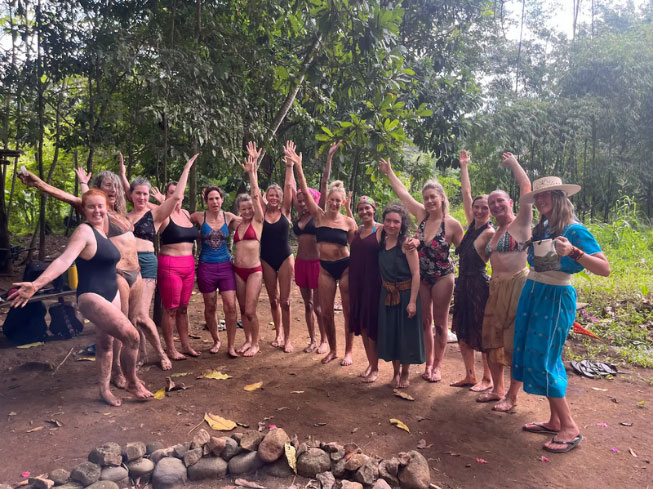
When Sarah walked into her first Ayahuasca Retreat in Costa Rica, she’d already tried five different antidepressants, two types of therapy, and even transcranial magnetic stimulation. Nothing worked. She’d been living with treatment-resistant depression for over a decade.
Three months after her retreat, her depression scores had dropped by 65%. A year later, she was still in remission.

Stories like Sarah’s are becoming increasingly common especially among those struggling with treatment-resistant depression, anxiety, and PTSD. As more people search for alternatives, Ayahuasca Retreats are emerging as a powerful option, supported by growing scientific evidence and real-world results from organizations like Behold Retreats.
The Depression Crisis That Conventional Medicine Can’t Solve
Among those receiving medication treatment for major depression, 30.9% develop treatment-resistant depression (TRD) meaning their condition doesn’t respond to at least two different antidepressant trials PubMed. For these 2.8 million Americans, conventional options have largely failed.
The statistics are sobering. Nearly half of adults with mental illness don’t receive any treatment and for those who do get help, the wait times stretch for months, the medications come with significant side effects, and the outcomes are often disappointing.
This is where Ayahuasca enters the conversation not as a replacement for conventional treatment, but as an option for those who’ve exhausted everything else.
What the Research Actually Shows
Over the past five years, scientific research on Ayahuasca’s effects on depression and anxiety has exploded. The results are remarkable.
Treatment-Resistant Depression Responds
In a randomized placebo-controlled trial with 29 patients with treatment-resistant depression, those who received ayahuasca showed rapid antidepressant effects that were still present days later. These patients had been experiencing depressive symptoms for an average of 11 years and had tried nearly 4 different antidepressants unsuccessfully.
What makes this particularly striking is how quickly ayahuasca worked. Improvements were seen in two or three hours – a rapid effect compared to conventional antidepressants which can take weeks to work (Scientific American).
The Benefits Last
Short-term improvements are one thing. Long-term healing is another.
Research following first-time Ayahuasca users found that the medicine was associated with decreases in depression, anxiety, stress, and negative affect at all time points measured—from 7 days through 12 months after the retreat. Individuals with diagnosed depression and anxiety disorders maintained significant symptom reductions throughout the entire year-long study period.
In a longitudinal study of clinically depressed participants, depression scores significantly reduced from an average of 22.7 at baseline to 8.88 at one-year follow-up. After one year, 71% of participants were in remission while 65% achieved a 50% reduction in depressive symptoms.
The Numbers Are Extraordinary
In a large cross-sectional survey of 11,912 ayahuasca users, 78% of those reporting depression said their symptoms were either ‘very much’ improved (46%) or ‘completely resolved’ (32%). For anxiety, 70% reported similar levels of improvement (ScienceDirect).
When researchers followed new Ayahuasca users over six months, they found that nearly half met diagnostic criteria for a psychiatric disorder before their first experience. After the ayahuasca retreat, more than 80% of those participants showed clinical improvements that persisted at the 6-month follow-up.
Why Ayahuasca Works When Other Treatments Don’t
The therapeutic mechanism of Ayahuasca is fundamentally different from conventional antidepressants.
Traditional antidepressants work by adjusting neurotransmitter levels – essentially managing symptoms. Ayahuasca appears to facilitate actual neurological reorganization, allowing people to process and release trauma, shift entrenched thought patterns, and create new neural pathways.
The uniqueness of ayahuasca’s therapeutic potential is that it is an amalgamation of its biochemical makeup and the ritual guided by a shaman, along with the interpretation of the participant of their experience PubMed Central.
These outcomes closely mirror what Behold Retreats observes across their programs in Costa Rica, Mexico, and Portugal.
The Medicine and the Experience
Interestingly, research comparing ayahuasca to placebo in retreat settings found that ratings of stress, depression, and anxiety were lower after the ceremony compared to baseline, independent of treatment group – suggesting that the retreat setting itself, combined with the medicine, creates a powerful healing environment.
The ceremonial context matters. The intention-setting, the support of facilitators, the communal experience, and the integration work all contribute to the therapeutic outcome.
What Actually Happens at an Ayahuasca Retreat for Depression
Understanding what to expect can help determine if an ayahuasca retreat is right for you.
Before the Retreat: Medical Screening
Reputable retreats conduct comprehensive screening to ensure ayahuasca is safe for you. This is critical because ayahuasca has contraindications with certain medications—particularly SSRIs and MAOIs—that many people with depression are currently taking.
You’ll typically need to taper off antidepressants under medical supervision weeks before the retreat. This should always be done in consultation with your prescribing physician.
The Retreat Experience
Most Ayahuasca retreats for depression include:
- 2-3 ceremonies over the course of 7 days
- Daily integration sessions with facilitators
- Holistic Healing practices (meditation, yoga, plant baths)
- One-on-one support from experienced guides
- Medical personnel on-site for safety
During ceremonies, participants often experience:
- Deep introspection and emotional release
- Confrontation of suppressed memories or trauma
- Insights about patterns contributing to depression
- Feelings of connection and meaning
- Physical purging (which is considered part of the healing journey)
After the Retreat: Integration
The real work begins after you return home. Quality retreats provide:
- Follow-up integration coaching
- Practices for maintaining gains
- Community connection for ongoing support
- Resources for translating insights into life changes
Many participants in research studies had been in years of therapy before trying ayahuasca. They expressed trust in their facilitators and were appreciative of the care and support provided, which created a positive setting in which positive ayahuasca experiences were more likely to occur.
Who Benefits Most from Ayahuasca Retreats
Based on the research, ayahuasca retreats show the strongest effects for:
Treatment-Resistant Depression: People who haven’t responded to conventional antidepressants often see the most dramatic improvements.
Anxiety Disorders: Those with diagnosed anxiety disorders maintained significant symptom reductions throughout a full year after their ayahuasca experience.
Co-occurring Depression and Trauma: The ability of ayahuasca to help process traumatic memories makes it particularly effective for depression rooted in past trauma.
People Ready for Deep Work: For healthy individuals, ayahuasca can be safely experienced within a traditional, well-held healing container when there is a strong commitment to the healing process and a solid support system to return to Temple of the Way of Light.
Critical Safety Considerations
While the research is promising, ayahuasca is not risk-free and it’s not for everyone.
In the large survey of ayahuasca users, 2.7% of those with depression and 4.5% of those with anxiety reported worsening of symptoms. This underscores the importance of proper screening and support.
Ayahuasca may not be safe for people with:
- Active psychosis or schizophrenia
- Unstable bipolar disorder
- Severe heart conditions
- Currently taking contraindicated medications
Ayahuasca has contraindications with certain medications including SSRIs and MAOIs, and specific psychiatric disorders -interactions that can be potentially life-threatening Nimeakaya.
Choosing the Right Retreat
Not all ayahuasca retreats are equipped to work with depression and anxiety. Look for:
Clinical Understanding: Facilitators who understand mental health conditions and can provide appropriate support.
Medical Screening: Thorough assessment of your mental health history, current medications, and suitability for ayahuasca.
Integration Support: Depression requires ongoing support. Quality retreats offer follow-up coaching to help maintain gains.
Experienced Facilitators: The bedrock of safe and responsible Ayahuasca healing lies fundamentally in the length of training, depth of experience, and heartfelt intentions of the healers.
Legal Locations: Countries where ayahuasca is fully legal – like Costa Rica, Mexico, and Portugal offer safer, more regulated environments.
The Limitations of Current Research
It’s important to acknowledge what we don’t yet know.
Most studies have relatively small sample sizes. A serious limitation is that there was no treatment-as-usual control group in many studies. We need larger randomized controlled trials to fully understand ayahuasca’s efficacy compared to conventional treatments.
We also don’t fully understand why some people respond dramatically while others see little benefit. More research is needed on predictors of positive outcomes.
A New Path Forward for Treatment-Resistant Depression
For the millions struggling with depression and anxiety that hasn’t responded to conventional treatment, ayahuasca retreats represent a genuinely different approach—one backed by growing scientific evidence.
The boom of “ayahuasca transformation” has brought forth testimonies of feeling “cured” of depression and substance abuse and an improvement in overall well-being. While we should be cautious about claims of being “cured,” the research clearly shows significant, lasting improvements for many people.
As Danny Yepez, CEO of Behold Retreats, explains: “We encourage people to do their own research on plant medicine, to ask themselves whether they may benefit, and to look within and be guided by professionals to make their own educated decision. For those who are ready to open the door to this inner exploration, Behold Retreats are here to start the conversation.”
If you’ve tried everything else and nothing has worked, if you’re ready to do deep healing work, and if you can access a safe, well-supported retreat environment, ayahuasca may offer a path forward that conventional medicine cannot.
The question isn’t whether ayahuasca works for depression and anxiety—the research increasingly suggests it does. The question is whether it’s the right option for you, right now, with the proper support in place.
About Behold Retreats
Behold Retreats specializes in supporting individuals with depression, anxiety, and trauma through carefully structured ayahuasca programs in Mexico, Costa Rica, and Portugal. Our retreats include comprehensive medical screening, experienced facilitators, and extensive integration support designed specifically for mental health healing. Learn more at www.behold-retreats.com.