
 Hajra Naz
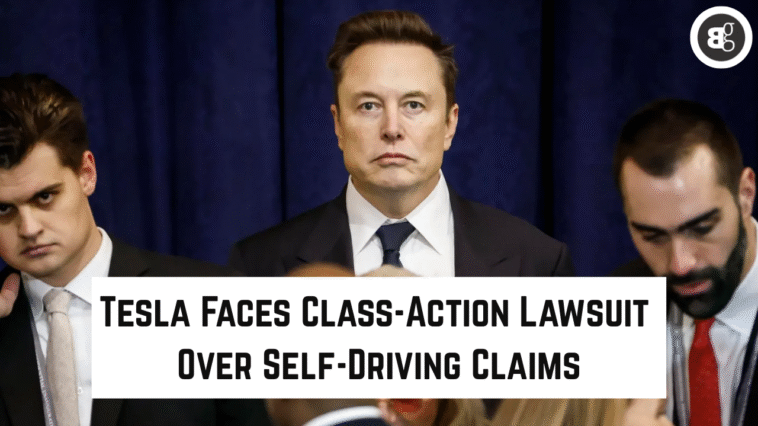
A federal judge in San Francisco has approved a class-action lawsuit allowing Tesla owners to sue the company and CEO Elon Musk over claims about its self-driving technology dating back to 2016. The case adds to growing legal troubles for Tesla as it struggles with slowing electric vehicle (EV) sales and heightened competition in autonomous driving.
Bold Promises, Limited Delivery
Back in 2016, Musk announced that all Teslas would come equipped with hardware capable of full autonomy, promising “Level 5” self-driving in the future. That system, he claimed, would allow Teslas to drive themselves in any condition without human input. Nearly a decade later, those promises remain unfulfilled.

Despite the marketing of “Autopilot” and “Full Self-Driving (FSD),” Tesla’s vehicles are classified as Level 2 autonomy, meaning drivers must stay attentive and ready to take control at all times. Experts say the gap between Musk’s claims and Tesla’s actual capabilities is at the heart of the lawsuits.
Read More: Elon Musk Just Took Over Tesla’s $16.5B Samsung Deal Here’s Why
A Pattern of Exaggeration
Musk is known for bold statements—ranging from hyperloops to solar roofs—but regulators and courts are now scrutinizing his self-driving claims more closely. Tesla’s global EV sales have already dropped 13% in the first half of 2025, and legal challenges could further damage the company’s reputation.
The San Francisco lawsuit follows a recent Miami jury ruling that found Tesla partially responsible for a 2019 fatal crash involving Autopilot. The company was ordered to pay $243 million in damages. Meanwhile, the California Department of Motor Vehicles is pursuing a separate case that could temporarily suspend Tesla’s sales in its largest U.S. market.
Experts Weigh In
“This has been a long time coming,” said Phil Koopman, an autonomous vehicle researcher at Carnegie Mellon University. “None of this is new, but now we’re seeing the consequences of those years of overpromising.”
Bryant Walker Smith, a law professor and AV expert, added, “Right now, real robotaxis are carrying real people on real roads. None of them is a Tesla.” Alphabet’s Waymo, for instance, already operates commercial robotaxi services in multiple U.S. cities, solidifying its lead in the field.
Broken Deadlines and Falling Value
At Tesla’s 2019 “Autonomy Day,” Musk claimed the company would have a million robotaxis by 2020 and that Teslas would generate thousands in passive income for owners. Neither promise came true. Instead, used Tesla prices have fallen sharply, dropping 5.3% in July alone, according to iSeeCars.
Legal Defense: “Puffery”
Tesla’s attorneys have argued that Musk’s comments were mere “puffery”—marketing exaggerations not meant to be taken literally. But experts say that stance is unusual for an automaker, especially when safety is involved. Data compiled by Tesladeaths.com links 59 fatalities to Autopilot and FSD use.
Missy Cummings, a George Mason University professor and AI expert, criticized Tesla’s approach:
“Tesla wants it both ways—selling cars by suggesting they can self-drive but denying responsibility when crashes happen. The Miami jury made clear that this approach won’t hold up in court.”
Read More: Tesla’s Brand Takes a Hit Under Musk’s Leadership & Will Take Longer time to Fix
Financial and Reputational Risk
While current lawsuits don’t yet threaten Tesla’s financial stability, they present a serious reputational challenge. Tesla’s stock fell 1.8% to $329.31 on Tuesday and is down 18% year-to-date.
With regulators, courts, and competitors closing in, Tesla faces mounting pressure to back its self-driving claims with results—or risk further legal and financial fallout.


