Huma Siraj
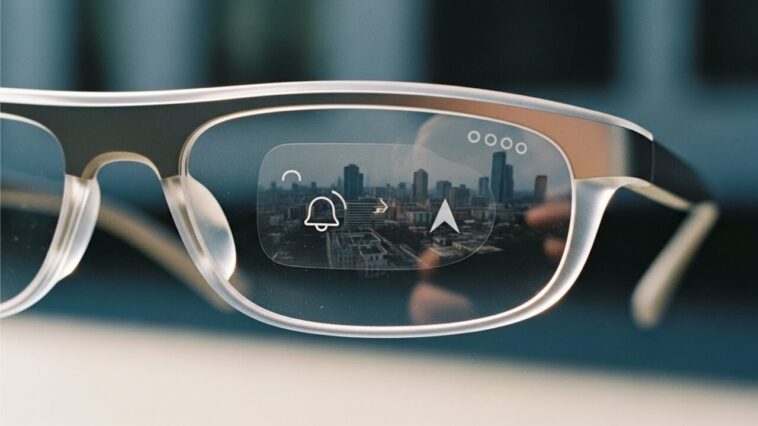
More than a decade after its first plunge into the smart glasses territory proved disastrous, Google re-enters the arena with a bang-the new experience would be centered on artificial intelligence. In 2026, the company would bring forth a new generation of smart eyewear, and hopefully advances in artificial intelligence, sleeker design, and changing consumer expectations would work where Google Glass did not.
Wearable AI is emerging as the next major battleground in consumer tech. Google’s return fits perfectly into a momentous defining moment in the industry.

A Second Chance After Public Failure
Back in 2013, Google Glass captivated the imagination of the whole world. It envisioned a universe in which information floated above your line of vision and pictures could–with the slightest wink–be captured. But reality was far less magical.
The original device suffered from:
- A very awkward, bulky design
- Serious privacy concerns, the ever-on camera being the biggest culprit.
- Limited real-world functionality
- Patent price and vague purpose
Officially, Google ceased consumer production in 2015-less than a year following its U.K. launch. Although redesigned as “Google Glass Enterprise Edition” in 2017. This product too would cease to exist by 2023.
Technology pundit Paolo Pescatore summarised the earlier failure succinctly: “The move was ahead of its time, poorly conceived and executed.”
Now, Google is convinced that the time is right.
What’s New This Time? AI at the Center
The new smart glasses will be integrated into Google’s AI ecosystem, primarily its lead chatbot, Gemini. The company is working on two different versions:
No 1. Screenless AI Glasses
- Designed for low-key, hands-free assistance, these glasses might:
- Offer voice feedback
- Convert text to audio or the reverse
- AI guidance that’s not visual
- This version is first in line for release in 2026.
No 2. Smart Glasses with a Display
A more advanced model featuring:
- Visual overlays in the eye Ball
- Navigation instructions
- Real-time translations
- AI-generated information in the user’s field of view
This version is still under wraps without confirmed launch details.
Discreet design is the key differentiating factor from Google Glass. The new glasses are supposed to look closer to regular eyewear, something that people genuinely want to wear.
A Tough Competitor: Meta Has a Head Start
Google is returning to a full market. It has benefited immensely from Ray-Ban smart glasses by Meta, made with the help of Ray-Ban and Oakley.
Noteworthy Features About the Success of Meta:
- More than 2 million units sold by early 2025
- It packs stylish frames that look like everyday sunglasses.
- Hands-free social sharing
- AI-assisted help
This was a big boost for the entire wearables segment, with AI consumer sales increasing a whopping 250% for H1 2025 alone, according to Counterpoint Research.
Google now enters a space where:
- Consumers accept hardware that’s more discreet.
- People are more open to wearing tech.
- AI is more powerful.
Market competition is stronger than ever.
Why Smart Glasses Are Making a Comeback
A few of the trends coming together to create a friendlier atmosphere for smart eyewear:
AI Is Right at Home
With things like Gemini and ChatGPT and much on-device AI, it has become more natural for people to speak to and depend on their AI assistants.
Miniaturization Gets Better
All pieces including cameras, chips, microphones, and batteries-are smaller, more effective, and powerful enough to put in a wear-size device.
Style Matters-and Tech Companies Know It
Collaboration with the topmost eyewear brands is a demonstration that smart glasses have to pass as fashionable rather than futuristic prototypes.
Wearable Computing-Becoming the New Frontier
As smartphones seem to lean to the top for innovation, tech companies are looking more toward the everyday device that can be worn all day.
So What Else Stands in Google’s Path?
Much is happening and many promises abound, but Google still faces significant hurdles:
1. Privacy Issues
Consumers still do not trust devices that they might record you when they are not in operation. This was the greatest issue of Google Glass, which has hardly changed.
2. Public Trust
Google still needs to convince users that this reincarnation is not just another beta experiment.
3. Competition with Meta
Meta already has the brand partnerships, market traction, and social media integration.
4. Usefulness
The critical question is: What can smart glasses do that cannot be achieved by phones or earbuds?
Deeply embedded in terms of AI assistance may well be Google’s answer.
What Went Wrong with Google Glass-and What’s Changed
Wearable computing was introduced by Google Glass; however, the culture and the ecosystem were not in place to make this a reality. Users felt uncomfortable putting on a device viewed by others as intrusive. Even public spaces started to ban the glasses, for privacy fears.
- Now the world has changed.
- AI is smarter and can be contextually aware.
- Smaller and lighter is the future of smart glasses.
- User experience and style matter more to companies today.
- People are getting used to cameras and digital assistants.
- Before, hands-free was a novelty but now it is a necessity, not a novelty.
- It is possible for Google to realize its vision with the help of matured AI.
The Road Ahead: Will Google Get It Right This Time?
Google’s new smart glasses will totally depend on three factors:
1. Clear Purpose
Real problems must be solved rather than just showcasing awesome technology.
2. Design Fit for Wearability
When the glasses aren’t neatly in the look and feel of regular eyewear, widespread adoption will stall.
3. Seamless AI Experiences
Gemini must shine-fast, accurate, intuitive help that feels natural.
If Google can really learn from its mistakes of the past, coupled with the momentum that Meta and the entire wearable AI boom have created, then 2026 would be the beginning of a whole new era in smart glasses.
If history were to repeat, this technology would again slip into obscurity.