Hajra Naz
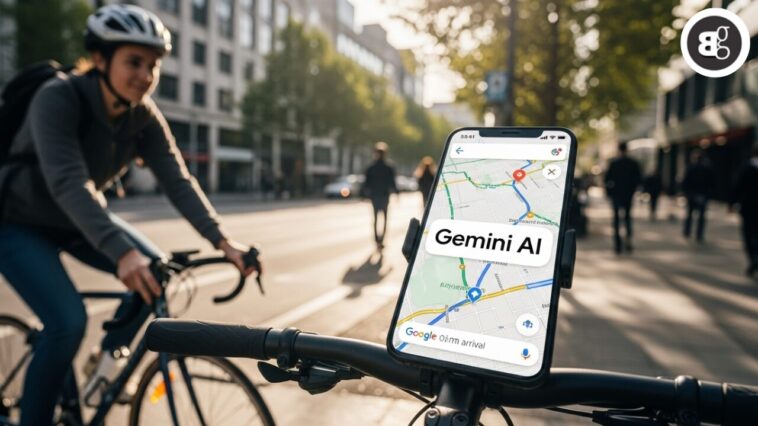
Google is pushing its Gemini AI assistant further into Google Maps, extending hands-free, voice-based navigation to people walking and cycling, not just drivers. The move turns Maps into something closer to a real-time travel companion rather than a simple directions app.
Google first introduced Gemini inside Maps in November 2025, starting with drivers. That early version let users ask conversational questions like how long until the next turn or what traffic looked like ahead without touching their phone. It was pitched as a safety feature, but it also marked a shift in how Google wants people to interact with Maps.

Now, that same AI-powered experience is rolling out to pedestrian and bike navigation, where typing or swiping can be even more awkward and sometimes unsafe.
Once navigation is active, users can trigger Gemini by saying “Hey Google” or by tapping the microphone or Gemini icon on the screen. From there, they can speak naturally while moving through a city.
Read More: Gemini beta can now give proactive replies using your photos, emails, files, and more
For walkers, Gemini can act like a local guide. Users can ask what neighborhood they’re in, what landmarks are nearby, or where to find highly rated restaurants, cafés, or shops along the route. The responses pull directly from Google Maps’ massive database of places, reviews, and location data.
Cyclists get a slightly different set of benefits. While riding, they can ask for their ETA, check upcoming calendar events, or dictate messages, all without taking their hands off the handlebars. It’s designed to reduce the temptation to glance down at a phone mid-ride.
Google says the idea is to make navigation safer and more convenient, especially for people moving through busy streets. Unlike traditional voice commands, Gemini supports follow-up questions, allowing for multi-step conversations. Someone might ask for vegan food nearby, then immediately ask whether any of those places have outdoor seating or bike parking.
The assistant goes beyond directions, too. It can suggest points of interest along the way, add stops to an active route, or help complete small tasks like sending texts or checking schedules, all through voice alone.
The rollout is happening globally on both Android and iOS, wherever Gemini is supported. iOS users appear to be getting access immediately, while Android availability is expanding gradually. The feature isn’t available on the web version of Google Maps.
This update is part of Google’s broader push to weave Gemini across its core products, from Search to Workspace to Maps. The goal is clear: turn everyday apps into conversational interfaces that respond to natural language instead of taps and menus.
Read More: Google Maps Launches AI-Powered Local Business Search
It also reflects how competitive the AI assistant space has become. With Apple, OpenAI, and Meta all racing to make their assistants more proactive and context-aware, Google is betting that Maps, one of its most widely used products, is the perfect place to show off Gemini’s strengths.
Whether users fully embrace talking to Maps while walking or biking remains to be seen. But one thing is clear: Google no longer sees Maps as just a navigation tool. It wants it to behave more like a personal guide that listens, responds, and adapts in real time.