
 Huma Siraj
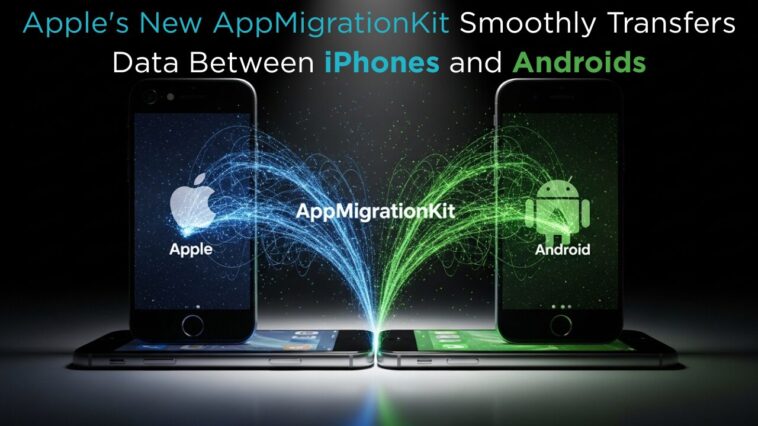
Apple’s Big Move Toward Cross-Platform Freedom
Changing phones has always been one of the most frustrating experiences for smartphone users. Whether switching from Android to iPhone or vice versa, the process often leads to lost files, missing settings, and the painful task of setting up everything from scratch.
But Apple may be ready to break that cycle. With the introduction of AppMigrationKit in the latest iOS/iPadOS 26.1 beta, Apple is taking a groundbreaking step toward making device switching smoother and more user-friendly than ever before.

This new framework is designed to help developers support seamless data transfer between iPhones and non-Apple devices, such as Android phones. It means your game progress, app preferences, and offline files could finally move with you no more starting over.
What Exactly Is AppMigrationKit?
AppMigrationKit is Apple’s latest toolkit that empowers app developers to enable cross-platform data migration. In simple terms, it’s the behind-the-scenes system that ensures your app data can safely move between devices even if you’re leaving the Apple ecosystem.
Unlike Apple’s existing “Move to iOS” program, which helps Android users migrate to iPhones, this new feature expands the scope in the opposite direction. For the first time, Apple is officially supporting data transfers from iPhone to Android, signaling a shift toward interoperability and user freedom.
How AppMigrationKit Works
Using AppMigrationKit isn’t automatic; developers need to integrate it into their applications. Once they do, users will have the option to securely back up and transfer their in-app data to another device even an Android phone.
Apple is also reportedly adding a “Transfer to Android” option within iPhone settings. This will allow users to move their personal data, app settings, and files without relying on third-party tools or external cloud backups.
On the Android side, Google is said to be developing a matching “Transfer to iPhone” feature, initially focusing on eSIM transfers but potentially expanding to app data in the near future. Together, these tools could finally create a two-way bridge between the two dominant mobile platforms.
Why AppMigrationKit Matters
For years, switching from iPhone to Android (or the other way around) has been a nightmare. Even with cloud backups, users lose local files, customized settings, and app progress. This inconvenience often discouraged users from changing ecosystems.
Apple’s AppMigrationKit could be the long-awaited solution. It gives users greater control over their data, reduces dependency on one ecosystem, and simplifies the migration process.
Moreover, Apple’s move likely responds to growing regulatory pressure from the European Union and other global authorities demanding more open and interoperable systems. By proactively introducing this feature, Apple is both improving user experience and aligning itself with global data portability standards.
Privacy and User Control Remain Central
Apple has built its brand on privacy, and AppMigrationKit stays true to that principle. The framework allows developers to choose which data can be shared while ensuring that sensitive or personal information remains protected.
This means not all app data will automatically move developers will tag what is safe to transfer, balancing convenience with privacy. This approach ensures that Apple maintains its strong privacy reputation, even as it becomes more open to cross-platform collaboration.
Impact on Developers and the Future of Mobile Transfers
For developers, AppMigrationKit opens new opportunities. Apps that support cross-platform migration can attract a broader audience, reduce user churn, and improve satisfaction. It could also push developers to adopt uniform data structures that make interoperability smoother.
In the long term, this shift could influence how apps are designed, encouraging a future where data belongs to users, not ecosystems. The result? A more flexible, user-centered digital world.
When Will It Be Released?
Currently, AppMigrationKit is in beta testing, and Apple hasn’t announced a public release date. Developers are testing its functionality, and the speed of its adoption will depend on how quickly app creators update their products to support migration.
If testing goes well, the feature might debut with the official release of iOS 27 or sooner in a late 2025 update.
Final Thoughts
Apple’s AppMigrationKit represents more than just a technical feature it’s a philosophical shift. For a company long known for its tightly controlled ecosystem, Apple is now acknowledging the importance of flexibility, user freedom, and transparency.
By giving users the ability to carry their app data wherever they go without compromising privacy Apple is setting a new standard for cross-platform harmony. This move could redefine how people perceive ecosystem loyalty and data ownership in the mobile world.


