Hassan Khan
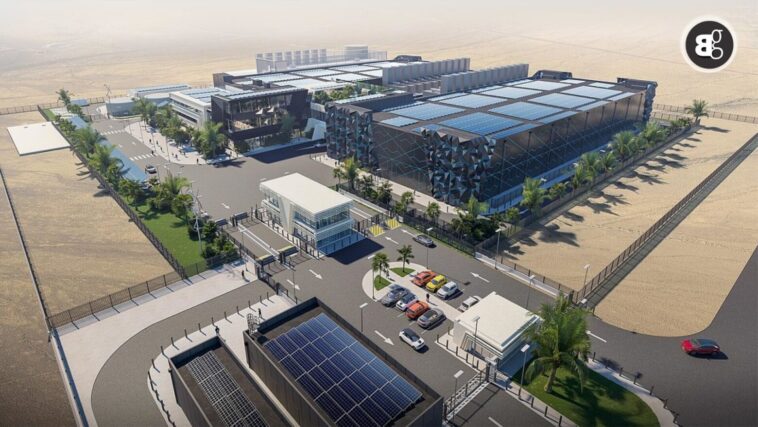
In 2025, Microsoft confirmed a massive $15.2 billion investment into new UAE data centers, marking one of the region’s largest technology infrastructure commitments. While the public messaging highlights renewable energy partnerships and sustainability pledges, the engineering contracts tell a different story: these mega data centers still depend on natural gas turbines to guarantee 99.999% uptime, equal to just 5.26 minutes of acceptable downtime per year.
This is where the tension begins Abu Dhabi wants to lead both the AI revolution and the climate transition. But the physics of today energy systems force a different reality.

Why Gas Turbines Still Power AI Infrastructure
Solar and nuclear energy contribute large portions of the UAE electricity mix, but neither can meet the sudden, unpredictable power spikes that hyperscale data centers generate.
Key Stats:
-
Barakah Nuclear Plant: Reached 5.6 GW capacity in 2024, covering roughly 25% of UAE’s electricity.
-
Mohammed bin Rashid Solar Park: Produces 3,860 MW, but drops to zero after sunset.
-
Operational battery storage: Only 3 MW available, with 300 MW under construction—far below the 500+ MW required for evening data center peaks.
Gas turbines, meanwhile, can start instantly and handle rapid load changes. This reliability makes them the backbone of all major data center contracts.
Renewable Messaging vs. Engineering Reality
Tech giants like Microsoft and Google promote renewable energy commitments, but these often involve renewable certificates financial tools, not physical power delivery. Their UAE servers still draw electricity from a grid where gas supplies the firm capacity, especially during high-load or nighttime periods.
This explains why press releases focus on green goals while technical documents specify gas turbine backup systems.
AI Growth Is Reshaping the UAE’s Energy Economics
Data center consumption in the UAE reached an estimated 8 to 10 terawatt hours in 2024, driven by regional cloud expansion and AI model deployment. Forecasts suggest demand will rise to 15 to 20 TWh by 2026.
This surge benefits ADNOC, the country’s dominant natural gas supplier:
-
Asian spot LNG prices averaged $11.91 per MMBtu in 2024.
-
By powering data centers domestically, the UAE preserves more gas for high-margin exports.
-
ADNOC Gas expects 6% annual domestic demand growth through 2030.
For the first time, AI infrastructure is directly shaping national energy policy.
UAE’s 2030 Challenge: Two Timelines, One Dilemma
The UAE Energy Strategy 2050 aims for 19.8 GW of clean energy by 2030. But renewable additions average just 1.5 GW per year, while AI-related power demand is climbing far faster up to 30% annually, according to global projections.
Unless grid-scale battery storage becomes affordable before 2035, the UAE will continue leaning on gas turbines to secure its status as a global AI hub. This is the real tension: a future powered by AI still running on the fuels the world hopes to phase out.
FAQs
Q1. Why can’t solar or nuclear fully power UAE data centers yet?
Because data centers need instant, rapid-response power something solar can’t provide at night and nuclear can’t ramp up quickly enough.
Q2. How much power will UAE data centers need by 2026?
Projections estimate 15 to 20 terawatt hours annually, nearly double their 2024 consumption.
Q3. Why does the UAE still rely heavily on gas turbines?
Gas turbines guarantee 99.999% uptime, fast startup, and stable fuel supply essential for AI workloads and real-time cloud services.