Hajra Naz
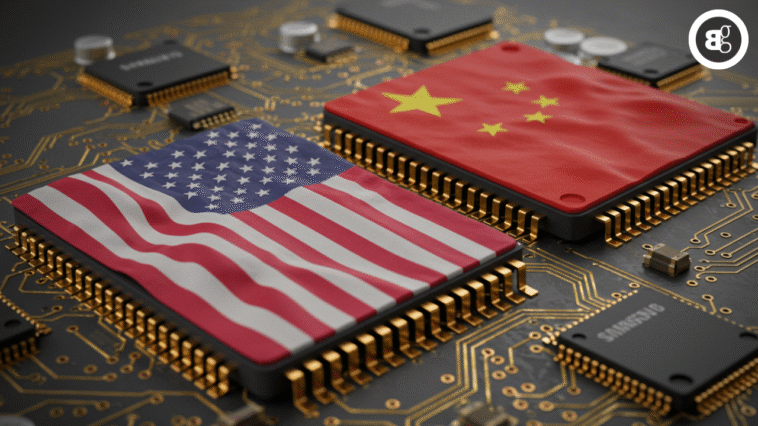
The United States has revoked a key waiver that allowed Taiwan Semiconductor Manufacturing Co. (TSMC) to ship advanced chipmaking equipment and technology to its facility in Nanjing, China. The decision, part of Washington’s broader effort to curb Beijing’s semiconductor ambitions, takes effect on December 31.
TSMC confirmed the move to CNBC, noting that it will lose its “validated end user” (VEU) status. This designation had allowed the company to fast-track shipments of U.S.-origin tools to its China operations without lengthy license applications.

The world’s largest contract chipmaker was granted the exemption shortly after the U.S. imposed its first wave of restrictions on semiconductor equipment in 2022. Now, the policy shift means every shipment of U.S.-made chipmaking equipment to TSMC’s China fabs will require individual export licenses.
TSMC’s Response
TSMC issued a statement saying it is
“Evaluating the situation and taking appropriate measures, including communicating with the U.S. government.”
The company stressed that it remains committed to ensuring uninterrupted operations at its Nanjing plant.
The company operates two sites in China—one in Shanghai and one in Nanjing, the latter being more advanced. However, the Nanjing facility contributes less than 3% of TSMC’s global revenue, meaning the direct financial hit may be small.
Industry analysts, including Brady Wang of Counterpoint Research, noted that the change reflects Washington’s broader strategy of tightening control over semiconductor exports to China. Wang said.
“This strengthens U.S. leverage over chip production in China,”
Read More: SoftBank + Intel: $2B Deal That Could Reshape AI Chips
South Korean Chipmakers Also Hit
TSMC is not alone. South Korean giants Samsung Electronics and SK Hynix also saw their VEU status revoked, according to a notice in the Federal Register. Both companies operate large memory chip plants in China.
The U.S. Department of Commerce’s Bureau of Industry and Security (BIS) explained that it was closing what it called a “Biden-era loophole.” It emphasized that while export licenses will still be issued for existing facilities, approvals will not cover expansions or technology upgrades.
Jeffrey Kessler, undersecretary of commerce for industry and security, framed the move as part of a broader strategy. “We are committed to closing export control loopholes—particularly those that put U.S. companies at a disadvantage,” he said.
Broader Policy Context
The timing is notable. Just weeks earlier, the U.S. had announced plans to ease certain restrictions on exports of artificial intelligence chips. Companies like Nvidia and AMD were told they could resume shipments of some previously banned AI chips to China.
At the same time, the administration scrapped the so-called “AI diffusion rule,” which could have expanded AI-related export restrictions. These steps were framed as efforts to preserve U.S. leadership in AI technologies.
Yet the rollback on AI chips contrasts sharply with the clampdown on memory and manufacturing technologies. Experts believe the U.S. is drawing a line: it wants to allow some AI chips to flow to China for global competitiveness, while blocking advances in the country’s core manufacturing capacity.
Ray Wang, research director at Futurum Group, explained the strategy. “Washington wants to prevent China from growing its semiconductor production base and developing local expertise,” he said. “The deeper goal is to stop companies from expanding their supply chain footprint inside China.”
Global Impact
While the direct financial hit to TSMC may be small, the decision highlights growing geopolitical risks in the chip sector. U.S. officials are pushing allies and global suppliers to reduce their exposure to China, while encouraging investment on American soil.
Indeed, TSMC, Samsung, and SK Hynix have all committed billions of dollars to new U.S. fabs this year. At the same time, Trump administration officials have floated tariff threats as another tool to push supply chains away from China.
Market reactions have been mixed. On Monday, shares of Samsung and SK Hynix fell on news of the VEU revocations. TSMC shares, however, traded largely flat.
Read More: Trump Hits 100% Tariff On Computer Chips | Big Win for U.S. Manufacturing
FAQs
1. What is a validated end user (VEU) status?
VEU status allowed certain companies to import U.S.-origin chipmaking tools into China without applying for a license each time. Revoking this privilege means shipments now require government approval.
2. Why did the U.S. revoke the waiver for TSMC and others?
The U.S. aims to limit China’s ability to advance its semiconductor manufacturing capacity. Officials argue that allowing expansions in China would undermine U.S. technology leadership and security.
3. How much does TSMC’s Nanjing plant matter financially?
It contributes less than 3% of TSMC’s total revenue. Analysts expect the financial impact to be minimal, though operational uncertainty remains.
4. Why is the U.S. easing rules on AI chips but tightening others?
The U.S. wants to keep its edge in artificial intelligence while restricting China’s ability to build a full chipmaking ecosystem. AI chip exports may be allowed for global market reasons, but manufacturing tools are seen as more strategically sensitive.
5. What does this mean for the global chip industry?
The policy adds friction for companies operating in China. It signals that the U.S. wants more production moved to friendly nations, especially the U.S. itself. This could reshape global supply chains in the coming years.