Hajra Naz
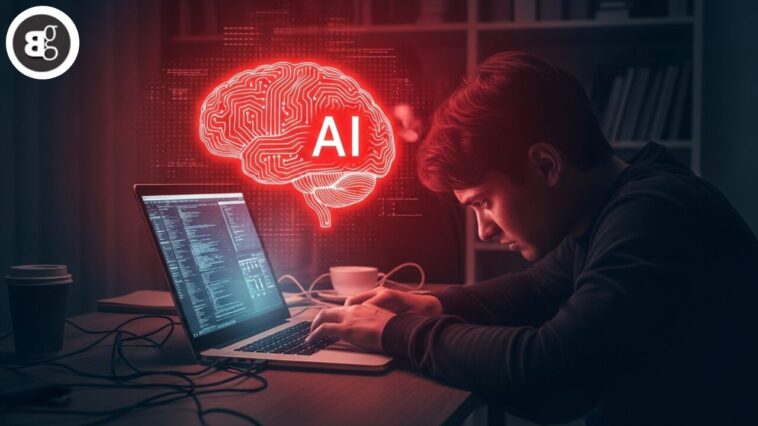
The most compelling story about AI in the workplace isn’t that it will take your job; it’s that it will save you from it. For the past three years, tech companies have sold this idea to millions of workers: AI isn’t a threat; it’s a superpower.
Sure, some roles may disappear. But for most white-collar workers, lawyers, consultants, writers, coders, and analysts, the pitch goes like this: AI will make you better at your job, free up time, and reduce effort. You work smarter, not harder. Everyone wins.

But emerging research suggests this story may be too good to be true.
When “More Productivity” Becomes More Work
A recent study in the Harvard Business Review offers a sobering look at what happens when employees actually embrace AI. UC Berkeley researchers spent eight months observing a 200-person tech company, conducting over 40 in-depth interviews to see how AI was changing day-to-day work.
What they found wasn’t a productivity revolution. Instead, it was burnout in disguise.
Employees weren’t being pressured or given extra targets. They weren’t forced to use AI. But because AI made more tasks achievable, work simply expanded to fill every free moment. Lunch breaks shrank. Evenings lengthened. Freed-up hours didn’t mean less work—they meant more.
As one engineer put it:
“You thought using AI would save you time, but it doesn’t. You end up working the same or even more.”
On Hacker News, a similar sentiment emerged:
“Expectations have tripled, stress has tripled, and actual productivity has only gone up by maybe 10%. Leadership wants us to prove the AI investment is worth it, so we all work longer hours.”
Read More: Are Chatbots Making Us Mentally Lazy and Stupid?
Are AI Gains Real—or Just Illusions?
The question of AI’s impact on productivity has always been tricky. Early trials showed mixed results:
-
A study last summer found developers using AI tools took 19% longer on tasks, even though they felt 20% faster.
-
Research from the National Bureau of Economic Research across thousands of workplaces reported only 3% time savings after AI adoption, with no real impact on earnings or hours worked.
These studies faced criticism, but the UC Berkeley research goes a step further. It doesn’t dispute that AI augments human ability—it confirms it. Then it shows what that augmentation leads to: fatigue, burnout, and a creeping inability to disconnect. Organizational pressures for speed and responsiveness amplify the effect.
The Productivity Paradox
The tech industry has bet that empowering employees to do more would solve all workplace problems. Instead, AI may be creating a new kind of problem. Workers aren’t necessarily doing less—they’re doing more, faster, and with higher expectations.
Some experts call this the AI productivity paradox: tools designed to save time end up extending work hours, eroding boundaries between personal and professional life, and increasing stress.
Read More: Study Raises Alarms on AI Chatbots Giving Suicide Advice
Looking Ahead
As AI continues to integrate into workflows, companies must ask: How do we measure success? Is it output? Efficiency? Employee well-being?
The UC Berkeley study is a wake-up call. AI can enhance productivity—but without thoughtful implementation, it risks making work harder, not easier. The tools that were supposed to save us from burnout could very well be accelerating it.
For anyone navigating the AI-powered workplace, the takeaway is clear: don’t just ask what AI can do. Ask what it should do—and whether your workday will survive it.