Hajra Naz
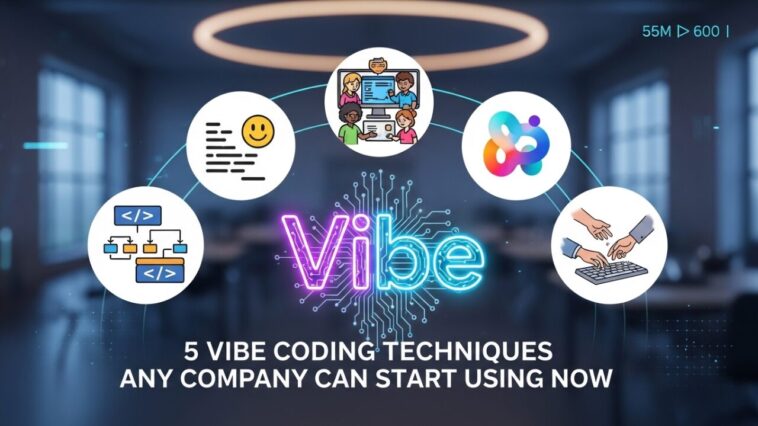
Vibe coding is giving businesses a faster way to turn ideas into working tools. Instead of drafting detailed specs and waiting in a development queue, teams can describe what they want, build something lightweight with AI, and refine it in real time. The gap between “idea” and “prototype” is shrinking fast.
That shift matters. In many organizations, the real bottleneck isn’t a lack of ideas — it’s limited engineering bandwidth. When the people closest to a problem can build small, fit-for-purpose solutions themselves, experimentation speeds up. Teams can test assumptions, streamline processes, and identify what actually creates measurable value before committing serious resources.

There are clear limits. Mission-critical systems, customer-facing products at scale, and anything involving sensitive data still require experienced engineers, strong governance, and security by design. But for internal tools and low-risk use cases, vibe coding can deliver quick wins right now.
As AI tools evolve, the ability to create bespoke software on demand will become a core professional capability. Here are five practical ways organizations can apply vibe coding today:
Read More: How Vibe Coding Uses User Prompts to Drive AI-Generated Software Code
1. Faster Prototyping and Idea Validation
Innovation often stalls at the prototype stage due to limited budget or technical resources.
With vibe coding, teams can quickly build proofs of concept, test new features, or simulate entirely new offerings. Instead of debating whether customers might want something, businesses can show them — reducing cost, risk, and time-to-market.
2. Automating Internal Workflows
Many organizations rely on manual processes, email chains, and spreadsheet tracking.
Vibe coding enables teams to create lightweight automation tools tailored to their needs — from employee onboarding workflows and purchase order approvals to content scheduling systems. These solutions may be simple, but they drive meaningful efficiency gains.
3. Sales and Customer Support Enablement
Sales and support teams operate in highly context-dependent environments, where generic software often falls short.
Using vibe coding, companies can build custom AI assistants aligned with their sales processes and customer challenges. These tools can suggest next best actions, guide agents through troubleshooting, and help resolve common user errors — improving both conversion rates and customer satisfaction.
4. Custom Reporting and Dashboards
Off-the-shelf dashboards answer generic questions. Most businesses need insights tied to their own strategic KPIs.
Vibe coding makes it possible to generate custom reporting tools that focus on the metrics that matter most. Because these systems can be natural-language-native, users can ask direct questions and receive clear insights — without navigating complex interfaces or interpreting dense charts.
5. Compliance and Risk Monitoring
Compliance requires human oversight, but vibe coding can support the process.
Organizations can create tools that flag missing approvals, detect reporting anomalies, monitor data protection gaps, or prepare documentation for audits. With proper guardrails, these tools reduce administrative burden while maintaining professional accountability.
Read More: Launch Your Personal AI Vibe Coding Platform — In a Single Click!
Vibe Coding as a Strategic Advantage
Businesses that embed vibe coding into their culture gain the ability to experiment, iterate, and adapt faster than competitors.
Instead of waiting for perfect plans or scarce development resources, they can bring ideas to life quickly and test them in real-world conditions. That speed of execution becomes a powerful competitive differentiator.
Ultimately, vibe coding is less about writing software and more about building organizations where continuous experimentation drives strategy. As AI tools become more capable and accessible, companies that move early will be positioned to lead — not follow.