Hajra Naz
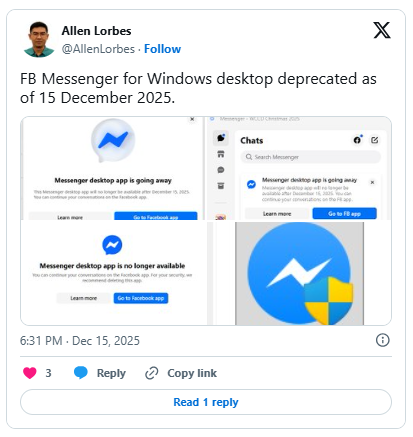
Facebook Messenger’s standalone desktop app is officially gone. As of December 15, 2025, the native Mac and Windows applications are no longer available, and users are being redirected to Facebook’s website to continue using the messaging service.
Existing users opening the app are now prompted to switch to the web version, marking the end of Messenger as a dedicated desktop product.

A Pandemic-Era App That Never Fully Kept Up
Messenger’s desktop app launched at the start of the COVID-19 pandemic, when demand for remote communication tools surged. But it struggled to keep pace with business-focused competitors like Zoom.
The app supported fewer video call participants and lacked key features such as screen sharing and easily shareable meeting links, limiting its usefulness beyond casual chats.
By the time Meta announced plans to shut it down in October, the app’s declining importance was already apparent.
Messenger’s Gradual Reabsorption Into Facebook
Signs of the app’s reduced priority date back several years. In 2023, Facebook began folding Messenger functionality back into the main Facebook app, reversing an earlier push to keep the services separate.
At the same time, Meta repeatedly changed the technology behind the desktop app — a move that frustrated both developers and users.
Read More: Meta has launched a new tool to help Facebook creators protect their reels from theft.
A Series of Technical Downgrades
According to Meta’s help documentation, Messenger for Mac was eventually rebuilt using Catalyst, a framework that allows iPad apps to run on macOS. The approach drew criticism for requiring extra development effort while delivering apps that felt less native to users.
Before Catalyst, the Mac version had gone through multiple iterations, starting as an Electron app and later transitioning to React Native Desktop, according to a former Meta software engineer.
On Windows, the shift was even more pronounced. Last year, Messenger’s desktop app was converted into a progressive web app, further blurring the line between a native application and the browser-based experience.
Strategy Shift Reflects Broader Platform Goals
These changes likely reduced demand for a standalone desktop app, especially as Meta refocused on driving users back to Facebook itself. The move aligns with broader efforts to stabilize engagement on the company’s aging flagship social network.
Earlier this fall, Meta warned users that the desktop app would be deprecated by year’s end and advised them to set up a PIN to preserve chat history before transitioning to the web.
Read More: Facebook Launches Tool to Help You Discover Photos to Share from Your Camera Roll
What Happens Next for Users
Users who rely on Messenger without a Facebook account are now being redirected to Messenger.com, where they can continue logging in without creating a Facebook profile.
Meta has published detailed guidance on the transition in Facebook’s help center, with separate instructions for Mac and Windows users navigating the shift to the web-based experience.