
 Hajra Naz
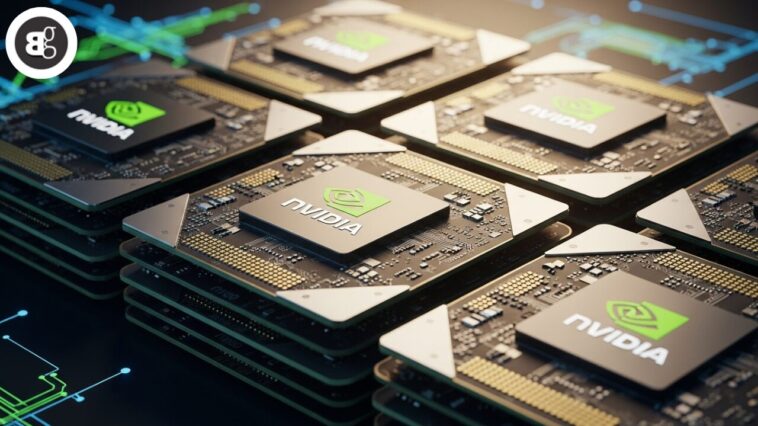
Donald Trump recently declared that Nvidia’s most advanced AI chips—its flagship Blackwell series—will be reserved exclusively for U.S. companies and kept out of China and other foreign markets. During a taped interview on 60 Minutes and in remarks aboard Air Force One, Trump emphasized that these top-end semiconductors will not be sold “to other people.”
He told CBS:

“The most advanced, we will not let anybody have them other than the United States.”
And aboard the aircraft: “We don’t give (the Blackwell) chip to other people.”
These comments point to a harder pivot in U.S. tech policy. Even though earlier frameworks suggested expanding AI exports to allies and maintaining a competitive edge, Trump’s statement suggests that Washington may impose stricter export controls around generative-AI hardware than previously revealed.
Read More: How China Is Advancing to Compete Against Nvidia’s AI Chips
Why It Matters
-
The Blackwell chips serve as foundational hardware for next-generation AI models and cloud infrastructure—part of the “AI chip race.” By restricting access, the U.S. is signaling a move to preserve technological leadership and national security advantage in the field of generative AI and AI infrastructure.
-
The decision may also ramp up pressure on global supply chains and export-licensing architectures. In recent weeks, Nvidia announced plans to ship over 260,000 Blackwell units to South Korea and major firms like Samsung Electronics—but Trump’s comments raise questions about whether allied countries’ access might also be subject to fresh scrutiny.
-
The move stokes tension with China, which has long been a battleground in the U.S.–China tech rivalry. Nearly every major semiconductor and AI policy pronouncement now carries strategic weight across both industrial and defense sectors.
Trump’s Nuanced Stance
While Trump barred the sale of the most advanced chips to Chinese firms, he left open the possibility that a “less capable” version might still be permitted.
“We will let them deal with Nvidia but not in terms of the most advanced,” he said.
That distinction—between full-capability hardware and downgraded variants—is a recurring theme in export-control discussions.
Also worth noting: Jensen Huang, Nvidia’s CEO, admitted the company has not sought U.S. export licences for China because of the Chinese government’s stance.
Read More: Nvidia Builds Its AI Empire with Key Startup Investments
Broader Context: AI Chips and Geopolitics
-
The U.S. long ago implemented export controls on high-end chips and advanced computing hardware destined for China, citing risks that they could bolster military AI capabilities.
-
Meanwhile, Nvidia is developing a variation of its Blackwell architecture for China (reportedly around 80 % of the full performance) — though that version still awaits full approval.
-
For Nvidia, the Blackwell chips are not just hardware: they’re strategic assets in the cloud-AI market, generative-model build-outs, and enterprise AI infrastructure. Having access to China was once a growth vector; now, exclusion looms as a structural constraint.
-
For China, the restriction intensifies incentives for domestic AI-chip development — and for the U.S., it raises questions about how far allies will be included in the “premium tier” of advanced hardware.
What’s Next
-
Will the U.S. roll out formal export-licensing rules that quantify what counts as “most advanced” vs. “less capable” chips?
-
How will allies respond? If South Korea and Japan, for example, are restricted from premium hardware, will they seek alternative supply chains?
-
Will China accelerate its self-sufficiency push in AI semiconductors to circumvent the exclusion?
-
How will broader market players in the cloud-AI ecosystem respond to hardware constraints and regional segmentation?
Read More: Nvidia Becomes First $5 Trillion Company Amid Global AI Boom