Hajra Naz
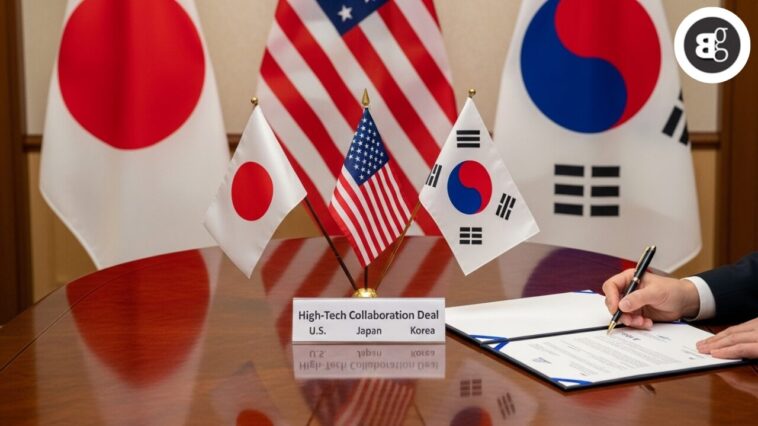
U.S. President Donald Trump arrived in Asia this week, not just for diplomacy, but to seal deals that could shape the next phase of the global technology race. The U.S. signed new Technology Prosperity Deals (TPD) with Japan and South Korea to boost collaboration in
- AI
- Semiconductors
- Quantum computing
- Biotech
- Space
- 6G
These agreements aim to deepen cooperation, align policies, and support shared economic and national security goals. They come just a month after the U.S. strengthened a similar partnership with the United Kingdom.

In many ways, Washington is securing long-term tech alliances with two of its most capable partners. Japan is a global leader in advanced materials, robotics, and space technology. South Korea dominates the world in memory chip manufacturing. Together, they bring powerful expertise to America’s innovation strategy.
According to the White House, the U.S.–Japan deal will focus on boosting AI exports, protecting emerging technologies, and creating joint standards for safe and transparent AI systems. The partnership also encourages collaboration across hardware, software, and data infrastructure to strengthen both countries’ positions in the global AI ecosystem.
Read More: How China Is Advancing to Compete Against Nvidia’s AI Chips
The U.S.–Korea agreement takes a slightly different path. It focuses on easing operational challenges for technology firms, especially around
- Data localization
- Hosting architectures.
The goal is to build a smoother and more open digital trade system. It should help innovation grow, rather than slowing it down.
The White House stated that the U.S.–Korea Technology Prosperity Deal will enhance export controls and coordination. It will also link the U.S. Center for AI Standards and Innovation with the Korea AI Safety Institute. This teamwork will set new standards for AI safety and measurement. It will help both nations responsibly develop AI.
But there’s a bigger picture. These agreements are part of a broader plan to reduce reliance on China’s tech supply chains. At the same time, they aim to build a trusted and innovation-focused alliance among democratic nations.
For the tech world, these deals bring new chances. Startups, chip makers, and AI researchers in the U.S., Japan, and South Korea could access new markets and funding. They’ll also gain more room for global collaboration.
As these nations align their technology goals, the next big breakthroughs in AI, quantum computing, 6G, and space technology may not come from one lab alone—but from this strong and connected network.
Read More: SoftBank + Intel: $2B Deal That Could Reshape AI Chips
FAQs
1. What is the Technology Prosperity Deal (TPD)?
The TPD is a bilateral agreement that promotes cooperation in advanced technologies like AI, semiconductors, and quantum computing between the U.S. and its key allies.
2. Why are Japan and South Korea important partners for the U.S.?
Japan leads in robotics and advanced materials, while South Korea is a top global chipmaker. Their combined expertise strengthens U.S. innovation and supply chain resilience.
3. How will these agreements impact the global AI industry?
The deals aim to align AI policies and standards, support safe AI development, and make cross-border innovation easier for tech companies in all three nations.
4. Are these deals targeting China’s influence in technology?
Yes. One key goal is to reduce reliance on China’s tech supply chains and establish secure, democratically led networks for critical technologies.
5. What benefits will businesses gain from these collaborations?
Companies may see easier data flow, better access to global AI infrastructure, and new funding or research opportunities across the U.S., Japan, and South Korea.