Hajra Naz
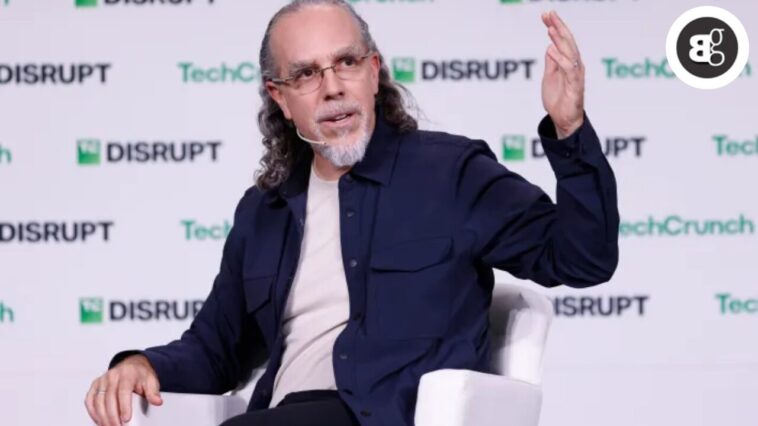
Astro Teller, the CEO of X (formerly Google X), Alphabet’s “moonshot factory,” shared how bold innovation happens inside one of the most secretive labs in Silicon Valley. Teller broke down what defines a moonshot and why failure is not just accepted at X but celebrated.
X is the birthplace of several groundbreaking projects, including Waymo, the self-driving car company, and Wing, the drone delivery service. These projects started as wild ideas that most people thought could never work.

The 2% Success Rate—and Why It’s a Win
Teller revealed that only about 2% of the projects at X ever succeed. That means 98% fail, and that’s perfectly fine. “We’re not afraid of failure,” he said. “Our goal is to learn fast, not to be right.”
He described X’s culture as one that rewards curiosity and rapid experimentation. The goal is to figure out as quickly as possible whether a big, crazy idea has real potential or whether it’s time to “kill it and move on.”
Read More: Trump and Xi Set to Finalize TikTok Deal on Thursday, Says Treasury Secretary
What Makes Something a Moonshot
According to Teller, a real moonshot has three parts:
-
It tackles a huge global problem.
The problem should affect millions or even billions of people, something worth solving at scale. -
It imagines a radical solution.
There must be a product or service that, if it somehow worked, could make the problem disappear. -
It relies on breakthrough technology.
There needs to be at least a small scientific or technical reason to believe the impossible might become possible.
“If someone came to me with a plan for a teleporter,” Teller said, “I’d say, ‘Great, here’s a little money. Now go prove why it won’t work. If you can’t, maybe we’ve found something special.”
Why Wild Ideas Matter
Teller believes that reasonable ideas aren’t what X is built for. If something sounds too practical or achievable, it’s not a moonshot. “We want ideas that sound a little crazy,” he said. “The kind that makes people raise their eyebrows.”
When a new idea shows a hint of promise, X gives it a bit more funding and tests it again. If the idea still holds up, it advances. If not, it’s shut down quickly — before too much time or money is wasted.
The Balance Between Audacity and Humility
Teller emphasized that successful innovators must have both boldness and humility.
“You need high audacity to even start a moonshot,” he explained. “But without humility, you’ll chase the wrong ideas for too long.”
X launches more than 100 projects every year, but only a small fraction survives. Still, Teller said 44% of their total investment goes into ideas that eventually turn into “outrageously good” products. The reason? They kill weak ideas early.
Rediscovering Creativity
Teller believes innovation isn’t just for geniuses; it can be learned. “We were all creative as kids,” he said. “We just unlearned it as adults.” He encourages people to build spaces where it’s safe to explore, fail, and feel a little foolish because that’s where real creativity returns.
Read More: Elon Musk and X Settle $128 Million Severance Lawsuit with Former Twitter Executives
FAQs
1. What is Alphabet’s X (Moonshot Factory)?
Alphabet’s X is an innovation lab where researchers and engineers work on breakthrough ideas that could solve big global problems using new technology.
2. What does Astro Teller mean by a “moonshot”?
A moonshot is a bold, high-risk project that aims to solve a major issue in a completely new way—often using unproven or emerging technology.
3. Why does X celebrate failure?
Because failure helps the team learn faster. By identifying what doesn’t work early, they can focus on ideas that truly have the potential to change the world.
4. What are some successful projects from X?
Notable successes include Waymo (self-driving cars), Wing (drone delivery), and Loon (high-altitude internet balloons).
5. Can anyone learn to think like a moonshot innovator?
Yes. Teller believes anyone can relearn creativity by staying curious, testing ideas quickly, and not being afraid to fail.