
 Hajra Naz
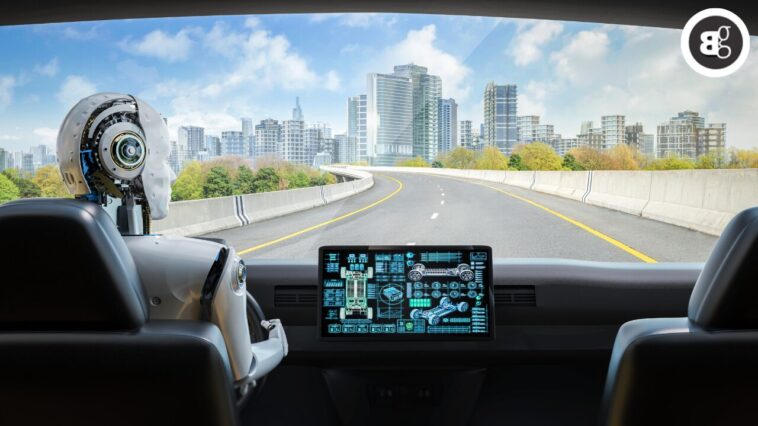
AI is often called the most transformative technology of our time. It is already reshaping medicine, education, and even the way wars are fought. But one of its boldest promises has yet to fully arrive: self-driving cars.
We’ve been told they will make roads safer, cut down on accidents, reduce traffic, and give us back hours of free time. Instead of driving, we could scroll our feeds, work, or even nap while algorithms take the wheel.

But is that vision real? Or is it another chapter in the ongoing AI hype cycle?
Where Are We Today?
The dream of Level 5 autonomy — cars driving without any human input — has not arrived. Predictions have come and gone. Even Elon Musk’s Tesla, famous for bold claims, has missed many deadlines. So much so that there’s a Wikipedia page listing his missed timelines for full self-driving.
Yet, progress has been made. The biggest success so far? Robotaxis.
-
Waymo, owned by Google’s parent company Alphabet, runs fleets in Phoenix, San Francisco, and Los Angeles. It carries out more than 250,000 rides every week and has announced plans to build a new factory for 2,000 cars a year.
-
In China, Baidu and Pony.ai operate robotaxi services in major cities like Beijing, Guangzhou, and Shanghai.
-
WeRide, which started from Baidu’s R&D unit, has gone global. It now runs robovans for cargo, robobus shuttles in France, and even robo-sweepers in Singapore.
These are not experiments anymore; they are real-world services.
Read More: Tesla Full Self-Driving Is Failing. Why Is It Still Legal?
What About Private Cars?
Here, the story is slower. No country has approved fully autonomous passenger cars for everyday use.
Tesla calls its product Full Self-Driving (FSD) Beta, but it still requires a human behind the wheel, ready to take over. That’s far from true autonomy.
Some progress is happening in smaller steps:
-
Mercedes-Benz became the first to get approval for Level 3 autonomy in the U.S. in 2023. Drivers can let go of the wheel in certain conditions, though they must stay alert.
-
Ford and General Motors (GM) are rolling out features like hands-free freeway driving and automated lane changes.
These may not sound futuristic, but they are practical, legal, and safer. Incremental steps are how the industry is building public trust.
Roadblocks to Full Autonomy
So, why aren’t self-driving cars everywhere yet?
-
Technology gaps – AI systems still struggle with unexpected events like jaywalkers, erratic drivers, or unusual weather. Waymo data shows autonomous driving is safer per mile, but fringe cases remain a challenge.
-
Accidents and trust – Fatal crashes under “supervised autonomy” have hurt public confidence. GM’s Cruise lost its California permit after a pedestrian accident.
-
Regulation – Only a handful of U.S. states allow limited autonomous fleets, and they operate within strict geo-fenced areas.
-
Public perception – According to AAA, just 13% of Americans trust self-driving cars, though the number is slowly rising.
Read More: Will Autonomy Disrupt AI Agents? Here’s What to Expect
The Road Ahead
Self-driving technology is moving forward, but not at the speed of its promises.
-
Level 2 and Level 3 features will likely become common in personal cars within a few years.
-
Robotaxis will keep expanding in tech-friendly cities with supportive laws, like Silicon Valley, Shenzhen, and Dubai.
-
Full Level 5 autonomy remains a distant goal. Experts say it could take decades before we see cars that drive themselves everywhere, under any conditions.
Still, progress is steady. AI-powered vehicles will be part of the future of urban mobility, even if the dream of sleeping in the backseat while your car takes you home isn’t quite here yet.
FAQs on Self-Driving Cars
1. What is Level 5 autonomy?
It means a car that can drive itself anywhere, anytime, with no human driver needed. We are not there yet.
2. Which companies lead in self-driving tech?
Waymo, Tesla, Baidu, Pony.ai, WeRide, GM’s Cruise, and Mercedes-Benz are among the top players.
3. Are self-driving cars safe?
Studies show they are safer per mile than humans, but rare, unpredictable situations remain a big challenge.
4. When will fully autonomous cars be available?
Experts say it could take decades before Level 5 cars are on public roads for personal use.
5. What’s happening now instead?
Robotaxis in cities, Level 2–3 driver assistance, and smart features like lane-changing and freeway autopilot are already available.