Huma Siraj

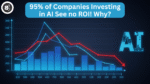
In the booming field of artificial intelligence, a lot of headlines frequently describe weariness. Regulators are putting more pressure on compliance, businesses complain about the inconsistent return on investment from their AI pilots, and even startup founders voice concerns about exaggerated valuations. The money hasn’t stopped flowing, despite the gloom.
According to Reuters, global startup funding increased to $162.8 billion in the first half of 2025 alone, with AI deals accounting for 64% of the total. Investors from Tel Aviv to Silicon Valley are writing larger checks than ever before because they are placing long-term bets rather than anticipating fast profits.

Glilot Capital Partners has made its mark on this conflict between fast capital and delayed payback. The Israeli venture capital firm, which has been named a top-performing venture capital firm in several Preqin and HEC Paris rankings, recently revealed that it has raised $500 million across its seed and plus funds. Even though many other venture funds are having difficulty closing new rounds, the VC claims that the move increases the amount of assets under control to over $1 billion. Kobi Samboursky and Arik Kleinstein, co-founders, said that market timing is not the only consideration in the funding.
Capital Keeps Flowing Into AI And Cybersecurity
In response to the question of why Glilot decided to raise such a sizable sum of money at this time, Samboursky acknowledged the heated discussion but rejected the notion of retreat. While our approach is specifically targeted, some areas of AI may be overheated. According to him, cybersecurity is a long lasting, vital field where innovative technology continues to yield enormous profits. “We have the dry powder to support the right founders thanks to the new $500 million fund.”
In a financial environment where capital is both concentrated and punishing, such discipline is important. Reuters reports that “AI investments drive 64.1% of total deal value in H1 2025,” after $162.8 billion in startup funding in the US over six months.
That gravitational attraction is consistent with Glilot’s wager. The company sees extended cycles of value creation where others see froth, particularly at the nexus of cybersecurity and artificial intelligence, areas where institutional investors continue to anticipate steady growth.
Going Long Term With Returns
We plan to continue and support the next major players from inception through scale, with disciplined capital and deep operating help. Israel has proven to be a consistent source of global winners in these fields.
“In 2025, investors will balance portfolio risk by focusing investment on those companies with clear mid term revenue and profitability potential versus those with more long term prospects,” according to FTI Consultants. “The more robust AI native companies will develop strong ARR.“
“We look for real moats, strong security/compliance from day one, clear customer ROI, and a go to market that actually scales,” Kleinstein said.
Israel’s Persistent Position as a Technological Superpower
Just as important as the capital is the geographic setting. Israel continues to draw international investors looking for AI, Cybersecurity, and AI despite persistent regional tensions.
“We will continue to lead investments in the best local and global talent because we firmly believe in the Israeli ecosystem,” Samboursky stressed.
“The ecosystem today is exceptionally strong repeat founders and operators with the vision, network, and grit to build global companies,” Kleinstein said, providing a more straightforward definition of persistence.
In the meanwhile, teams are robust and practical: distributed hiring, multi-geo operations, and strong worldwide customer ties. Regional headwinds exist, but we are certain that the tensions will soon ease. Israel is still one of the greatest locations in the world to launch industry-leading cybersecurity and artificial intelligence businesses.
There is evidence to support that belief. As of last year, Israeli firms made up about 20% of all cybersecurity unicorns worldwide, and the trend has only become faster with AI native protection strategies. Glilot’s $500 million fundraising is less of an exception in this regard than a sign that international investors continue to have faith in Israel’s ecosystem’s ability to generate the next wave of AI and security behemoths.
Where the True Winners Are Anticipated by Investors
Naturally, the key question is where the true value will be concentrated. According to Kleinstein, infrastructure and cybersecurity hold the key. Our primary competencies are AI (applications and infrastructure) and cybersecurity. These days, we see how AI opens up significant prospects in three main areas: protecting AI, AI vs. AI, and using AI native techniques to recreate existing cyber domains. All of the aforementioned groups will produce large corporations. Here is where we shall concentrate.
“AI is an important shift that will probably result in several winners at different points of the technology stack. In our view, the cybersecurity and infrastructure layer holds the strongest potential. This aligns well with our expertise and with the Israeli ecosystem’s unmatched talent base.”
Over the past three years, the most distinctive aspect of AI investing has been the discrepancy between what investors anticipate and what they receive. However, that gap presents an opportunity rather than a warning to companies like Glilot Capital.
They are placing themselves in a position where the delayed returns can end up being the most resilient by concentrating on corporate infrastructure and cybersecurity.
“This new capital not only validates our past performance but also empowers us to continue and grow our cyber and AI philosophy,” said Samboursky.
The billions invested in AI might not yield results right away. However, one important finding is that investors are no longer placing short bets. They are constructing for the long haul.