Hajra Naz
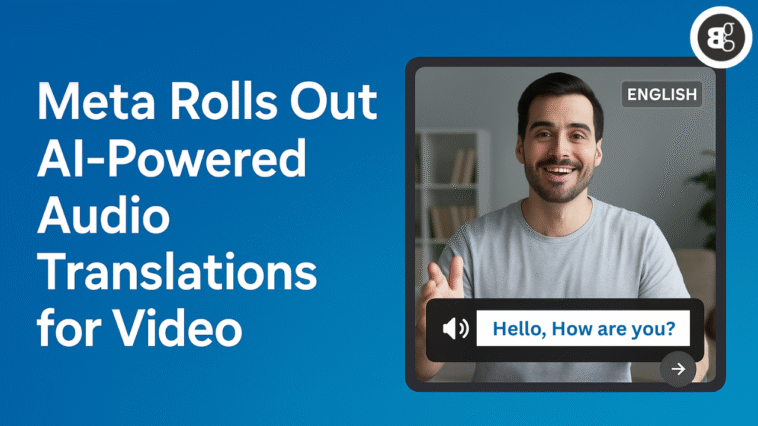
Meta is taking a big step in breaking language barriers online. The company is rolling out AI audio translations for videos and Reels. It uses advanced generative AI and machine learning models. The feature not only translates spoken words. It also syncs lip movements to match the new audio. This makes it look like the creator is speaking another language.
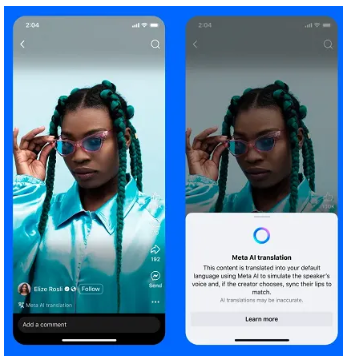
With this update, Facebook and Instagram users gain more options. They can watch content in different languages without only using subtitles. Meta AI creates natural translations that match the creator’s tone and voice. This makes videos more immersive and easier to enjoy worldwide.

How It Works
According to Meta, the AI-powered translations are designed to feel authentic and natural:
-
Voice Matching: Meta AI uses the creator’s vocal tone and style so that translations sound personal and not robotic.
-
Lip-Sync Technology: The system aligns mouth movements with the translated speech, creating a realistic visual experience.
-
Language Support: The feature will initially support English ↔ Spanish translations, with more languages like French, Hindi, Arabic, and Mandarin expected soon.
Creators can activate this feature in the Reels composer by toggling “Translate your voice with Meta AI.” They can also enable or disable auto lip-sync or stick with voice-only translation.
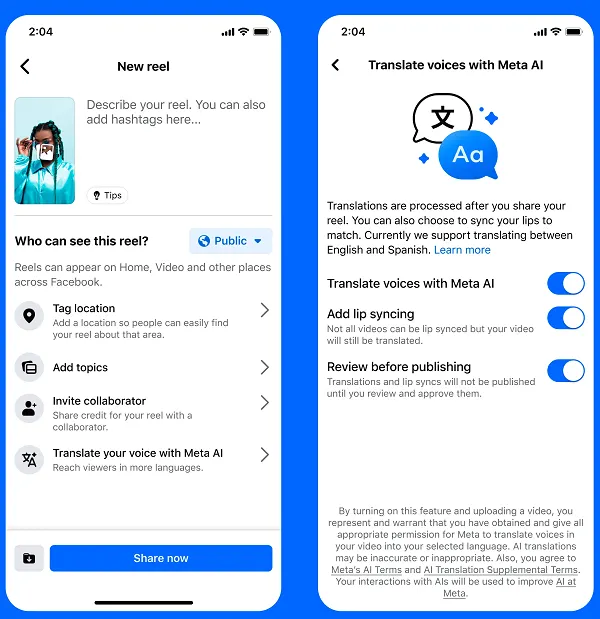
For added control, creators can review translations before publishing. The translated versions will be shown to viewers in their preferred language, and audiences will be notified that the reel uses Meta AI translation.
Why This Matters
Social platforms are becoming increasingly global, and language accessibility has been a major barrier. With AI-driven translation tools:
-
Creators can instantly expand their reach to global audiences.
-
Brands can launch campaigns in multiple regions without hiring large localization teams.
-
Educators, influencers, and entertainers can connect with diverse communities in real time.
This also places Meta in direct competition with YouTube’s multi-language audio dubbing, TikTok’s translation features, and tools like AI voice cloning startups ElevenLabs and OpenAI’s Voice Engine.
Extra Features for Creators
Meta isn’t stopping at AI translations. It’s also giving Facebook Page managers the ability to upload up to 20 dubbed audio tracks for a single Reel. While these manual tracks won’t include lip-sync, they provide another way for creators to customize and connect with multilingual audiences.
To get the best results, Meta recommends:
-
Avoid overlapping speech between multiple speakers (the tool currently supports up to 2).
-
Minimize background noise and music for clearer translations.
-
Be patient, as building an audience in a new language is like starting from scratch.
The Bigger Picture
This move is part of Meta’s push into AI-driven content personalization, where translation, voice cloning, and cross-language engagement tools will play a huge role in keeping users engaged. With more than 3 billion people using Meta apps worldwide, AI translations could make Facebook and Instagram even more dominant in the global video content space.
For creators, this is a game-changer. It opens the door to global audiences, higher engagement, and better monetization opportunities, all while breaking down cultural and language barriers.
FAQs
1. Which languages does Meta’s AI translation support right now?
Currently, the tool supports English to Spanish (and vice versa). Meta plans to roll out support for more languages soon.
2. Can creators review and edit translations before publishing?
Yes. Creators can toggle on “review before publishing” to approve or reject translations without affecting the original reel.
3. Does lip-syncing work with all translations?
Lip-syncing is available for AI-generated translations but not for manually uploaded dubbed tracks.
4. How many speakers can the system handle in one reel?
The translation tool currently supports up to two speakers per video for the best accuracy.
5. Will this feature be available on Instagram as well as Facebook?
Yes. The feature will roll out across both Instagram Reels and Facebook Reels to maximize creator reach and audience accessibility.