Hassan Khan
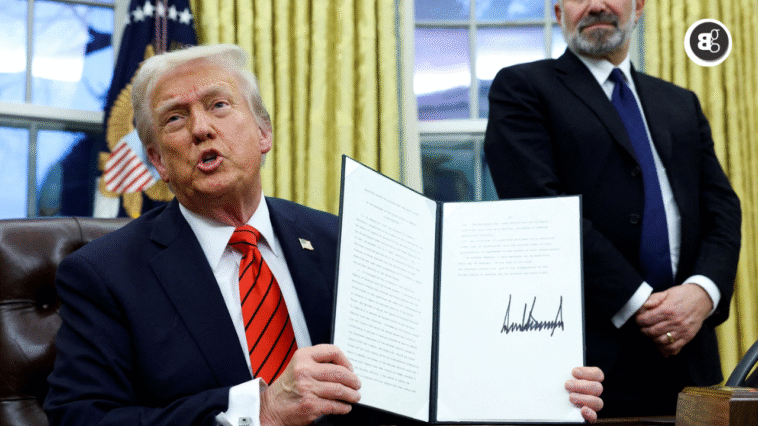
Trump Hits Imported Chips with 100% Tariff U.S. Builders Get a Free Pass
In a move that could shake up the tech industry, President Donald Trump announced a 100% tariff on imported computer chips and semiconductors with one big exception: no tariff for companies building in the U.S.

During a meeting in the Oval Office with Apple CEO Tim Cook, Trump said:
We’ll be putting a tariff of roughly 100 on chips and semiconductors. But if you’re erecting in the United States of America, there’s no charge.
This decision comes after a temporary break from tough tariffs earlier this year. But now, Trump is putting pressure on global manufacturers to bring their factories home.
See More:
The reasoning? To avoid the kind of chip shortage that caused prices to skyrocket during COVID-19, especially in the auto industry. A lack of chips then led to car shortages and higher inflation. Trump’s latest move is aimed at preventing that from happening again.
Big Tech’s Reaction
Apple, Nvidia, Intel they’ve all been ramping up U.S. investment. In fact, Apple alone has pledged $600 billion more toward building and developing tech in the U.S, bringing its total commitment to $1.5 trillion. That includes chip manufacturing.
Read More: Trump’s Tariffs Won’t Slow Apple’s Shift to India for iPhone Production
The stock market reacted fast. Apple’s shares surged 5% during the day, and another 3% in after hours trading after Trump made his announcement. Nvidia saw modest gains too, while Intel, which has been struggling, also saw a small rise.
Can Apple Avoid the Tariff?
That’s the big question. While Apple is investing heavily in the U.S., millions of iPhones are still made in China and India. Unless the company gets a waiver or makes more phones in the U.S prices on future models could go up.
But with Tim Cook by Trump’s side during the announcement, investors are hoping some kind of understanding was reached.
Joe Biden Era Policy
Trump’s move marks a sharp break from President Biden’s earlier plans. Biden’s CHIPS Act focused on support, offering more than $50 billion in funding to companies building plants in the U.S.
Trump’s strategy is the opposite: tariffs instead of tax credits. It’s a more forceful tactic meant to punish offshoring rather than reward local building. Whether it works without raising prices across the board remains to be seen.
For now, the chip war is heating up, and where companies choose to manufacture could define not just their future, but the price of your next iPhone or smart fridge.