Hajra Naz
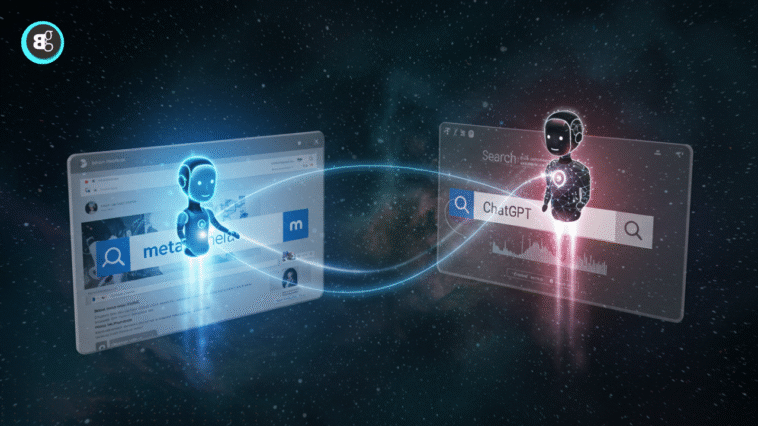
OpenAI recently made headlines when it quietly removed a feature that allowed shared ChatGPT conversations to appear in Google search results. The decision came after users raised concerns that their publicly shared chats were showing up in search engines—possibly without them fully realizing the implications.
Meta, however, seems to be taking a different approach.

The standalone Meta AI chatbot app—which launched earlier this year—also allows users to share their conversations publicly via a feature called the Discover feed. And unlike OpenAI, Meta has no plans to stop these public chats from being indexed by Google, meaning that conversations shared on the app can still show up in search engine results.
It’s already happening.
A quick Google search using the operator site:meta.ai alongside a keyword like “balloons” will turn up public chats users have had with the Meta AI assistant—for example, asking where to buy the best birthday balloons. These results appear because users have tapped a button to share their conversations to the Discover feed, which is visible within the Meta AI mobile app and also crawlable by Google’s indexing systems.
OpenAI’s public chat sharing feature worked similarly—users had to manually opt to share a chat. But the problem arose when it became clear that some users might not have understood that “sharing” also meant the conversation could end up in Google results, not just in a limited public feed.
On Thursday, OpenAI responded by announcing that shared ChatGPT conversations would no longer be indexed by Google — a move that significantly limits their visibility outside the platform. This change seems to be a direct response to growing user concerns over privacy and discoverability.
Meanwhile, Meta is standing firm. A spokesperson for the company, Daniel Roberts, confirmed that Meta has no plans to stop Google from indexing its Discover feed. He emphasized that the process for sharing is deliberate: users must tap to share, and a clear warning now pops up saying,
“Conversations on feed are public, so anyone can see them and engage.”
That warning wasn’t always so prominent.
Back in June, Meta AI’s Discover feed was filled with shared chats that looked highly personal—ranging from medical questions to career advice and even relationship issues. Some even included private details like phone numbers, full names, and email addresses. And while it’s true that every one of those users had clicked the “share” button, it was easy to wonder if they fully understood what that meant.
Following that report, Meta appears to have taken some action. The app now provides clearer messaging when a user tries to share a conversation, warning that the feed is public and visible outside the app. Since then, the Discover feed has shifted. It’s now mostly filled with more neutral content like AI-generated images and creative prompts, though a few personal text chats still seem to slip through.
Meta AI only works on mobile right now. It doesn’t work on desktop or the web. That fact might make some users think their chats stay inside the app. But that’s not true.
The full Discover feed isn’t searchable on the web. Still, shared chats can be turned into public URLs. Those links are open online. And that’s where Google steps in.
If that sounds confusing, you’re not alone. The Discover feed feels like a private space. In reality, it’s a public broadcast tool. Share something there, and Google can find it. So can anyone else.
Some users may like that. They might want to share chats for fun or creativity. Others may see it as a way to spark conversations. Some may even enjoy the exposure—especially if their Instagram or Facebook handles are linked.
Still, the broader question remains: Do people understand how far their AI chats can travel once shared? And more importantly, would they still share if they did?
I know I wouldn’t.