Hajra Naz
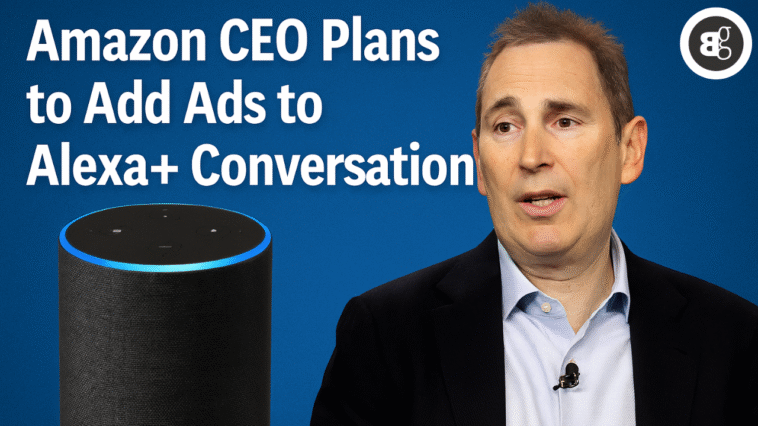
Amazon CEO Andy Jassy is eyeing a new frontier for advertising: the conversations people have with Alexa+, the company’s upgraded AI-powered assistant. Speaking on Amazon’s second-quarter earnings call Thursday, Jassy outlined how ads could become a natural part of Alexa+ interactions, opening up fresh opportunities for both product discovery and revenue.
“People are excited about the devices they can buy from us that have Alexa enabled,” Jassy told investors and Wall Street analysts. “People do a lot of shopping [with Alexa+]; it’s a delightful shopping experience that will keep getting better. I think over time, there will be opportunities, as people are engaging in more multi-turn conversations, to have advertising play a role to help people find discovery, and also as a lever to drive revenue.”

Alexa+ and the AI Race
Amazon has rolled out Alexa+ to millions of customers to breathe new life into its digital assistant, which had been seen as falling behind the wave of generative AI-powered voice assistants from OpenAI, Google, and Perplexity. Unlike the old Alexa, Alexa+ is designed for more natural conversations and “agentic” behaviors, meaning it can take initiative in helping users.
The service is free for Prime members (who already pay $14.99 per month), but Amazon has also introduced a $20-a-month standalone subscription for Alexa+. Jassy hinted that additional subscription tiers could be introduced in the future—potentially including an ad-free option.
From Limited Ads to Conversational Ads
Up until now, advertising within Alexa has been minimal. Users might see a banner ad on the Echo Show, Amazon’s smart display device, or hear the occasional audio ad while streaming music through an Alexa-enabled speaker. But Jassy’s description points to a future where Alexa+ could deliver AI-generated, conversational ads woven seamlessly into multistep interactions.
For example, a user might ask Alexa+ about workout routines. Instead of a static ad, Alexa+ could suggest sneakers or supplements. It would feel like part of the conversation. This is new ground—not just for Amazon, but for the entire tech industry.
Marketers have been eyeing AI chatbots for attention. Alexa+ could become a major platform for conversational ads. But how it will work is still unclear. And it’s unknown how much control brands will have.
The Broader AI Advertising Trend
Amazon isn’t alone in exploring advertising as a business model for generative AI. Google is already testing ad integrations within its AI-powered “AI Mode” search experience. OpenAI CEO Sam Altman has also signaled that he’s open to “tasteful” advertising in ChatGPT.
That’s because the economics of generative AI are demanding. The computing costs are enormous, and companies are still struggling to figure out sustainable revenue models beyond subscriptions.
The Cost of Catching Up
Amazon is spending heavily to stay competitive. Its capital expenditures soared to $31.4 billion in Q2 2025, a 90% increase compared to the same quarter last year. Much of that spending is being poured into developing in-house AI chips and expanding data centers to support large-scale AI models.
AWS, Amazon’s cloud division, grew 18% in revenue during the quarter, but the company will likely need new revenue streams—like conversational advertising—to justify and recoup its massive AI investments.
Jassy is betting big on Alexa+. If users interact with it more often than they did with the older Alexa, that could naturally lead to more shopping and more ad impressions within Amazon’s ecosystem. But there are hurdles.
Alexa Faces Challenges
The rollout of Alexa+ has been slower than many expected. According to reports, Amazon has faced difficulties in shipping some of Alexa+’s more advanced features, and early reviews have been mixed.
Then there’s the problem of AI hallucinations—when generative AI produces incorrect or misleading information. Before advertisers fully embrace Alexa+ as a channel, Amazon will need safeguards to ensure its assistant doesn’t accidentally provide false advertising about a product.
Privacy is another big concern. Alexa+ gathers more personal data than older assistants. People talk to it more—and in deeper ways. That means more information is collected.
If Amazon adds ads into these chats, questions will follow. How much data is shared with advertisers? Are users okay with ads in what feels like a human conversation? The line between help and marketing could get blurry.
Betting on Ads
Despite the uncertainty, Jassy appears enthusiastic. Amazon’s advertising revenue already rose 22% in Q2 2025 compared to the same period last year, showing strong growth. Introducing ads directly into Alexa+ interactions could supercharge that momentum.
For Amazon, the strategy is clear: push Alexa+ as a smarter, more engaging assistant, then layer in ads as a natural part of the experience. For users, however, the question will be whether Alexa+ feels like a helpful companion—or a salesperson that never stops listening.