Hassan Khan

The removal of the so called “Google tax” has increased the appeal of the South Asian market for international tech companies that sell online advertisements, and Google has now introduced a suite of its AI powered advertising tools in India, which made their debut in the U.S. in May.
In an effort to allay some of the trade worries expressed by the Trump administration, the Indian government eliminated its 6% digital ad levy in March, with effect from April.

Since domestic businesses were exempt, the US Trade Representative had denounced the fee as “discriminatory and unreasonable.” Removing it would lower expenses for tech behemoths like Amazon, Google, and Meta.
Google debuted its AI powered tools for Indian marketers on Thursday by hosting the local edition of its Marketing Live event.
Among these is “Generated for You,” a tool in Product Studio that finds chances for relevant content in shopping catalogs and uses AI to pre generate photos and videos that retailers may save or post on Google platforms. Another tool is an opt-in option in search campaigns called Smart Bidding Exploration. It builds on the already existing Smart Bidding and leverages AI to locate more recent, quality leads that merchants would not normally have found or bid on.
Additionally, Google Ads and Analytics now include new agentic features.
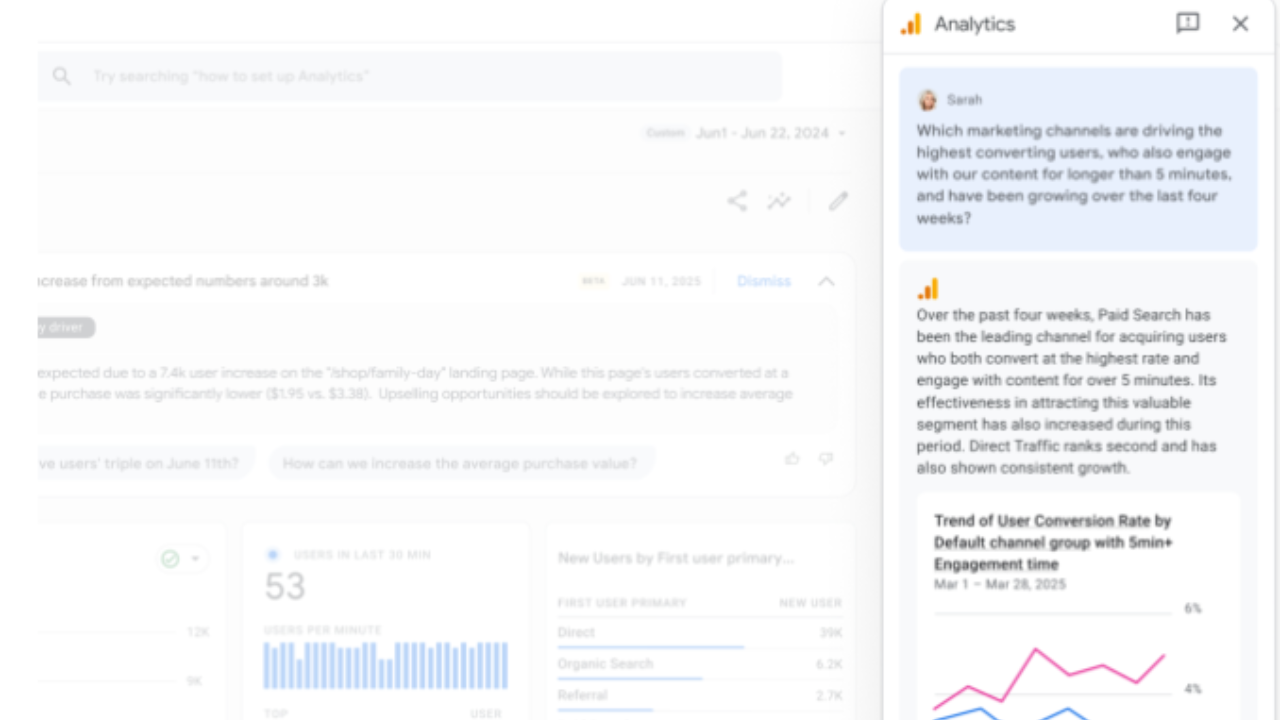
At a virtual media roundtable, Google Vice President for Global Ads Dan Taylor stated, “These agentic tools can learn from advertising inputs, including datasets, landing pages, assets, and real time campaign performance, to take the guesswork out of achieving business goals.”
By learning from brands’ landing pages, their current advertisements, and their existing keyword lists, Google introduced AI Max for Search Campaigns, which attempts to improve the success of search ad campaigns by identifying more pertinent and effective search queries.
Google claimed that after implementing AI Max in its early testing, Cashify, an Indian online marketplace for old electronics products, witnessed a 15% increase in conversions and a 12% decrease in client acquisition costs.
See More: How to Recover a Hacked Google Account: Step-by-Step Process
Additionally, Google declared that later this year, advertisements will begin to show up on AI Overviews in India.
The business has also launched its shoppable connected TV advertisements on YouTube in India. YouTube’s mobile masthead will soon begin to display advertisements within the nation.
According to Roma Datta Chobey, general director of Digital Native Industries at Google India, YouTube on connected TVs has been the most popular streaming service on Indian televisions in the last 12 months.
The nation has also been a major market for YouTube Shorts, with short videos on the platform having received trillions of views since its debut. According to Chobey, up to 87% of Indian shoppers use YouTube or Shorts while they purchase.
Read More: 20 Game-Changing AI Tools That Are Transforming Everyday Life in 2025
India’s digital ecosystem is flourishing. The majority of our users are actively experimenting with and evaluating our goods. In answer to TechCrunch’s inquiry over the new AI ad tools’ timing, Chobey stated, “So, that’s really the reason why we’re getting these innovations to India faster.”
In order to enhance local campaign compatibility, Google told TechCrunch that its recently released features such as AI Max for Search Campaigns, Smart Bidding Exploration, YouTube’s shoppable masthead and CTV, and Performance Max Retention Only Mode support Hindi. In order to facilitate more detailed advertising planning, purchasing, and reporting, the company has created state-level urban and rural audience filters for Indian advertisers.
In addition to having the largest user base in the world, India has long been a crucial market for Google because of the steady increase in ad income generated by the country. Google’s net advertising revenue in India climbed 18% to ₹27.43 billion ($320 million) in fiscal year 2024, while its total ad revenue climbed 11% to ₹312.21 billion ($3.6 billion).