
 Hajra Naz
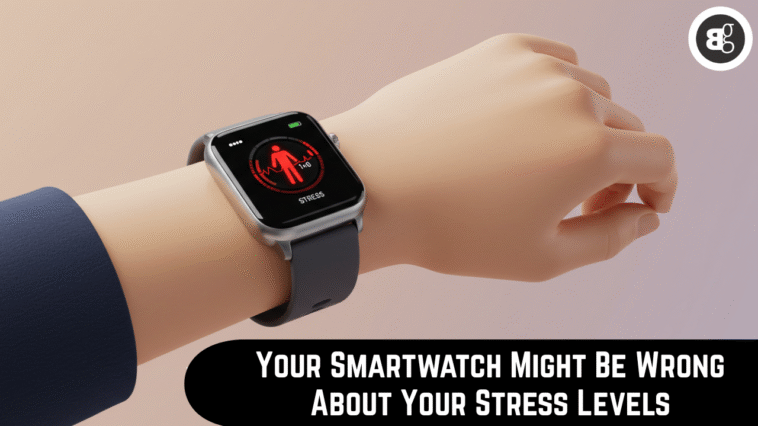
For many health-conscious people, a smartwatch is more than a step counter. It’s more than a calorie tracker. It’s like a small wellness assistant you wear. It can monitor your heart rate. It can track your sleep. It can log your workouts. It can even guide you through meditation. These devices promise a complete view of your physical and mental health.
But when it comes to detecting your psychological state, particularly stress, your wearable might not be as reliable as you think.

A new study, published in the Journal of Psychopathology and Clinical Science, explored how accurately wearable devices measure stress. Researchers followed nearly 800 university students who wore Garmin’s Vivosmart 4 for several weeks. Alongside the device’s automated readings, participants regularly self-reported their emotional state.
The findings were eye-opening: in most cases, the device’s stress readings didn’t match how participants felt.
“For the majority of individuals in our sample, we found that self-report and physiological measures of stress show very weak to no associations,” the authors wrote. “These results raise several questions about differences between data sources and potential measurement issues.”
How Garmin Measures Stress
The Garmin Vivosmart 4 uses a combination of heart rate (HR) and heart rate variability (HRV) data to assign a stress score between 0 and 100. In theory, higher scores indicate higher stress levels. However, as Garmin itself admits, heart rate alone can be misleading. Public speaking, climbing stairs, or even drinking a strong coffee can cause a spike, not all of which are related to psychological stress.
To improve accuracy, Garmin recommends wearing the device consistently, especially during sleep, so it can better understand your baseline.
Why the Readings May Be Off
Physiological signs like elevated heart rate can result from many factors — physical exertion, caffeine, temperature changes, or even emotional excitement. Without additional context, wearables may struggle to distinguish “good” stress (e.g., excitement before a performance) from negative stress (e.g., anxiety about an exam).
Researchers say stress is complex. It has many layers. It mixes physical signals, brain chemistry, and personal feelings. Self-reported data may show the emotional side better. Sensors only track the body’s responses. These do not always match how a person feels.
Other Features Still Perform Well
The study did not fully dismiss the device. The Garmin Vivosmart 4 did well in other areas. Its sleep tracking was highly accurate. It matched participants’ actual sleep duration. But the link between its sleep data and how tired people felt was weaker. This suggests that sleep quality is also a matter of personal perception.
What This Means for Users
If you rely on a smartwatch for wellness insights, the takeaway is simple:
-
Treat stress scores as one piece of the puzzle, not an absolute truth.
-
Consider how you feel in addition to what your device reports.
-
Wear your device consistently so it can better understand your baseline.
The Bigger Picture
This research adds to studies that question mental health tracking in wearables. Companies like Apple, Fitbit, Samsung, and Garmin are moving deeper into wellness tracking. But there’s debate on whether these devices can measure something as complex as stress.
In the future, better sensors may help. They could track cortisol levels through the skin. This might connect physical and emotional readings. Until then, treat smartwatch stress alerts with caution. And pair them with mindful self-reflection.