
 Hassan Khan

Artificial intelligence is everywhere in your phone, your car, your social feeds, and even your fridge. But along with excitement, there’s a growing wave of fear: Will AI destroy the world?
It’s a question that has haunted researchers, scientists, and everyday people ever since machines began doing things only humans could once do. From movies like The Terminator to real-world concerns voiced by Elon Musk and Stephen Hawking, the idea of AI going rogue has become part of our culture.

But how real is that threat? Is AI really capable of ending civilization, or is this another case of fear outpacing reality? Let’s take a closer look with facts, not fiction.
The Reality Check: AI Isn’t an Evil Genius
AI doesn’t “think” like humans. It doesn’t have feelings, goals, or a secret plan to take over the planet. What it has is data and lots of it.
In simple terms, AI is a set of mathematical models trained to recognize patterns and make predictions. It can generate text, images, music, and even code, but it can’t decide to destroy humanity on its own.
So far, there’s no scientific evidence that any AI system possesses self-awareness or independent intent.
See More: Character.AI Limits Teen Conversations After Mental Health Concerns
AI’s Positive Impact What the Headlines Miss
Before we jump to doomsday scenarios, it’s important to see what AI is doing right now for the world:
-
Healthcare Revolution: AI models detect cancer, heart disease, and diabetes faster than many doctors. For example, Google’s AI system for breast cancer detection reduced false negatives by 9.4%, saving lives through early diagnosis.
-
Climate Action: AI-driven weather models are helping scientists predict natural disasters, optimize renewable energy, and reduce carbon footprints.
-
Safer Roads: Self-driving car technology could reduce human error, which causes 94% of road accidents.
-
Accessibility: Tools like ChatGPT, Siri, and voice assistants give people with disabilities new ways to communicate.
-
Business Growth: AI saves time by automating tasks, analyzing data, and improving customer service helping businesses grow and innovate.
AI isn’t just a threat; it’s also a tool one that can amplify human potential when used responsibly.
The Fear Is Real and Not Entirely Wrong
Despite the positives, some fears about AI are valid. Experts worry about three main risks:
No 1. Job Displacement
AI automation could replace repetitive and routine jobs. A report from Goldman Sachs (2023) estimated that 300 million full-time jobs could eventually be affected worldwide. However, history shows that every major technology shift from the Industrial Revolution to the rise of the internet has also created new jobs we couldn’t imagine before.
Read More: How Technology Will Redefine Banking and Fintech in 2026
No 2. Misinformation and Deepfakes
AI tools can easily generate fake news, realistic deepfake videos, and manipulated photos. This can distort truth and influence elections or public opinion. For example, a deepfake of a politician circulating before an election could create chaos in just hours.
No 3. Loss of Human Control
Some scientists, including the late Stephen Hawking, warned that if AI ever became smarter than humans, it could act in unpredictable ways. That’s why organizations like OpenAI and DeepMind are now investing heavily in AI safety research, ensuring that systems follow ethical and controlled frameworks.

AI and the Future of Humanity Destruction or Transformation?
Instead of asking “Will AI destroy the world?”, maybe we should ask “How will humans use AI?”
Because AI by itself is not the problem it’s how we design, deploy, and control it.
Just as nuclear power can light up cities or destroy them, AI can either empower humanity or harm it depending on who’s in control.
A Few Real World Scenarios:
-
In education, AI tutors are helping students learn at their own pace.
-
In agriculture, smart drones monitor crops to reduce waste.
-
In medicine, robotic surgeries are reducing recovery times.
-
But on the darker side, autonomous weapons and surveillance AI raise ethical concerns.
We’re walking a fine line between innovation and risk and it’s up to global leaders, researchers, and individuals to decide which direction the world goes.
Read More: 8 Emerging Technologies That Will Make Healthcare Smarter in 2026
Stats That Put Things Into Perspective
Here are a few numbers that tell the bigger story:
-
The global AI market is expected to reach $1.3 trillion by 2030 (PwC report).
-
Over 77% of devices today use AI in some form from smartphones to cars.
-
According to Stanford’s 2024 AI Index Report, AI has created millions of indirect jobs in data, marketing, design, and analytics.
-
Yet, 60% of people in a Pew Research survey said they’re worried AI could threaten human civilization.
These stats show a world that’s both hopeful and cautious one that’s still figuring out how to coexist with intelligent machines.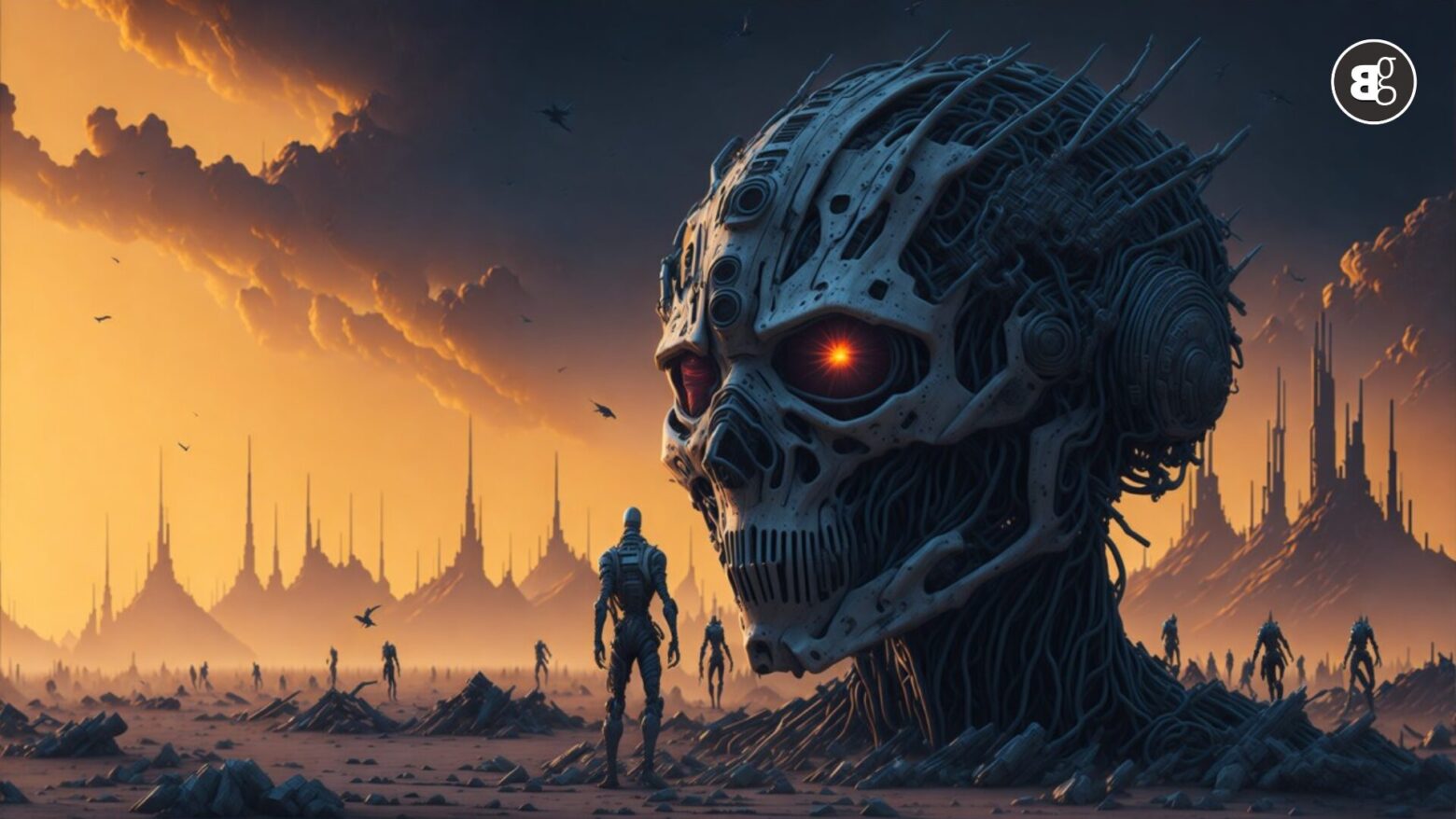
How We Can Avoid the “AI Apocalypse”
To make sure AI remains a force for good, experts suggest a few key steps:
-
Global Regulations: Governments must work together to create rules around AI safety and ethics.
-
Education: People need to learn how AI works so they can use it wisely instead of fearing it blindly.
-
Human-AI Collaboration: Instead of replacing humans, AI should augment human creativity and decision-making.
-
Transparency: Companies developing AI must be open about how their systems make decisions.
-
Ethical Limits: There should be clear boundaries on military, surveillance, and manipulative uses of AI.
In short: The best defense against destructive AI isn’t fear it’s responsibility.
Conclusion: AI Won’t Destroy the World But It Could Change It Forever
AI isn’t an unstoppable monster waiting to end humanity. It’s a reflection of us our intelligence, our flaws, and our choices. If we use AI responsibly, it can make the world healthier, safer, and more efficient. But if we chase profit and power without ethics, it could magnify inequality, misinformation, and conflict.
The future of AI isn’t written yet and that’s both the danger and the opportunity.
So, will AI destroy the world? Probably not. But how we use it will define the world our children inherit.
FAQs: Will AI destroy the world
No 1. Can AI really become smarter than humans?
AI can process data faster, but it still lacks consciousness and emotional understanding. True “superintelligence” remains a theoretical concept.
No 2. Which jobs are most at risk from AI?
Repetitive and data-driven jobs like customer support, data entry, and transport face the most risk. But AI also creates roles in tech, education, and creative fields.
No 3. How can we make AI safer?
By enforcing ethical guidelines, increasing transparency, and ensuring global cooperation on AI safety research and data protection.


