Hassan Khan
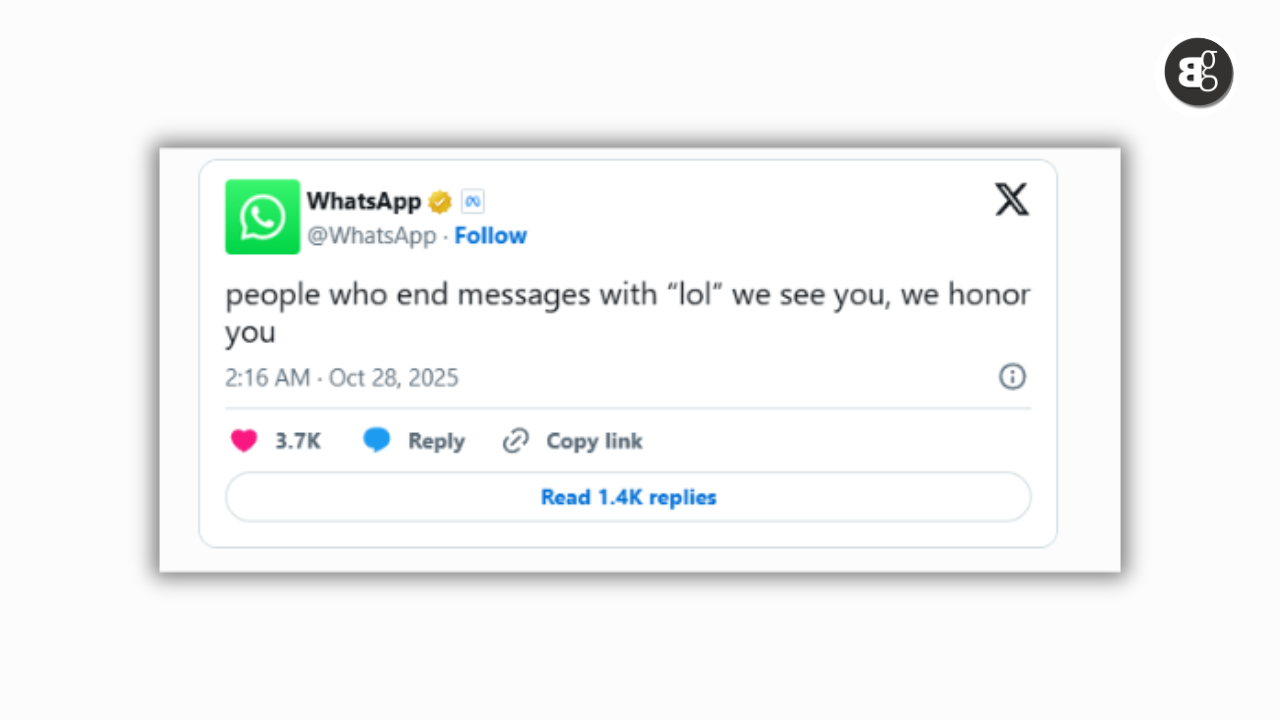
On October 27 / 28, the official WhatsApp account on X (formerly Twitter) posted:
“People who end messages with ‘lol’ we see you, we honor you.”
The post drew more than 5 million views almost immediately, but what was meant as a playful nod to texting culture instead unleashed a wave of user anxiety about privacy.

Why users panicked
The phrase “we see you” struck a nerve. To many, it seemed more than a joke it sounded like an admission that WhatsApp could read private chats. That triggered hundreds of comments like:
-
“So end-to-end encryption is just a lie?”
-
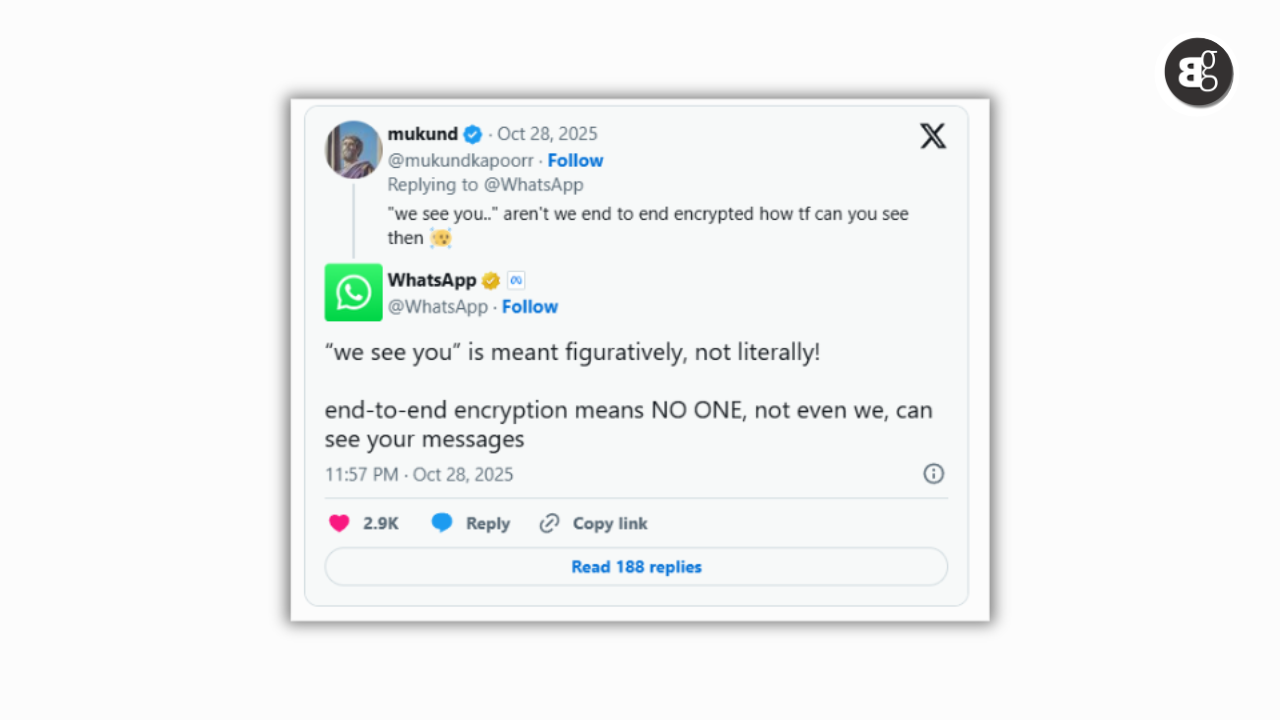
“How can you see when no one can read my messages?”
Since WhatsApp has long marketed itself on the promise of end-to-end encryption (E2EE) meaning only sender and recipient can access message content any suggestion otherwise causes immediate distrust.
Read More: WhatsApp’s New AI Image Generator Transforms Status Updates
WhatsApp’s response and clarification
Realising the fallout, WhatsApp quickly jumped in with a follow-up tweet:
- “ ‘we see you’ is meant figuratively, not literally! End-to-end encryption means NO ONE, not even we, can see your messages.”
- They reiterated that user chats remain protected, and the original post was simply an attempt at light far and fun engagement aimed at people who type “lol” often.
The underlying tension: trust and perception
The incident highlights the fragile trust relationship between WhatsApp and its users. With more than 3 billion users worldwide, WhatsApp’s brand promise of “Private chats” is tied up with how the public views its parent company, Meta Platforms.
Because Meta has a long history of data-privacy controversies, even the most innocent joke from one of its apps can be perceived as something more sinister. The backlash wasn’t about a real breach it was about anxiety.
What to keep an eye on
-
Messaging tone matters: What seems like harmless social-media banter can rapidly erode user trust when it touches on sensitive promises like encryption.
-
Brand vs parent company: The gap between what WhatsApp says it does and what people believe Meta does is real and the disconnect surfaced here.
-
Clarifications don’t always heal damage: Although WhatsApp clarified quickly, the initial impression (“we see you”) lingered and reminded users how carefully these platforms need to communicate.
Summary