Hajra Naz
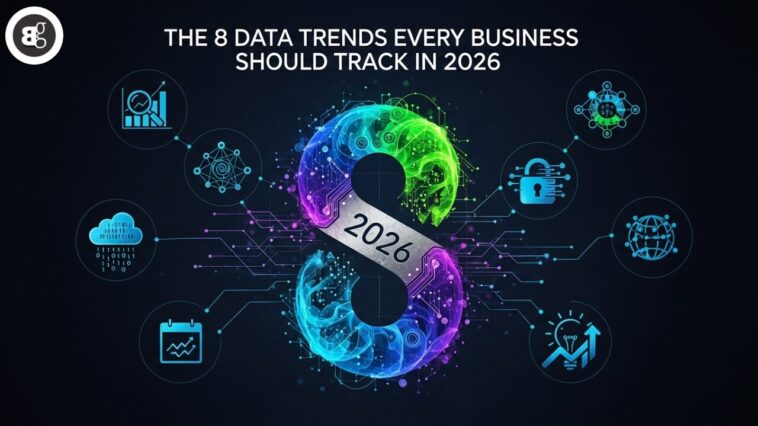
Data is the fuel powering the AI gold rush. Machines rely on it to understand the world and solve pressing problems.
Data collection, storage, and usage are evolving as fast as AI itself. The rise of agentic AI and foundation models is forcing organizations to rethink strategies. Cybersecurity threats are increasing, and governments are racing to implement robust regulations to protect data.

In 2026, data is faster, smarter, and more autonomous than ever. Here are the top trends shaping how we work with information.
1. Agent-Ready Data
AI agents will transform both enterprise and everyday life. They will complete complex tasks, manage end-to-end processes, and coordinate with third-party services. Data must be accessible and formatted for AI agents, not siloed behind legacy systems. Organizations must balance accessibility with privacy to avoid security risks. Some may need to rebuild strategies entirely to be agent-ready.
Read More: Don’t Miss These 5 Technology Trends Coming in 2026
2. GenAI For Data Engineering
Data engineering will be revolutionized by generative AI. Algorithms will clean, format, and manage ETL workflows autonomously. Security audits can be automated. Engineers will simply describe their needs in natural language, reducing friction and speeding insights.
3. Data Provenance
With data volumes exploding, tracing data origin, usage, and quality is critical. Provenance ensures transparency, authenticity, and trust. Tools that log transformations and usage events will become a core part of enterprise data strategy.
4. Compliance And Regulatory Changes
New AI-focused rules are emerging globally. Existing regulations like GDPR remain vital. The EU AI Act, Colorado AI Act, and Texas Responsible AI Governance Act create reporting obligations, transparency requirements, and penalties for violations. Organizations must stay compliant to avoid fines and reputational risks.
Read More: 7 Cybersecurity Trends for 2026 That Demand Your Attention
5. The Agentic Edge
AI agents will operate at the edge, interacting directly with devices like sensors, cameras, and autonomous vehicles. They can adjust industrial processes, negotiate deals, or personalize customer interactions in real time—all on-device. This agentic edge reduces latency and enhances efficiency.
6. Generative Data Democracy
Generative AI empowers everyone to become a data scientist. Employees can extract insights using simple natural-language prompts instead of SQL queries or dashboards. Enterprises must ensure data literacy and safe usage policies are in place to maximize benefits.
7. Synthetic Data
Collecting real-world data can be costly, risky, or violate privacy regulations. Synthetic data, generated by AI, mimics real data without exposing sensitive information. By 2026, Gartner predicts 75% of companies will use generative AI to create synthetic customer data, making it a major trend in data-driven innovation.
8. Data Sovereignty
Data rules differ by jurisdiction and national borders. Enterprises must ensure infrastructure aligns with local regulations. Sovereignty covers storage, access, and usage rights while avoiding breaches of third-party IP. Geopartitioned strategies will be key in managing global data compliance.
The 2026 data landscape will differ drastically from today. Organizations that prepare for agent-ready infrastructure, adopt generative AI tools, and implement strong governance frameworks will gain a competitive edge. Those who delay risk falling behind as AI agents become primary consumers and processors of enterprise data.
Adapting your data strategy for the agentic era is no longer optional—speed and execution will determine market leadership.
Read More: The 8 Most Impactful AI Trends of 2026 You Need to Prepare For
FAQs
1. What is agentic AI, and why is it important?
Agentic AI refers to autonomous systems that can complete complex tasks and interact with other systems or devices. It’s key for faster, smarter decision-making.
2. How will generative AI change data engineering in 2026?
Generative AI will automate cleaning, formatting, and ETL processes. Engineers can use natural language commands to generate pipelines, speeding insights.
3. Why is synthetic data becoming essential?
Synthetic data solves privacy, cost, and risk issues. It mimics real-world scenarios while keeping sensitive data safe, particularly in healthcare and finance.
4. What is data provenance and how does it build trust?
Data provenance tracks origin, usage, and quality. It ensures transparency, authenticity, and accountability in enterprise data practices.
5. How does data sovereignty affect global organizations?
Data sovereignty requires compliance with local laws on storage and usage. Enterprises must manage cross-border data regulations and IP rights carefully.