
 Hajra Naz

Silicon Valley’s interest in psychedelics goes back decades, well before the current AI boom or longevity craze. Whether that’s through countercultural experimentation in the ‘70s, modern wellness retreats and new clinical research, or simply day-to-day microdosing at work for a pick-me-up isn’t the point; it factually remains tech’s unspoken intellectual and cultural subset.
It’s not just strangers coming out to share their stories—even high-profile figures like Steve Jobs and OpenAI CEO Sam Altman, and tech entrepreneur Bryan Johnson have talked publicly about tripping. Others, from well-known investors and founders, have backed psychedelic research with money and advocacy, even as they’ve kept their use in private.

Psychedelics and the Modern Tech Elite
The revival of interest in psychedelics isn’t limited to tech leaders of yore. A growing number of entrepreneurs, executives, and investors who make up the largest market in America (and quite possibly in the world) that involves buying and selling shares in companies are doing psychedelics not to party or escape, but to perform better at work.
Psychedelics remain a long way from the mainstream, but they have made inroads with certain professional classes. This has also contributed to investment in start-ups for psychedelic-assisted therapy and mental health, drawing backing from groups like Y Combinator to billionaires such as Peter Thiel.
Bryan Johnson and the “Most Quantified Psychedelic Experiment”
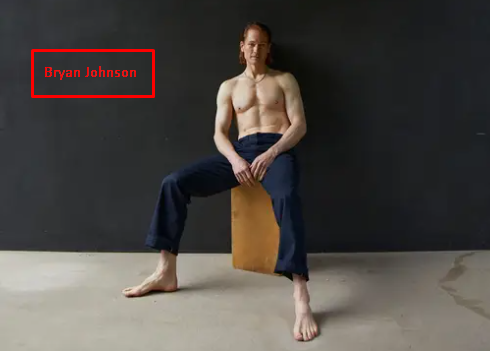
Tech entrepreneur and longevity enthusiast Bryan Johnson is the latest Silicon Valley figure to draw attention for his experimentation. Johnson, 48, first made his name in tech before becoming widely known for his extreme efforts to slow or reverse aging—an approach he says costs him roughly $2 million per year.
In one of his most unconventional experiments, Johnson livestreamed a five-and-a-half-hour magic mushroom session on X. The event included participation from his son, his father, musician Grimes, Salesforce CEO Marc Benioff, and several other business leaders.
Johnson described the session as the “most quantified psychedelic experiment in history.” During the experience, he was tracked across 249 biomarkers, underwent brain scans, and recorded numerous physiological and cognitive measurements. He has suggested that psilocybin could play a role in extending human lifespan beyond 120 years.
Johnson has also discussed using 5-MeO-DMT, a potent psychedelic compound derived from the venom of the Sonoran Desert toad (as with psilocybin and DMT, this drug is classified as Schedule I). He told the Core Memory podcast in August that he had experimented with the substance to investigate how machine intelligence interacts with human consciousness. It was so meaningful, he later got a tattoo of the 5-MeO-DMT molecule, he said.
Steve Jobs and the Countercultural Roots of Silicon Valley
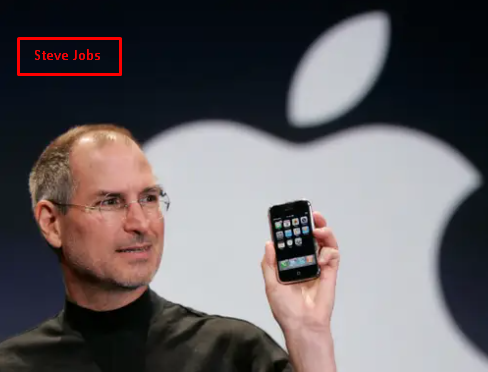
Late Apple cofounder Steve Jobs was one of the earliest and most vocal tech leaders to discuss his experiences with psychedelics. In his early 20s, Jobs pursued spiritual meaning through meditation, travel, and LSD use.
“I came of age at a magical time,” Jobs told his biographer Walter Isaacson.
Jobs described LSD as a “profound experience” and later said it was among the most important influences in his life. He believed it helped shape his values, pushing him to prioritize creating meaningful products over financial success.
Between 1972 and 1974, Jobs reportedly used LSD between 10 and 15 times before stopping entirely. He later documented this history in a 1988 questionnaire for a government security clearance.
Read More: Steve Jobs: One habit separates high performers from those who fall short.
Sam Altman on Psychedelics and Personal Transformation
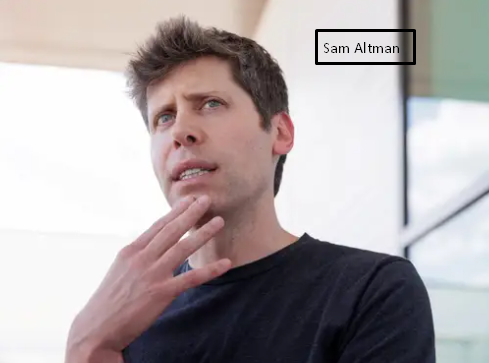
OpenAI cofounder and CEO Sam Altman has also spoken openly about the impact psychedelics had on his life. In a 2024 appearance on the Life in Seven Songs podcast, Altman said psychedelic experiences were among the most transformative moments he has had.
Altman described himself as having once been “very anxious” and “unhappy,” saying he now feels notably calmer. He credited a guided psychedelic retreat in Mexico with driving that change.
“If you had told me that one weekend-long retreat was going to significantly change that,” Altman said, “I would have said absolutely not. And it really did.”
While Altman acknowledged occasional psychedelic use at Burning Man, he said those experiences were relatively minor. The most impactful sessions, he explained, involved intentional travel and professional guidance.
Altman has also invested in several medical startups, including companies focused on psychedelic-assisted therapy. He previously served as board chairman of Journey Colab, a startup developing clinical psychedelic treatments for addiction.
Read More: Sam Altman says it would be a failure if OpenAI isn’t run by an AI CEO first
Sergey Brin and Quiet Investment in Psychedelic Research

The Google cofounder Sergey Brin has tried psilocybin, as the Wall Street Journal reported. Brin hasn’t publicly described his own experiences and did not respond to a request for comment, but it seems his interests in the arena go beyond investing.
Brin has supported a nonprofit investment firm called Catalyst4, which committed $15 million to Soneira, a startup that is developing hallucinogenic treatments for mental health. Brin is also tied to Burning Man, the annual gathering of tech leaders who venture into unusual ideas and experiences.
Bill Gates and Early Experimentation
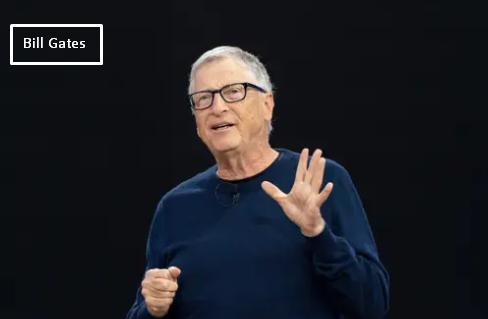
Before becoming a tech titan and philanthropist, Bill Gates also experimented with psychedelics. Gates has spoken publicly about his experiences with LSD, including during an appearance on The Tonight Show Starring Jimmy Fallon.
He shared a story involving Steve Jobs, who once suggested that Gates try acid to improve his design sensibility. Gates joked that he “got the batch that was about code,” not aesthetics.
In his memoir Source Code: My Beginnings, Gates detailed his early experimentation. He initially declined LSD in high school but tried it later as a senior. He described the experience as exhilarating but confusing, particularly when followed by a dental procedure the next morning.
He later used LSD again during college, calling the experience “cosmic,” but said it made him uneasy about memory loss—prompting him to stop using psychedelics altogether.
Read More: Bill Gates Reveals the Jobs AI Won’t Replace
A Notable Holdout: Demis Hassabis

Not every tech leader is interested in psychedelic exploration. Google DeepMind CEO Demis Hassabis has explicitly said he has no desire to experiment with substances like LSD.
In a June interview, Hassabis explained that gaming, science fiction, and scientific study—not psychedelics—helped him explore questions about reality. As a neuroscientist, he said he is cautious about anything that could affect mental acuity.
“I’ve done too much neuroscience,” Hassabis said. “I’ve finely tuned my mind to work in this way. I need it for where I’m going.”
Psychedelics as a Mirror of Tech Culture
Taken together, these stories highlight how psychedelics continue to reflect Silicon Valley’s broader culture—one driven by experimentation, self-optimization, and a willingness to challenge conventional limits. Whether embraced as tools for creativity and insight or rejected in favor of discipline and focus, psychedelics remain a revealing lens into how tech leaders think about the mind, innovation, and the future.


