Hajra Naz
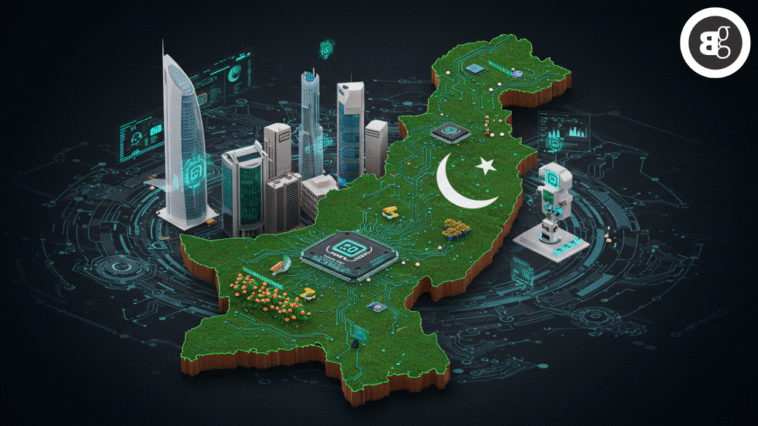
As Pakistan rises among the top five global users of Artificial Intelligence (AI) tools, the country is changing fast. AI is reshaping the economy and society. It creates jobs and drives automation but also brings ethical challenges. Pakistan’s heavy reliance on AI calls for strong policies. The nation needs new rules, better education, and digital readiness.
Pakistan Ranked 4th in Global AI Usage
A survey by the Schwartz Reisman Institute for Technology and Society ranked Pakistan fourth in AI adoption. The survey covered 21 countries. Results show Pakistanis mostly view AI in a positive way. But many also see challenges ahead. Concerns about jobs, ethics, and skills are growing. The outlook is hopeful, yet cautious.

-
26% of respondents in Pakistan expressed a very positive outlook on AI.
-
39% described their view as fairly positive.
-
22% remained neutral.
-
Only 13% reported negative sentiments (8% fairly negative, 5% very negative).
Globally, India leads the survey with 43% of respondents showing strong optimism toward AI, followed by
- Kenya (29%)
- Brazil (27%)
- Pakistan.
Read More: Impact of AI on Jobs in UAE: How companies are reshaping teams without cutting jobs
Optimism in Emerging Economies vs. Skepticism in Developed Nations
Experts note that emerging economies like Pakistan, India, and Brazil are more hopeful about AI because they see it as a pathway to economic growth, innovation, and better public services.
By contrast, advanced economies—such as the US, France, and Australia—show higher skepticism. In the US, 34% of respondents reported negative views of AI, citing concerns about misinformation, political bias, and job displacement in white-collar sectors.
Indigenous AI Innovations in Pakistan
Pakistan isn’t just using AI—it’s also developing homegrown solutions. One such innovation is Zahanat AI, an indigenous chatbot available in local languages. Its founders argue that ethical and inclusive AI will play a central role in shaping Pakistan’s digital economy.
At a UNESCO dialogue on AI for Humanity, over 25 key stakeholders from academia, tech institutions, and the private sector emphasized the urgent need for national AI ethics and governance frameworks.
Jobs, Skills, and the AI Disruption
With over 146 million broadband users, Pakistan has massive potential to scale AI-driven solutions in education, healthcare, finance, and governance. However, disruption is already evident:
-
A P@SHA survey found that some companies are reducing hiring because AI is replacing human roles in IT and customer service.
-
AI apps are helping small businesses automate tasks, but at the same time, they’re weakening critical thinking skills when over-relied upon.
-
Integration Xperts CEO Umair Azam warned at the CIO Global 200 Summit that while AI boosts efficiency, misuse can harm trust, creativity, and decision-making in organizations.
He also suggested appointing AI Champions in companies—specialists responsible for ensuring AI is used responsibly and in line with ethical standards.
The Need for a National AI Policy
To balance growth with responsibility, experts say Pakistan must:
-
Build a robust National AI Policy addressing ethics, privacy, and data protection.
-
Develop AI-focused education programs to prepare young people for the future of work.
-
Encourage local AI startups to reduce reliance on foreign platforms.
-
Ensure inclusive access so rural communities and underprivileged groups benefit from AI tools.
-
Establish public-private partnerships for sustainable AI innovation.
Read More: AI Powered Meeting Assistants: How They Transform Work Productivity
FAQs
1. Why is Pakistan among the top global users of AI?
Pakistan has a large youth population. Broadband penetration is high. Interest in digital tools is growing. These factors drive rapid AI adoption. It is common in education, freelancing, and business automation.
2. Will AI replace jobs in Pakistan?
Yes, some jobs are at risk. IT roles, customer service, and office tasks are being automated. Yet, AI is also opening doors. New work is growing in data science, AI engineering, and digital entrepreneurship.
3. What is Zahanat AI?
Zahanat AI is Pakistan’s first local chatbot. It supports users in native languages. It gives a homegrown option. It competes with global AI platforms.
4. How can Pakistan benefit from AI in public services?
AI can boost governance. It enables smart healthcare diagnostics. It offers automated legal aid. It supports predictive policing. It improves e-governance. It helps cut corruption and inefficiency.
5. What steps should Pakistan take to ensure ethical AI adoption?
Pakistan needs a clear AI policy. It must focus on ethics and inclusivity. Education and reskilling are vital. The country should also work with global bodies. This ensures best practices in adoption.