Hajra Naz
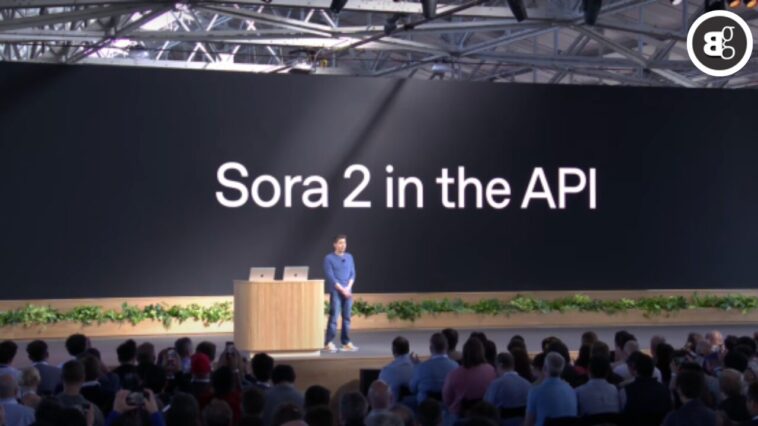
OpenAI is turning up the heat in the developer world. At its Dev Day event on Monday, the company announced major upgrades across its platform — including GPT-5 Pro, Sora 2, and a smaller, faster, and cheaper voice model for its API.
The updates are part of OpenAI’s bigger plan to attract more developers, startups, and enterprise clients to its growing ecosystem.

GPT-5 Pro: Smarter, Deeper, and Built for Real-World Use
The star of the show was GPT-5 Pro, OpenAI’s most advanced language model yet. It’s designed for industries that need high-level reasoning, such as finance, law, healthcare, and research.
OpenAI CEO Sam Altman said GPT-5 Pro offers better accuracy, longer context handling, and faster response times. He described it as “a big step forward in reliability and depth of understanding.”
Developers can now access GPT-5 Pro through OpenAI’s API and start integrating it into apps, chatbots, and workflows.
Read More: OpenAI’s Fastest, Smartest GPT- 5 is here – Free for All Users
Voice Tech Gets Cheaper and Faster
Altman also emphasized how voice will shape the future of AI interaction. To make that future more accessible, OpenAI launched gpt-realtime mini, a smaller, low-latency voice model available in the API.
It’s 70% cheaper than OpenAI’s previous advanced voice model — but with the same voice quality and natural tone. It supports real-time speech streaming, making it ideal for AI assistants, customer support bots, and accessibility tools.
Developers can now build instant-response AI voice apps without worrying about high costs or lag.
Sora 2: Next-Gen AI Video Generator
OpenAI also introduced Sora 2, its new AI video and audio generation model.
Developers can now use Sora 2 through the API to create hyper-realistic, cinematic videos directly from text prompts.
Sora 2 powers the recently launched Sora app — a TikTok-style platform filled with AI-generated short videos.
Users can make clips of themselves, their friends, or creative scenes using just a prompt.
Altman said,
“Developers now have access to the same model that powers Sora 2’s stunning video outputs right inside your own app.”
Read More: OpenAI Introduces Sora, a TikTok Competitor, with Its Latest Sora 2 Model
What’s New in Sora 2
The new model offers:
- Better realism — smoother, more physically consistent motion
- Synchronized audio — ambient sound, music, and effects that match the scene
- Creative control—camera angles, lighting, and visual style adjustments
Altman explained,
“You can start with an iPhone shot and ask Sora to expand it into a wide, cinematic view. The model now understands sound and visuals together — it doesn’t just generate speech, but full soundscapes.”
He also revealed how Sora 2 is being used beyond entertainment — for concept design, advertising, and product development.
For example, Mattel designers are already using Sora 2 to turn sketches into toy concepts, part of OpenAI’s new partnership with the Barbie maker.
Building the Future of AI Development
The Dev Day announcements highlight how OpenAI is evolving from a model company to a developer platform. With GPT-5 Pro, Sora 2, and GPT-Realtime Mini, developers now have tools for language, voice, and video—all in one API.
It’s a clear signal that OpenAI wants to own the AI development stack, from enterprise automation to consumer creativity tools.
FAQs
1. What is GPT-5 Pro?
GPT-5 Pro is OpenAI’s newest large language model, designed for tasks that need deep reasoning and high accuracy, such as legal, medical, and financial work.
2. What makes GPT-Realtime Mini special?
It’s a smaller, cheaper voice model for developers. It delivers low-latency, high-quality speech — perfect for real-time AI assistants and chatbots.
3. What can Sora 2 do?
Sora 2 can generate full videos and sound from text prompts. It offers realistic visuals, synchronized audio, and detailed creative control.
4. How can developers access these models?
All three — GPT-5 Pro, Sora 2, and gpt-realtime mini — are available in OpenAI’s API. Developers can start integrating them into their apps now.
5. Why is OpenAI focusing on developers?
OpenAI aims to build a powerful developer ecosystem, giving creators access to advanced AI tools for building apps, products, and creative experiences.