Hajra Naz
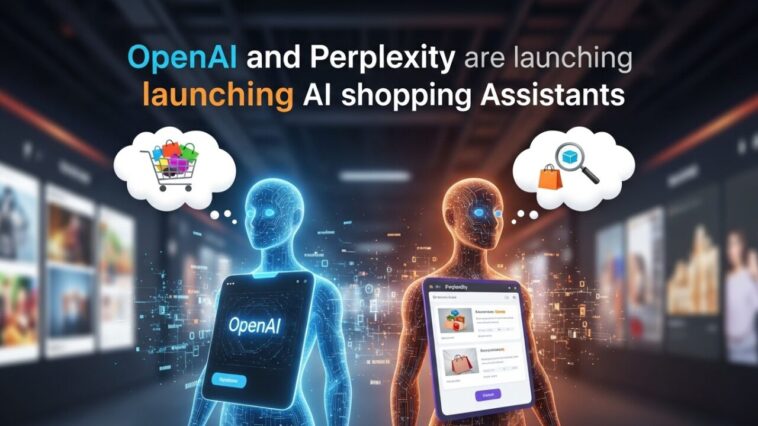
Holiday shopping is coming fast. OpenAI and Perplexity announced new AI shopping tools this week. Both features sit inside their chatbots. Users can research items and compare options with simple prompts.
The tools work in similar ways. OpenAI says you can ask ChatGPT to find a gaming laptop under $1000 with a screen over 15 inches. You can also upload photos of a designer item and ask for cheaper matches. These prompts tie into trending retail AI and e-commerce AI searches.

Perplexity highlights how its memory helps with shopping queries. The chatbot uses past details, like your city or job, to adjust recommendations. This creates tighter search results for personal needs.
Read More: Best AI Assistants (Chatbots) in 2025
Adobe expects AI-assisted shopping to grow by 520% this season. That shift may help AI shopping startups like Phia, Cherry, and Onton. But OpenAI and Perplexity are expanding fast. Some founders wonder if smaller teams can keep their footing as large chatbots move deeper into AI shopping experiences.
Zach Hudson, CEO of Onton, does not seem worried. His platform focuses on interior design. He believes niche AI shopping tools will always offer stronger results than broad chatbots.
Hudson says this comes down to data quality. ChatGPT and Perplexity depend on search indexes from Bing or Google. Their answers rely heavily on the top few links. In his view, that limits the accuracy of general chatbots for detailed retail searches.
Julie Bornstein, CEO of Daydream and a longtime e-commerce leader, agrees. She told TechCrunch that fashion search never worked well. Finding the right dress is different from picking a TV. Fashion needs deep context about styles, fabrics, silhouettes, and occasions. She says AI shopping tools need domain-specific data to reach that level.
Startups such as Onton build their own datasets. They train on cleaner and more complete catalogs in fashion or home goods. This helps the models recognize details that broad LLMs miss. Onton built a data pipeline that sorts hundreds of thousands of interior items with better structure. Hudson says this gives niche tools a serious edge.
Read More: The Rise of AI Assistants: A New Era of Smart Tech
But he also warns that startups depending on off-the-shelf LLMs will face trouble. If a product is only a conversation layer on a general model, it gets drowned out by bigger players.
OpenAI and Perplexity hold different advantages. Their users are already inside their apps. They also have the reach to set up partnerships with major brands. Daydream and Phia send shoppers to retailer websites to complete a purchase. OpenAI and Perplexity go further. They use Shopify and PayPal integrations. Users can check out inside the chatbot.
Both companies still need a path to profit, given the high cost of computing. Retail ads may become a solution. Google and Amazon built strong revenue streams this way. OpenAI and Perplexity might follow. But this could add new search problems for shoppers.
Bornstein says specialized models will win long term. Travel, fashion, and home goods have their own decision patterns. Vertical AI shopping tools can read those patterns better than broad models.
Read More: Say Goodbye to Tabs? Perplexity Launches Comet, Its New AI-Powered Browser
FAQs
1. How do AI shopping tools help with holiday purchases?
They compare prices, find matches, filter features, and cut research time through simple prompts.
2. What makes niche AI shopping tools different?
They use custom datasets focused on one category, giving sharper results for fashion, home goods, or travel.
3. Does Perplexity’s memory change shopping results?
Yes. It factors in your location, job, and past details to shape recommendations.
4. Why are OpenAI and Perplexity entering e-commerce AI?
They need stronger revenue streams and see value in integrating retail partners inside their chatbots.
5. Will general chatbots replace AI shopping startups?
Not likely for niche needs. Startups with specialized data and focused catalogs still hold an advantage.