Hajra Naz
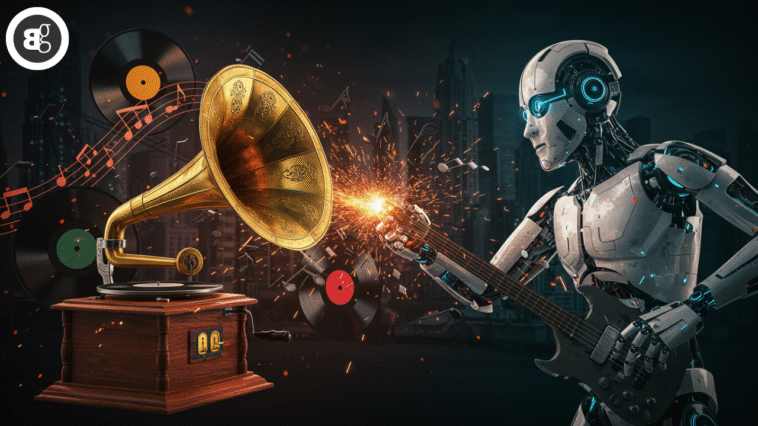
The global music industry is raising alarms about AI in music. It says major developers are guilty of widespread copyright infringement.
The International Confederation of Music Publishers, or ICMP, speaks for publishing rights worldwide. It released findings from a two-year probe. The report claims leading firms like OpenAI, Suno, Udio, and Mistral trained models on copyrighted songs without consent.

The ICMP says these firms copied lyrics, melodies, and vocal styles. They even drew from stars like The Beatles and Mariah Carey. The data often comes from sites like YouTube, Spotify, and other licensed services. It is then fed into AI tools that make songs similar to the originals. Publishers argue this is copyright theft. They stress that the content is unlicensed, unpaid, and reused for profit.
Legal Battles Already Underway
The controversy arises as lawsuits reshape the relationship between AI and the creative world.
In June 2024, the Recording Industry Association of America sued Suno and Udio. It was one of the first big legal fights over AI-generated music. At the same time, major labels such as Universal, Warner, and Sony began discussions with AI firms. Their goal is to set up clear licensing rules.
There are small signs of progress. Eleven Music signed a deal with Kobalt Music. The agreement shows that AI firms can work with rights holders. Yet industry leaders warn these single deals are not enough. They say bigger action is needed to fix the problem.
Read More: YouTube Is Now Letting Creators Make Free Background Music Using AI
The Wider Copyright Debate
The issue extends far beyond music. Earlier this year, Anthropic, the developer of the Claude AI model, agreed to pay at least $1.5 billion in settlements related to lawsuits over scraping books for training purposes. That case set a clear precedent: AI firms are expected to compensate creators when their work is used to train algorithms.
This expectation is now at the heart of the music industry’s fight. Publishers argue that without enforceable protections, AI-generated music could erode the livelihoods of songwriters, musicians, and producers. Projections suggest that artist income could drop more than 20% in the next four years if unlicensed practices continue unchecked.
Calls for Global Regulation
To counter this trend, the ICMP is urging governments to enforce greater transparency in how AI companies source their training data. They want legal safeguards that ensure copyrighted works are licensed, credited, and properly compensated.
Europe is already moving in this direction. The European Union’s Artificial Intelligence Act, adopted earlier this year, requires companies to disclose training datasets and could serve as a global model. However, the U.S. and other regions have yet to finalize comparable policies.
For now, the standoff highlights the growing tension between creative industries that depend on intellectual property and AI firms eager to advance their technology at scale. The outcome of these disputes could redefine the balance between innovation and copyright in the digital age.
Read More: Can You Tell If That Song Is AI-Generated or Human Written? Here’s How to Check
FAQs
1. Why is the music industry accusing AI companies of copyright infringement?
Publishers say AI firms are using copyrighted lyrics, melodies, and vocals without permission or licensing agreements, violating copyright law.
2. Which AI companies are under scrutiny?
Reports highlight OpenAI, Suno, Udio, and Mistral as firms accused of training music models on unlicensed material.
3. Has anyone taken legal action yet?
Yes. In 2024, the RIAA filed lawsuits against Suno and Udio. Other negotiations are ongoing between major record labels and AI firms.
4. Are licensing agreements possible?
Yes. Eleven Music signed a deal with Kobalt Music, showing that licensing frameworks are achievable when companies cooperate with publishers.
5. What happens if this issue is not resolved?
Without regulation and fair licensing, experts warn that artists’ incomes could drop by over 20% in four years, while AI firms continue to profit from unlicensed use of music.