Huma Siraj
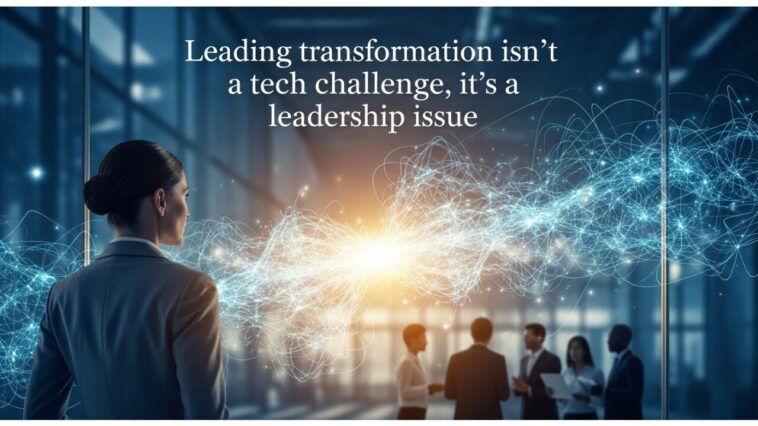
The Widespread Misconception in Business
In nearly every boardroom, the same assumption echoes: “Our business transformation will succeed if we purchase the right technology.”
This belief, though appealing, is deeply flawed. Organizations invest millions in new systems, digital tools, and automated processes expecting instant results. Vendors and consultants often reinforce this illusion by promising that technology will “revolutionize” operations overnight.

But transformation is never just about upgrading tools. It’s about upgrading people, culture, and mindset.
When the excitement of a new system fades and old problems resurface, leaders often realize something critical the issue wasn’t the technology at all.
Real Transformation Is a Leadership Challenge
When I worked with a major financial services firm struggling with ongoing IT disruptions, the company had spent heavily on infrastructure, new monitoring systems, and process redesign. Yet, nothing truly changed.
Systems continued to fail, employees were demotivated, and leadership frustration was growing. After multiple “fixes” failed, we discovered that the problem wasn’t technical, it was cultural.
The organization had developed a “culture of consensus” where everyone talked, but no one decided. Quick fixes were favored over sustainable solutions. Accountability was diluted, and meetings often ended with no clear ownership.
The real barrier wasn’t code or hardware it was human behavior.
Breaking the Cycle: Empowering the Frontline
We decided to rebuild from the inside out. The principle was simple but powerful:
“Senior leaders may know what’s broken,
but the best people to fix it are those who face it every day.”
We formed cross-functional teams composed of people directly involved in daily operations not just managers. Each member devoted just 10% of their time to 90-day improvement cycles focused on specific, measurable goals.
This approach gave employees ownership and accountability, without overwhelming them. Gradually, morale improved. Decision-making became faster. Most importantly, problems were addressed at the root not patched over.
Within months, outages decreased, internal communication improved, and team confidence surged.
The difference wasn’t in the software , it was in leadership behavior and empowerment.
Why Technology Alone Fails
Technology is an enabler, not a savior.
Without clear vision, ownership, and follow through, even the most advanced systems will fail to deliver results.
Some common reasons why technology-driven transformations fail include:
-
Lack of employee buy in or understanding
-
Undefined success metrics and accountability gaps
-
Over-reliance on consultants instead of internal leadership
-
Ignoring the importance of culture and trust
-
Leadership that focuses on tools instead of teamwork
Transformation succeeds only when technology and leadership evolve together.
What Effective Leaders Do Differently
Leadership in transformation isn’t about controlling every decision, it’s about creating clarity, direction, and trust.
No 1. Move Beyond Consensus
Leaders often confuse agreement with alignment. Endless discussions may make everyone feel heard but rarely lead to progress.
Instead, assign one decision owner, set clear timelines, and after input, decide and commit.
Encourage the team to “disagree and commit” once a decision is made, everyone works toward it.
No 2. Empower, Don’t Micromanage
Set the goals, guardrails, and resources. Let the team decide how to achieve them.
Hold biweekly check-ins to remove obstacles not to re-decide their work. Empowerment without interference builds confidence and ownership.
No 3. Create a Learning Culture
Sustainable transformation thrives on reflection and growth.
Adopt three simple habits:
-
Monthly Show and Tell: Showcase progress and lessons learned.
-
Weekly Commitment Reviews: Evaluate which promises were kept or missed and why.
-
Post-Miss Reflection: After every setback, conduct a short learning review to identify takeaways.
Reward progress, innovation, and resilience not just outcomes.
No 4. Use Data for Cultural Change
Analytics should not only track performance but also measure culture.
Monitor indicators like:
-
Average time from problem to decision
-
Percentage of tasks with clear ownership
-
Employee engagement and learning participation
Data driven culture building helps leaders see not just what is happening, but why.
The Human Side of Transformation
Leaders who focus solely on systems forget that organizations are made of people. Employees don’t resist change they resist uncertainty and lack of purpose.
When leaders communicate why change matters, link it to shared values, and involve employees early, transformation becomes something people want to be part of not something forced upon them.
Empathy, clarity, and recognition go a long way. When individuals feel heard and trusted, they contribute ideas, take ownership, and drive innovation faster than any tool ever could.
The Leadership Mindset Shift
True transformation begins when leaders move from command and control to coach and empower.
They must redefine their role from being the “expert problem solver” to being the enabler of problem solvers.
As one executive put it:
“My job isn’t to have all the answers, it’s to make sure the right people are asking the right questions.”
When leaders create a safe environment for experimentation, mistakes become learning opportunities instead of failures. That’s when real, lasting change takes root.
Final Takeaway: Leadership Over Technology
The message is clear: even the best technology cannot overcome a weak culture or poor leadership alignment.
Transformation is not about installing a new system, it’s about inspiring a new way of thinking.
When leaders build accountability, trust, and a shared sense of purpose, technology becomes a tool of progress not a false promise.
Because ultimately, transformation is not a technological challenge.
It’s a leadership challenge.