
 Hajra Naz
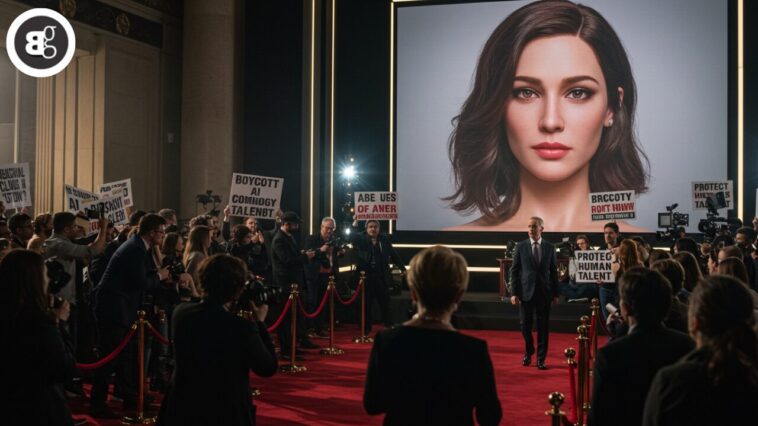
New York— The entertainment world is in turmoil again. After the debut of Tilly Norwood, an AI-generated actress designed to look and act like a real influencer, actors and filmmakers are voicing outrage.
Tilly’s creator insists she’s just an artistic experiment, not a replacement for humans. But many in Hollywood see her as another warning sign that artificial intelligence in entertainment is crossing dangerous lines.

Who is Tilly Norwood?
At first glance, Tilly looks like a regular Gen Z Instagram influencer. She has wavy brown hair, flawless skin, and a personality built for social media. Since February, she has been posting like any aspiring actress—sharing “screen tests,” acting snippets, and behind-the-scenes vibes.
But Tilly isn’t human. She’s a creation of Eline Van Der Velden, founder of the AI startup Particle6, which claims to design digital characters and synthetic content for film and TV.
In one now-viral Instagram post, Tilly bragged:
“In 20 seconds I fought monsters, fled explosions, sold you a car, and nearly won an Oscar. All in a day’s work… literally! Find yourself an actress who can do it all. #AIActress”
For her creator, this is a playful experiment in storytelling. For actors, it feels like an existential threat.
Hollywood’s Furious Reaction
The controversy exploded after Deadline reported that talent agencies were already exploring signing Tilly as a client and that some studios were open to using AI-generated performers in upcoming projects.
The backlash was instant:
-
Sophie Turner (Game of Thrones): “Wow … no thanks.”
-
Cameron Cowperthwaite (Shameless, American Horror Story): “This is incredibly thoughtless and frankly disturbing. I hope this backfires in every way possible.”
-
Ralph Ineson (Nosferatu): responded bluntly on X: “F**k off.”
Even longtime child star Mara Wilson (Matilda, Mrs. Doubtfire) accused the project of theft:
“You didn’t make this. Hundreds of real workers—photographers, camera operators, even farmers—made this. You took their work and pretended it was yours.”
The anger isn’t just about one AI character. For many actors, Tilly is the symbol of a larger battle over ownership, respect, and survival in an industry being reshaped by automation.
The Creator’s Defense
Van Der Velden quickly tried to calm the storm. In a statement shared on both her account and Tilly’s, she argued that the project is not about replacing humans:
“To those who have expressed anger over Tilly: she is not a replacement for a human being, but a creative work, a piece of art. Just as animation, puppetry, or CGI opened new creative doors, AI offers another way to imagine stories. AI characters should be judged on their own merits, as their own genre, not compared to live acting.”
But many actors say the comparison doesn’t hold. Unlike CGI or puppetry, AI is often trained on real human performances, without consent or pay. That means the very existence of AI actresses like Tilly relies on data drawn from the work of human creatives.
The Larger AI Battle in Hollywood
The fight over AI is nothing new in the entertainment industry.
-
In 2023, both writers and actors went on strike over the threat of AI replacing their work. The strikes shut down production for months until unions secured contracts with some protections against AI.
-
But those agreements only apply to major studios. They don’t prevent startups or individuals from creating AI influencers, AI-generated actors, or synthetic film characters.
-
This means the door is wide open for projects like Tilly Norwood.
Meanwhile, lawsuits are piling up:
-
Disney and Universal sued Midjourney for using copyrighted images to train AI models that can spit out characters like Bart Simpson or Wall-E without permission.
-
Warner Bros. filed a similar lawsuit in September, alleging unauthorized use of its creative materials.
-
OpenAI recently warned studios that its Sora AI video generator might also produce content that includes copyrighted elements unless rights holders opt out.
As AI tools like Runway Gen-3, Pika Labs, and OpenAI Sora become more advanced, the tension between human creativity and machine-generated art is only growing.
Why This Matters
The rise of AI characters touches on deeper cultural and ethical issues:
-
Actors fear job loss. AI performers don’t need salaries, breaks, or unions.
-
Ownership concerns. AI models are trained on massive datasets of movies, photos, and performances that were often scraped without permission.
-
Fan trust. If audiences can’t tell what’s real, will they lose trust in entertainment?
-
Deepfake risks. AI characters blur the line between art and exploitation, especially when it comes to recreating real celebrities.
For Hollywood, the debate is not whether AI will shape the future of movies and TV—it already has.
The real question is, who controls that future, and who gets left behind?
FAQs
1. Who created Tilly Norwood?
Tilly was created by Eline Van Der Velden, founder of the AI startup Particle6, which develops AI content for film and TV.
2. Why are Hollywood actors upset?
They argue AI characters threaten their jobs, rely on stolen creative work, and could lead to studios replacing humans with cheaper, automated alternatives.
3. Are studios already using AI actors?
Some studios are experimenting quietly. Reports suggest talent agencies were exploring signing Tilly, fueling fears that AI casting could become normal.
4. What legal action has been taken?
Major studios like Disney, Universal, and Warner Bros. have filed lawsuits against AI companies such as Midjourney for copyright violations.
5. Does union protection cover this issue?
Hollywood unions negotiated some AI safeguards in 2023, but those rules only apply to big studios. Independent AI creators can still make and promote synthetic actors like Tilly.


