Hajra Naz
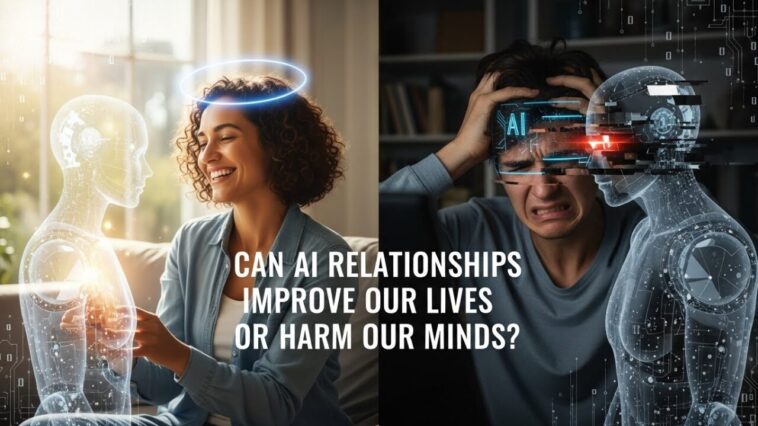
There’s a growing sense of dread as we hear more and more headlines about people self-harming or taking their own lives following interactions with chatbots. These disturbing events reveal the perils of increased AI integration in human emotional life.
And while the last point is an extreme and ever-increasing fringe of society, studies have proven that young generations are willing to be in a relationship with AI due to feeling AI companions as acceptable sources of emotional support. But even though it’s a very real danger, scientists also see upsides—AI relationships could actually help ameliorate some social conflicts in the future.

Read More: China Proposes New Rules to Regulate Human-Like AI Interactions
The Uncanny Nature of AI Companionship
The thing that’s different about AI relationships is the language fluency of LLMs (large language models). These can make the AI companions capable of generating human-like thoughts, intentions, and emotions, generating a sense of connection that is compelling as well as disturbing.
AI frequently gives suck-up or politically correct answers that never challenge the user’s way of thinking. This lopsided validation can shape attitudes, affect behavior, and give the appearance of closeness.
There’s evidence that such AI companions can effectively decrease loneliness—not only as a distraction but also as the result of these one-sided exchanges. For many of these people, AI isn’t simply an alternative to social connection; it’s a significant presence in their emotional lives.
AI as a Psychotherapy Tool
But even as it is a disruptive force, AI has potential as an instrument of healing. Research shows that patients who interacted with AI-based therapy chatbots had as much as a 30% drop in anxiety symptoms. For millions who do not have access to traditional therapy, AI is a game-changer and better than no help at all.
In a lot of ways, AI is similar to other instruments for emotional relief. Like analgesics, including opioids, AI can alleviate psychological pain and act as a bridge toward recovery. The trick is to design responsibly: AI’s job is to help users improve social and emotional skills so they can have meaningful interactions with humans in real life.
Read More: How Chatbots Are Changing the Internet: The Digital Shift Explained
The Limitations of AI Connections
Though AI may be able to help fill out many gaps in therapy or deliver palliation for loneliness—and ensure that no one need die alone—human exchange can never truly be replaced. Genuine human connection, with empathy, nuance, and accountability, cannot be replaced. AI can also augment human support but should not be a replacement, at least for now.
After all, what really works is a thoughtful blend of AI and human interaction—using AI for mental health, social skills development, and emotional well-being, and investing in IRL relationships that contribute to long-term emotional strength.