Hassan Khan
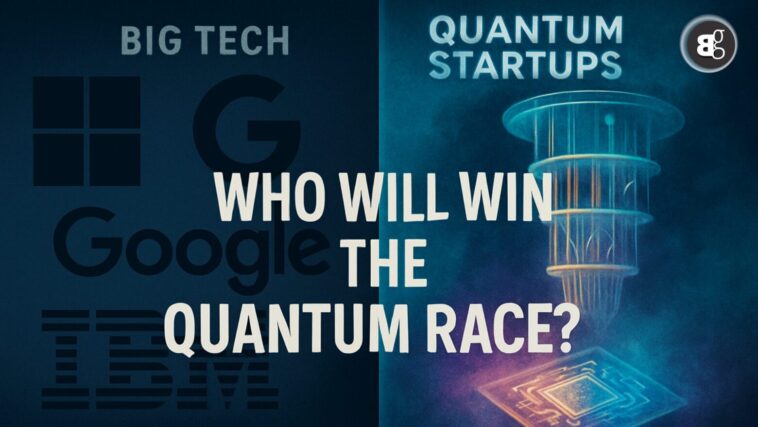
For more than a decade, Quantum Computing has lived in the shadows of hype promising revolutionary breakthroughs while delivering little that businesses could actually use. That narrative is now starting to change. What’s becoming clear is not just when quantum computing may matter, but who is most likely to profit when it finally does.
Industry analysts estimate the broader quantum sector including computing, communications, and sensing could approach a $97 billion valuation by 2035. But for Big Tech, that figure isn’t a finish line. It’s merely the starting point. The real opportunity lies in how quantum technology could accelerate drug discovery, optimize financial modeling, and unlock new materials that traditional computers struggle to simulate.

Unlike past tech booms, the smartest capital isn’t chasing flashy quantum startups. Instead, it’s flowing toward Microsoft, Alphabet (Google), and IBM companies with the financial strength to invest billions without depending on quantum revenue to survive.
This shift is already visible on Wall Street. JPMorgan Chase recently committed long-term capital toward frontier technologies, including quantum computing. The bank has spent years testing quantum algorithms internally, not as a science experiment, but as a way to improve risk modeling, fraud detection, and complex financial pricing. That kind of institutional validation signals something important: quantum’s first commercial impact will happen quietly inside enterprise cloud systems not in standalone machines sold by startups.
Pure-play quantum companies like IonQ, Rigetti, and D-Wave have delivered dramatic stock moves, but their business reality remains fragile. Revenues are limited, losses are significant, and stock prices often react more to speculation than fundamentals. These companies may eventually succeed, but for now, they behave more like early-stage biotech firms than stable technology leaders.
By contrast, Big Tech is playing a longer, smarter game. Microsoft is embedding quantum into its Azure cloud ecosystem. Google is pushing the boundaries of error correction, a critical step toward scalable quantum systems. IBM, meanwhile, is closest to turning quantum milestones into real enterprise revenue through cloud access, consulting, and hybrid computing models.
History offers a clear lesson. Major computing revolutions from GPUs to AI accelerators didn’t create overnight winners. They rewarded companies that controlled platforms, distribution, and enterprise trust.
Quantum computing is entering its most serious phase yet. And once again, it’s the giants not the gamblers who appear best positioned to benefit.