Hajra Naz
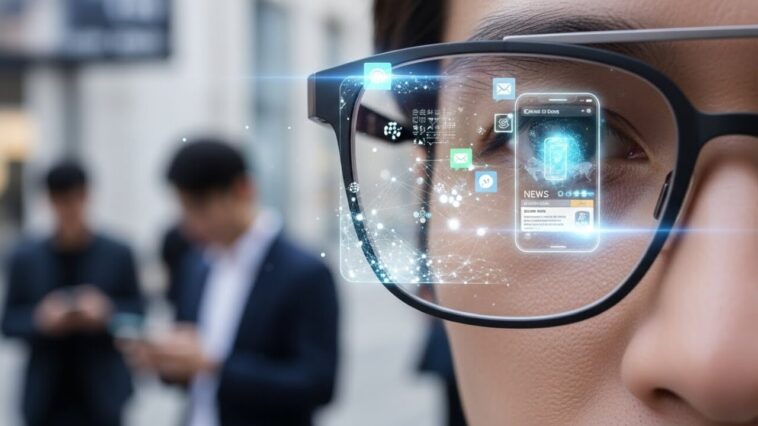
With smartphones showing signs of maturity, major technology companies are increasingly focused on what could become the next mass-market computing platform: AI-powered smart glasses. Apple, Google, and Samsung Electronics are racing to establish an early lead in a category that could reshape how users interact with digital services as early as next year.
Apple Bets on Lightweight, AI-First Wearables
Apple is reportedly working on a lightweight wearable device, often referred to as Apple Glass, with an internal debut targeted for next year and a potential consumer launch around 2027. Unlike the company’s premium Vision Pro, the new glasses are expected to forgo displays and augmented-reality features, instead emphasizing a slim form factor and AI-driven functionality designed for everyday use.

Visual Intelligence at the Core
A central feature of Apple’s glasses is expected to be visual intelligence—a system powered by multiple onboard cameras and AI models that process images and video in real time. This could enable hands-free assistance, object recognition, and the delivery of contextual information throughout the day. Health-monitoring features are also under exploration, though an Apple Korea official declined to comment on specific capabilities.
Google Returns to Smart Glasses With a New Strategy
Google confirmed last week that it will reenter the smart glasses market next year, more than a decade after the failure of Google Glass. This time, the company is pursuing a partnership-led approach, working with Samsung and eyewear brands including Gentle Monster and Warby Parker to balance design and functionality.
Gemini AI Powers Voice-First Glasses
Google’s upcoming glasses will integrate its Gemini AI system, enabling natural voice interaction without a display. The initial model is expected to be audio-only, offering services such as real-time scheduling, navigation assistance, restaurant recommendations, and instant translation.
Display-Enabled Models Also in Development
A more advanced version of Google’s glasses is also in development. This model would feature transparent lenses acting as a head-up display, projecting navigation cues, captions, and contextual information directly into the user’s field of view while maintaining a discreet appearance.
Meta’s Early Lead Sets the Competitive Bar
The renewed push into smart glasses comes as competition intensifies. Meta currently dominates the global smart glasses market, capturing more than 60 percent of market share last year through its partnership with Ray-Ban. Meta’s success has shown that consumer demand exists when AI features are paired with a familiar eyewear design.
A Post-Smartphone Platform in the Making
Industry analysts increasingly view AI glasses as a potential successor to smartphones, offering always-on assistance without constant screen use. Whether Apple, Google, or Samsung can challenge Meta’s early lead may depend on how seamlessly AI is integrated into daily life—and how quickly consumers are willing to adopt a new device worn directly on their faces.