Hajra Naz
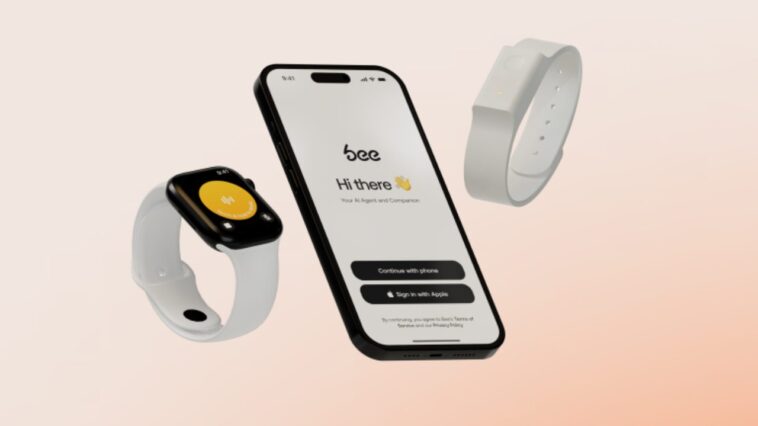
From smart rings and TVs to screens, pins, and even ice cube makers, AI was everywhere at this year’s Consumer Electronics Show (CES) in Las Vegas. Nearly every major tech company showcased how artificial intelligence is being built into everyday devices.
For Amazon, CES served as a coming-out party for one of its newest acquisitions: Bee, an AI-powered wearable that can be worn as a clip-on pin or a bracelet.

Amazon’s Expanding AI Device Strategy
Amazon is no stranger to consumer AI. The company already has Alexa, whose upgraded version, Alexa+, can now run on 97% of the hardware devices Amazon has shipped. But Bee represents something different.
Unlike Alexa, which is primarily designed for use inside the home, Bee gives Amazon a way to extend its AI presence beyond the living room and into daily, on-the-go life.
Read More: Amazon Brings Alexa+ to the Web With Launch of Alexa.com
What Bee Does—and Why It’s Different
Bee is largely designed to record conversations, including meetings, interviews, lectures, and classes. But it also functions as a personal AI companion.
The device has access to world knowledge and learns about its user through recorded conversations and approved integrations. These can include Gmail, Google Calendar, phone contacts, and Apple Health, depending on what the user allows.
Over time, Bee builds an understanding of how you work, communicate, and organize your life.
Why Bee Doesn’t Replace Alexa
At first glance, Amazon’s acquisition of Bee might seem redundant. The company has already tried to bring Alexa into wearables like earbuds and smart glasses. Those products, however, struggled against competition from Apple’s AirPods and Ray-Ban Meta AI glasses.
Amazon appears to recognize this. Rather than forcing Alexa into every form factor, it’s bringing Bee into the fold as a separate but complementary AI.
“We see each other as complementary friends,” Bee co-founder Maria de Lourdes Zollo said in an interview at CES. “Bee has the understanding of outside the house, and Alexa has the understanding of inside the house.”
Read More: Amazon’s Ring introduces face-scanning AI, raising privacy concerns
A Future Where Bee and Alexa Converge
That doesn’t mean Bee will be absorbed into Alexa anytime soon. Daniel Rausch, Amazon’s vice president of Alexa, said the company views Bee as an “important and lovable experience.”
He described Bee as a deeply personal and engaging AI while acknowledging that a future convergence between the two assistants is likely.
“When you have access to these AI experiences throughout the day, continuously, we’re going to be able to do so much more for customers,” Rausch said.
How Bee Learns From Its Users
Bee adapts to its users by learning their patterns, habits, and commitments. This allows it to suggest to-do items, reminders, and follow-ups throughout the day.
Early users include:
-
Students recording lectures
-
Elderly users who struggle with memory
-
Professionals who speak for a living and don’t want to manually take notes
“They just want a place where everything they said is summarized,” de Lourdes Zollo said.
Bee builds what she described as a personal knowledge graph, allowing users to chat with the AI about what happened during their day—and even how their habits change over time.
Privacy, AI Models, and Limitations
Like Alexa, Bee uses a mix of AI models under the hood. The company is also exploring adding Amazon’s AI models into that stack.
After transcribing conversations, Bee discards the audio, which helps address privacy concerns but limits certain professional use cases where playback is required for accuracy.
Read More: Amazon Launches Ultra-Fast 30-Minute Delivery in the U.S.
What’s Next for Bee
Looking ahead to 2026, Bee has more features on the way. Recent additions include voice notes, templates, daily insights, and other productivity tools.
The company’s eight-person team, based in San Francisco, is working closely with Amazon and already employs many hardware and Alexa engineers.
“There are endless possibilities now,” de Lourdes Zollo said. “That’s one of the reasons we’re excited to be part of Amazon.”