Hassan Khan
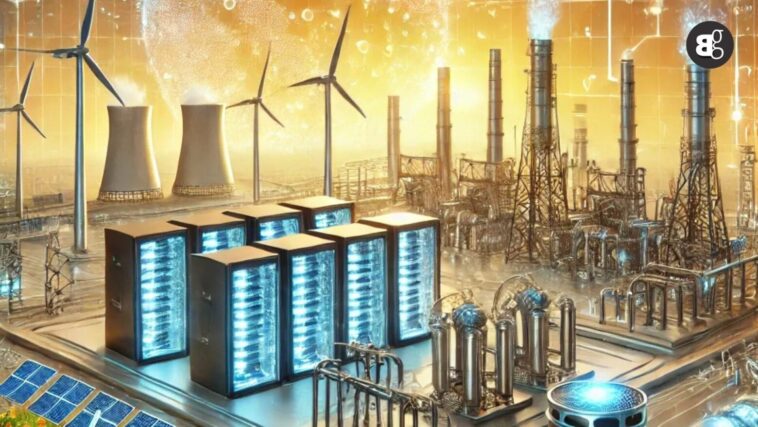
Why Data Centers Now Cost More Than Oil
A new report from the International Energy Agency (IEA) dropped a number that honestly shocked a lot of people: The world will spend $580 billion on data centers this year $40 billion more than what’s spent searching for new oil supplies.
That comparison alone shows how fast our economy is shifting from fossil fuels to digital infrastructure. And with AI becoming part of everyday life, this surge is only getting started.

Data Centers Are Becoming the New Oil Rigs
For decades, oil exploration symbolized power, money, and global influence. Now, data centers those giant buildings packed with servers are taking that spot.
Here’s why this matters:
-
Data centers consumed 460 terawatt hours of electricity in 2022
-
By 2026, that number could double, according to the IEA
-
The U.S. will account for half of all new electricity demand, followed by Europe and China
These facilities are being built at such speed that many cities are struggling to keep up with energy demand.
Example: In Texas, officials already worry that new AI data hubs could worsen summertime blackouts. Some areas have even paused approvals because the grid simply cannot carry the load.
AI Companies Are Spending at Unbelievable Levels
The numbers coming from major tech firms sound like something out of a science fiction movie:
-
OpenAI has reportedly committed $1.4 trillion for future data centers
-
Meta plans to spend $600 billion
-
Anthropic has unveiled a $50 billion expansion plan
It’s the biggest construction wave in tech history. But the question many people are asking is:
Will all these projects actually get built?
There’s already controversy around whether these companies can generate enough revenue to match such massive investments. The debate intensified when an OpenAI executive suggested the U.S. government might need to help support the cost a statement that sparked political criticism.
The Bright Spot: Renewables Are Becoming Essential
Here’s where the story takes an interesting turn.
Since data centers need enormous amounts of power, many companies have realized it’s cheaper and faster to build solar farms, microgrids, and battery systems next to their facilities.
A climate tech reporter noted this surprising upside:
It’s easier to get approval for solar panels than for new oil pipelines.
Read More: OpenAI, Oracle, SoftBank Build Five New AI Data Centers In U.S
Innovative Example
Redwood Materials, led by Tesla cofounder JB Straubel, has launched Redwood Energy a project using old EV batteries to build mini-grids that can power AI centers.
This approach could ease pressure on local grids while speeding up renewable adoption.
Cities Will Change — Whether We Like It or Not
Most new data centers are being built near large cities (around 1 million population) because they need strong internet backbone connections.
This means:
-
Acres of suburban land turning into data hubs
-
Higher demand for local power lines
-
More industrial-style zones appearing near neighborhoods
See More: Data Centers in Pakistan: How It’s Powering the Digital Future
Some urban planners worry the landscape will look very different within the next decade.
New Era of Energy, Money & Machines
We’re entering a phase where digital infrastructure is as essential as fossil fuels once were.
But this shift comes with challenges: pressure on power grids, environmental concerns, and massive financial commitments that could affect public policy.
Still, the growth of renewables and energy-storage tech may be the silver lining proof that climate-friendly solutions can scale when the economic pressure is strong enough.
One thing’s clear:
AI isn’t just changing the internet it’s rewriting the global energy map.