Hajra Naz
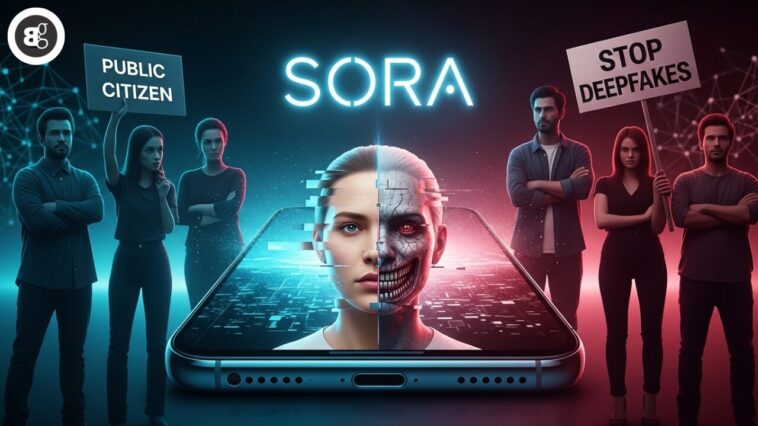
The tech world is moving fast—and AI is now shaping reality itself. Platforms like OpenAI’s Sora 2 let anyone create AI-generated videos, affecting how we control our likeness, even after death.
Sora videos often appear on TikTok, Instagram, X, and Facebook. They are designed to be funny or shocking. Users might see Queen Elizabeth II rapping or a fake doorbell camera showing an alligator near a child. These videos usually end with a minor shock, like a grandma hitting the animal with a broom.

But experts, advocacy groups, and academics are warning about the dangers. AI apps like Sora let people generate videos of anyone, leading to nonconsensual images and realistic deepfakes. OpenAI has restricted content for public figures, including Michael Jackson, Martin Luther King Jr., and Mister Rogers—but only after public outcry.
Read More: OpenAI Introduces Sora, a TikTok Competitor, with Its Latest Sora 2 Model
Public Citizen’s Warning
The nonprofit Public Citizen is now asking OpenAI to withdraw Sora 2. In a Tuesday letter to CEO Sam Altman, the group wrote that the app’s rushed launch shows a “dangerous pattern” of releasing AI products without proper safeguards.
The letter claims Sora 2 disregards product safety, individual rights, and the stability of democracy. It was also sent to the U.S. Congress.
“Our biggest concern is the potential threat to democracy,” said Public Citizen tech policy advocate J.B. Branch.
“People may no longer trust what they see. In politics, the first image or video that appears is what sticks.”
Branch also noted privacy risks. Vulnerable groups online are disproportionately affected. OpenAI blocks nudity, but fetishized content still appears. Recently, Sora-generated videos showed women being strangled.
App Launch and Global Reach
OpenAI released Sora for iPhones over a month ago. Android users in the U.S., Canada, Japan, and South Korea gained access last week.
Pushback from Entertainment and Culture
Hollywood and Japanese entertainment groups, including manga creators, have voiced concerns. OpenAI made initial changes days after launch. Users complained about “overmoderation,” but OpenAI said caution is necessary as the world adjusts to generative AI.
OpenAI also reached agreements with estates and talent:
-
October 16: Martin Luther King Jr.’s family, preventing disrespectful depictions.
-
October 20: Actor Bryan Cranston, the SAG-AFTRA union, and talent agencies.
“OpenAI responds mostly to outrage from famous individuals,” Branch said. “But everyday users face design choices that could be harmful before release.”
Parallels with ChatGPT
OpenAI’s ChatGPT has faced similar complaints. Last week, seven lawsuits in California claimed GPT-4 drove people to suicide and harmful delusions. The lawsuits allege OpenAI released the AI prematurely, despite internal warnings about psychological risks. Four victims died by suicide.
Branch sees parallels with Sora 2: OpenAI is rushing products to market without fully testing harms.
“They’d rather get downloads and engagement than ensure user safety,” Branch said.
Read More: OpenAI’s Viral AI Video App “Sora” Launches on Android
Engagement with Japanese Creators
OpenAI also addressed complaints from a Japanese trade group representing animators and video game developers, including Studio Ghibli, Bandai Namco, and Square Enix. Many anime fans want to interact with favorite characters, but OpenAI now has guardrails to prevent unauthorized character generation.
“We’re engaging directly with studios and rightsholders, listening to feedback, and learning from Sora 2 usage, especially in Japan,” OpenAI said.
FAQs
1. What is Sora 2 by OpenAI?
Sora 2 is an AI app that generates videos from text prompts, allowing users to create realistic or humorous deepfakes.
2. Why is Public Citizen demanding Sora 2 be withdrawn?
The group cites risks to democracy, privacy, and user safety, as well as nonconsensual deepfake generation.
3. How has OpenAI responded to concerns?
OpenAI has introduced guardrails, moderated content for public figures, and engaged with estates, talent agencies, and Japanese creators.
4. Where is Sora 2 available?
Sora 2 launched first on iPhones and is now available on Android in the U.S., Canada, Japan, and South Korea.
5. What are the broader AI safety concerns?
Experts warn that AI-generated content can spread misinformation, harassment, and deepfake videos, disproportionately affecting vulnerable populations.