Hajra Naz
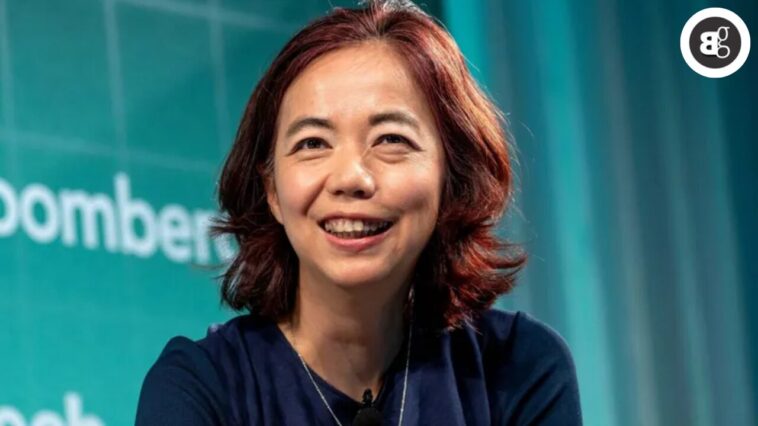
Professor Fei-Fei Li, often called the “Godmother of AI,” says she feels “proud to be different” as the only woman among seven pioneers being honored with one of the world’s top engineering awards.
Today, King Charles III will present the 2025 Queen Elizabeth Prize for Engineering at St. James’s Palace to Li and six other trailblazers who shaped the foundation of modern machine learning—the technology driving today’s AI revolution.

Joining her are
- Prof. Yoshua Bengio
- Dr. Bill Dally
- Dr. Geoffrey Hinton
- Prof. John Hopfield
- Nvidia founder Jensen Huang
- Meta’s Chief AI Scientist Dr. Yann LeCun.
Together, their breakthroughs have fueled innovations in deep learning, neural networks, and computer vision—all key pillars of today’s generative AI systems.
The Godfathers and Godmother of AI
Dr. Hinton, Prof. Bengio, and Dr. LeCun are often called the “Godfathers of AI.” They shared the 2018 Turing Award for their pioneering work in deep learning.
Fei-Fei Li, however, stands alone as the “Godmother of AI.” She once hesitated to accept that title.
“I wouldn’t call myself a godmother of anything,” she told the BBC. “But rejecting it would mean losing an opportunity for women scientists to be recognized equally.”
She added, “Men are easily called godfathers or founding fathers. For young women and the generations of girls to come, I’m okay accepting this title.”
From China to Silicon Valley
Born in China, Fei-Fei Li moved to the United States as a teenager. She studied computer science and rose to become one of the most influential voices in ethical AI and human-centered innovation.
She is now co-director of Stanford’s Human-Centered AI Institute and CEO of World Labs, a startup focused on advancing responsible technology.
Her groundbreaking work on ImageNet, a massive image recognition dataset, changed the course of AI research. The dataset helped machines learn how to “see,” revolutionizing computer vision and powering applications in autonomous vehicles, medical imaging, and robotics.
According to Li, ImageNet “opened the floodgate of data-driven AI.”
The Next Frontier: Interactive Intelligence
Fei-Fei Li believes the next big leap in AI will be systems that can interact naturally with the world.
“This ability is innate to animals and humans,” she said. “If AI can achieve that, it will superpower human creativity, robotics, design, and architecture.”
She envisions a future where AI and humans collaborate, enhancing productivity without replacing human intelligence or empathy.
A Healthy Debate on AI’s Future
This year marks the first time all seven laureates will appear together. Interestingly, the three “Godfathers” of AI have contrasting views on AI’s risks.
Dr. Hinton warns that AI could become an “extinction-level threat.” Prof. LeCun, in contrast, believes such fears are “overblown.”
Fei-Fei Li takes a middle ground. “Disagreement is healthy,” she said. “AI is profound and impactful, and it deserves open, science-based discussions.”
She warns against “extreme rhetoric” and calls for balanced communication rooted in facts. “We need to focus on education and responsible AI development,” she added.
Engineering That Transforms Humanity
The Queen Elizabeth Prize for Engineering honors innovations that benefit humanity. Previous winners include Sir Tim Berners-Lee, creator of the World Wide Web.
Lord Vallance, chair of the Prize Foundation, praised this year’s winners. “They represent the very best of engineering,” he said. “Their work shows how technology can sustain our planet and transform how we live and learn.”
FAQs
1. Why is Fei-Fei Li called the “Godmother of AI”?
Fei-Fei Li earned the title for her pioneering work on ImageNet. She revolutionized computer vision and data-driven AI systems.
2. What is ImageNet, and why is it important?
ImageNet is a massive visual database used to train AI models to recognize and classify images. It became the foundation for today’s machine learning breakthroughs.
3. What is Fei-Fei Li’s stance on AI risks?
She promotes a balanced, pragmatic approach—acknowledging risks while encouraging science-based communication over fear-driven narratives.
4. Who are the “Godfathers of AI”?
Dr. Geoffrey Hinton, Prof. Yoshua Bengio, and Dr. Yann LeCun are known as the “Godfathers of AI” for their work in
- Deep learning
- Neural networks.
5. What does Fei-Fei Li believe is the next milestone for AI?
She believes the next step is enabling AI to interact naturally with the real world—unlocking
- Creativity
- Robotics
- Human-AI collaboration