Hajra Naz
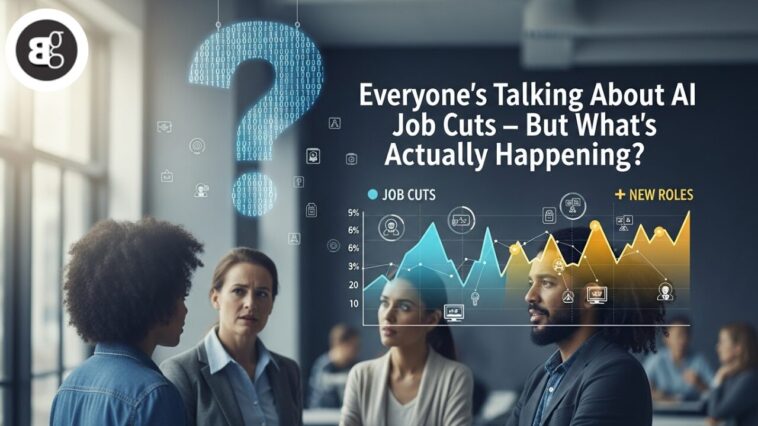
Amazon’s recent decision to cut thousands of corporate jobs has reignited a growing concern:
Is artificial intelligence (AI) starting to replace human workers?

The tech giant joins a wave of U.S. companies that have pointed to AI as one of the reasons for layoffs. But not everyone agrees that AI is the real cause behind these cuts. Many experts say it’s more complicated than that.
Who’s Blaming AI for Layoffs?
Several major companies have mentioned AI when reducing their workforce:
-
Chegg, an online education firm, cut 45% of its workforce, saying the move reflected the “new realities” of AI in education.
-
Salesforce eliminated 4,000 customer service roles, with its CEO noting that AI agents were now handling many of those tasks.
-
UPS announced that it has cut 48,000 jobs since last year, with its leadership linking part of the reduction to machine learning and automation.
These headlines sound like AI is sweeping through the workforce, but is that really the full story?
Experts Urge Caution Before Blaming AI
Martha Gimbel, executive director of the Budget Lab at Yale University, warns against jumping to conclusions. “Relying on company statements during layoffs is possibly the worst way to measure AI’s impact,” she explained. Many companies face unique internal and economic factors beyond technology.
She believes people are overreacting to each announcement because they’re anxious about how AI might reshape the job market.
Who Is Actually at Risk?
While not all workers are equally affected, some roles are more vulnerable. Data center workers and recent college graduates face higher exposure as AI tools automate repetitive or entry-level tasks.
A Federal Reserve Bank of St. Louis study found that jobs more closely tied to AI use have seen rising unemployment since 2022.
Still, other research paints a mixed picture. Morgan Frank, assistant professor at the University of Pittsburgh, said his data shows only administrative and office workers saw a noticeable rise in unemployment after the launch of ChatGPT in late 2022.
For tech and math professionals, he found no major shift — suggesting the broader AI panic may be overstated.
The Bigger Picture: Economic Cycles Still Matter
Amazon’s layoffs — and those of other tech firms — also reflect larger economic patterns.
Many companies went on massive hiring sprees before and during the pandemic, when interest rates were low and demand for tech surged. As the economy stabilized and the Federal Reserve began raising interest rates, downsizing became inevitable.
“This conversation feels new because AI is part of it,” said Gimbel, “but what we’re seeing still follows typical hiring and firing cycles.”
When the economy picks up again, companies may start hiring just as aggressively as they did before. The key question, she added, is whether future job growth will include the same roles — or whether AI will permanently change the types of jobs available.
Separating AI Hype from Reality
In the long run, it’s important to distinguish between layoffs caused by economic slowdown and those caused by automation. Many positions in marketing, HR, and customer service — all exposed to AI — also tend to shrink during recessions, making it harder to know what’s driving job loss.
AI is a factor, but not the only one. The technology is evolving fast, yet its true effect on employment will take years to fully understand.
Amazon’s Role: Leader or Example?
Amazon is at the center of this shift. The company confirmed it would eliminate 14,000 corporate roles, saying it needed to “organize more leanly” to seize opportunities in AI.
Despite the cuts, Amazon’s performance is strong. In July, it reported a 13% year-over-year sales increase to $167.7 billion, exceeding Wall Street expectations.
According to Enrico Moretti, economics professor at the University of California, Berkeley, large tech firms like Amazon are “both producers and consumers of AI.” That puts them at the forefront of automation-driven restructuring.
Still, Lawrence Schmidt of MIT Sloan School of Management believes Amazon’s cuts reflect both over-hiring during the pandemic and the growing efficiency of automation.
“It’s not surprising if Amazon wants to trim certain roles or pause hiring where AI can do the job,” he said. “What we’ll likely see is a reallocation—not necessarily a total loss of jobs.”
Read More: Freelance AI Jobs That Are in High Demand: Exciting Opportunities for Professionals
The Bottom Line
AI is certainly changing how companies work. But it’s too early to say it’s replacing people on a massive scale. For now, the current wave of layoffs may be more about adjusting after years of fast growth than an AI takeover.
FAQs
1. Is AI really replacing human workers right now?
Not entirely. While AI tools are automating some tasks, most job cuts are due to business cycles, over-hiring, or restructuring—not full automation.
2. Which jobs are most at risk from AI?
Roles involving repetitive or data-driven tasks—such as administrative support, data entry, and customer service—face higher exposure to automation.
3. Why are tech companies leading AI-related layoffs?
Big tech firms like Amazon and Salesforce use AI both internally and in their products, so they are quicker to test automation and reorganize roles around it.
4. How can workers protect their jobs from AI disruption?
Learning new skills — especially in AI management, data literacy, creativity, and problem-solving — can help workers stay valuable as technology evolves.
5. Will AI eventually create new jobs?
Yes. History shows that every major technological shift creates new industries and roles. AI is expected to generate new opportunities in development, maintenance, and creative sectors over time.