Hassan Khan
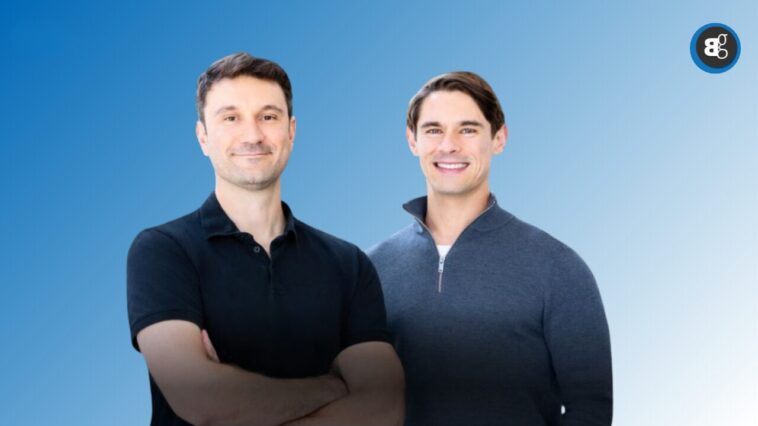
A new wave of AI Innovation is brewing not in chatbots or image generators, but in the heart of scientific discovery itself. The startup Periodic Labs, founded by Liam Fedus, one of OpenAI’s key researchers, and Ekin Dogus Cubuk, a top scientist from Google Brain, is betting big on the idea that Artificial Intelligence can reinvent how science is done.
Just a few weeks after coming out of stealth, Periodic Labs stunned Silicon Valley with an eye-popping $300 million seed round, led by Felicis Ventures and backed by an all-star lineup of investors including Andreessen Horowitz, Accel, Nvidia’s NVentures, DST, Jeff Bezos, Eric Schmidt, Elad Gil, and Jeff Dean.

That’s not just a funding round it’s a statement.
The Beginning: When Two Scientists Reimagined Discovery
It all started with a simple conversation between two old colleagues. Around seven months ago, Fedus and Cubuk began discussing a question that’s haunted researchers for years: what if AI could not only predict scientific outcomes but actually run the experiments itself?
Cubuk, who friends affectionately call “Doge,” had already worked on advanced machine learning and material science projects at Google. Meanwhile, Fedus was leading OpenAI’s post training team, the same unit that refined ChatGPT after its initial development.
Read More: OpenAI Adjusts Pay Packages After Meta Recruits Researchers
Together, they realized something had changed. Robotic arms were now precise enough to mix materials; simulations were advanced enough to model real-world physics; and large language models had evolved the reasoning skills to analyze results. The pieces were finally in place.
As Cubuk told TechCrunch, “Making contact with reality bringing experiments into the AI loop this is the next frontier.”
How Periodic Labs Works
The vision behind Periodic Labs is bold but remarkably practical. Imagine a self learning lab where AI designs an experiment, robots conduct it, and algorithms analyze the results then repeat the process thousands of times faster than a human team could.
Their first mission? Discovering new superconductors materials that can carry electricity without losing energy. Better superconductors could revolutionize everything from power grids to quantum computing.
See More: OpenAI Will Pay Oracle $30 Billion Yearly for Data Center Services
And while the robotic systems are still being trained, the lab is already working with experimental data and simulations. Every test success or failure adds new information, creating a growing database that helps the AI get smarter over time.
Even failed experiments are valuable. As Fedus put it, “In science, data is gold. And failure is data too.”
Why Investors Are Calling It the Next Big Leap
The $300 million seed round isn’t just a reflection of hype it’s a vote of confidence in how AI can transform physical science. Investors didn’t just line up; they fought for a spot.
Felicis partner Peter Deng, who once worked at OpenAI, said he “Committed On the Spot” after meeting Fedus in San Francisco. What convinced him wasn’t a pitch deck or a demo it was a line Fedus said during a walk through the hills of Noe Valley:
“Everyone talks about doing science, but in order to do science, you actually have to do science.”
That line hit home. To truly innovate, AI can’t stay behind a screen it has to interact with the real world.
A Star Studded Team With Serious Pedigree
After securing funding, Fedus and Cubuk began assembling a dream team. Their hires include Alexandre Passos, co-creator of OpenAI’s o1 and o3 models, Eric Toberer, a renowned materials scientist, and Matt Horton, one of the minds behind Microsoft’s GenAI materials tools.
Every week, one member gives a graduate level lecture to the rest of the team, sharing insights from their field. It’s not just a workplace it’s starting to look like a modern day version of the Bell Labs era, where collaboration between disciplines sparked historic breakthroughs.
The Data Behind the Dream
To understand why Periodic Labs matters, you need to look at the numbers.
According to the World Intellectual Property Organization, over 70% of new material discoveries still rely on manual testing a slow, expensive, and error-prone process.
AI-assisted simulations, on the other hand, can speed up discovery by 100x while reducing costs dramatically. In 2023, Cubuk’s own Google research team created 41 entirely new compounds using a language model to generate chemical “Recipes.”
Periodic Labs is now taking that same concept only at industrial scale.
OpenAI Didn’t Invest But That’s Fine
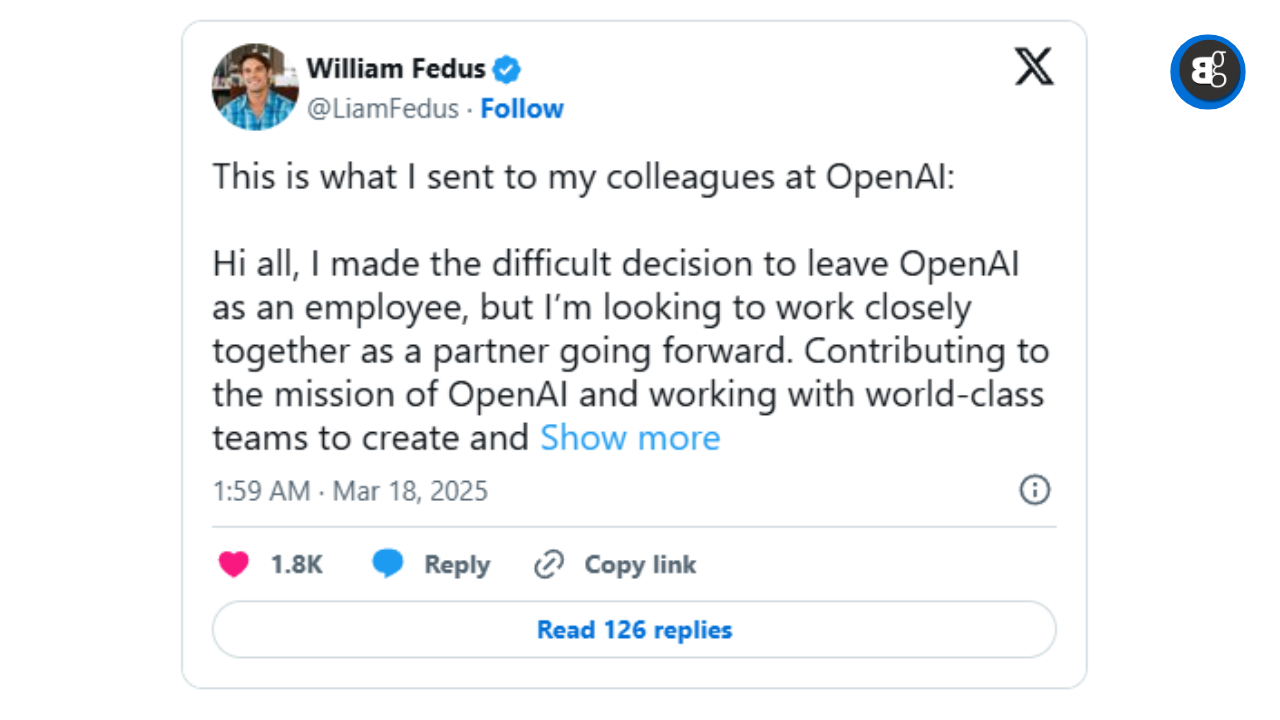
Despite Fedus’ roots at OpenAI, the company didn’t invest in his new venture. While he hasn’t commented on why, it hardly mattered. Within days of announcing his departure, Fedus was flooded with investor interest.
As he joked to TechCrunch, “There was almost a feeling of being reverse pitched. One investor even wrote us a love letter.”
Periodic Labs didn’t need the OpenAI badge. The enthusiasm from other backers was enough to give them all the runway they needed and more.
What’s Next for Periodic Labs
The lab is now up and running, with robots being trained and experiments underway. The immediate goal is to create new superconducting materials, but the long term mission is far larger: to build a system that can accelerate all fields of science using AI.
It’s not just about invention it’s about reimagining the scientific process itself.
Fedus and Cubuk believe that by looping real-world experiments into AI models, humanity can shorten the time between idea and discovery from years to weeks or even days.
A New Chapter in AI and Science
As the world debates the limits of generative AI, Periodic Labs is quietly writing its next chapter: AI that discovers, not just imitates.
The founders aren’t promising miracles. Science takes time, and success isn’t guaranteed. But their approach grounded in data, collaboration, and real world testing could mark the beginning of a new era where machines don’t replace scientists but work alongside them.
If it works, this might be remembered as the moment when AI truly entered the lab and changed science forever.