Hajra Naz
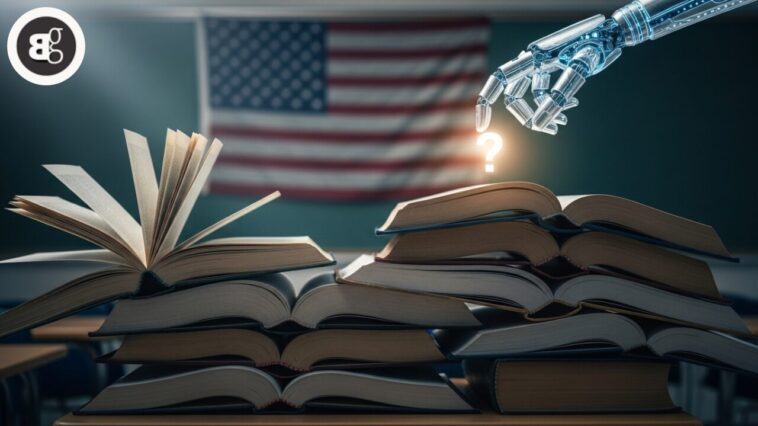
Reading scores in the U.S. have fallen to record lows, and many parents, teachers, and tech companies hope artificial intelligence (AI) can help turn things around. The literacy crisis has been building for years.
Even before the pandemic, children’s reading skills were declining. Experts point to causes like too much screen time, short attention spans, and less interest in long-form reading.

Now, schools are turning to AI to make reading fun and personal again. Across the country, students are trying AI reading tutors that listen as kids read, correct mistakes instantly, and adjust lessons to fit each child’s level.
How Schools Are Using AI to Boost Reading
In Denver, public schools are using Amira Learning, an AI-powered reading tutor. When students read out loud, Amira listens closely and jumps in when they stumble on a word. It might tell them to sound it out slowly or trace it with a finger on the mouse pad.
The program works in both English and Spanish, a big help in Denver, where many students come from bilingual homes. So far, thousands of students are using the system. “Kids love it because it feels like a game,” said Jennifer Begley, the district’s director of humanities. “They’re reading to AI and getting instant feedback, something teachers can’t do for every student at once.”
Amira Learning isn’t the only platform making waves. Around 4 million students across the U.S. use it, according to the company. Other AI reading programs like Edsoma are helping students practice pronunciation and fluency at home or after school.
Read More: The 10 best AI Educational tools for Students in 2024
Teachers Say AI Helps — But Can’t Replace Them
While many educators are optimistic, experts warn that AI can’t replace human connection. “When kids read with an AI chatbot, they do get better,” said Ying Xu, an assistant professor at Harvard’s Graduate School of Education. “But there’s no replacement for a parent or teacher sitting beside a child.”
Andra Jones, director of the Boys and Girls Club of the Permian Basin in Texas, agrees. Her organization started using Edsoma this spring to support kids who may not have parents available to read with them. “Some children can already write their names when they start kindergarten. Others don’t even know the first letter,” she said. “AI helps fill that gap.”
Finding the Balance: Technology vs. Human Touch
While AI can make reading more accessible, experts warn it must work with existing curricula, not replace them. NYU professor Susan Neuman uses ChatGPT to simplify reading passages, then slowly increases difficulty to help students grow. But she cautions that “AI lessons must align with what’s happening in the classroom; otherwise, kids end up juggling two different systems.”
Parents also worry about screen time and privacy. Some school districts have already stepped back from AI programs due to data concerns. Denver’s schools, however, say they enforce strict rules to protect student information.
Read More: AI In Education: Balancing Innovation With Human Learning
The Risk of Widening Gaps
Some educators worry AI could worsen inequality. Alex Kotran, CEO of AiEdu, warned that “poor kids might end up with all the AI teachers, while wealthy kids still have small classes and real teachers.” He fears AI could create a new kind of education divide if not implemented carefully.
Others, like Pennsylvania principal Jordan Caldwell, are trying to strike a balance. “We’re just beginning to explore AI,” she said. “But books, libraries, and reading time with real people are still at the heart of learning. It’s about balance.”
AI is not a magic fix for literacy, but it’s giving teachers and students a new set of tools and new hope to tackle one of America’s toughest education challenges.
FAQs
1. How does AI help kids learn to read?
AI-powered tools Listen as kids read, correct mistakes, and tailor lessons to each student’s skill level, making learning more personal and engaging.
2. Can AI replace teachers in reading instruction?
No. Experts agree AI can support teachers but not replace the one-on-one connection and emotional support children need while learning.
3. Are AI reading tools safe for kids?
Most programs follow strict data privacy rules, but parents and schools should always review how student data is stored and used.
4. Do AI tutors work for bilingual students?
Yes. Many AI reading tools, like Amira Learning, offer lessons in multiple languages, helping bilingual students improve fluency in both.
5. Will AI make kids too dependent on screens?
That depends on balance. Educators stress combining AI learning with real books, in-person reading, and classroom activities to prevent screen overload.