Huma Siraj

“Spend $500 on advertising, get $500 in ad credits for free!” is a common example of a BOGO ad on social media. Because it’s so alluring, you jump. After all, if you can possibly move thousands of dollars’ worth of product, what good is a $500 investment? You could create the advertisement yourself or you may hire a designer and copywriter. After that, you have two weeks to spend your $500 and the Social media company’s $500 on the advertisements. But there’s nothing at the end. Zip. Nothing. (#learnedmylessonthehardway; #truestory) Not a single sale.
What should a brand do if its ads don’t work? I’m not trying to be offensive, but your ads most likely annoy customers. Without a question, they are obnoxious and disturbing. Additionally, when paired with all the other advertisements, they seem unrelenting. Therefore, people naturally avoid them. to keep them out. to ignore your advertisement and scroll straight past it.

However, what if I told you that there is a method for attracting attention? What if I told you that you could increase brand trust, encourage individuals to say yes, and potentially even reach a 29% conversion rate by employing a different kind of advertisement? Sure, please!
User generated content (UGC) is the kind of content I’m discussing. I’ll explain what it is, show you how UGC Professionals profit from their advertisements, and provide you with a tried-and-true method for using UGC marketing for your own benefit.
What UGC marketing is in reality (and why it’s so effective)
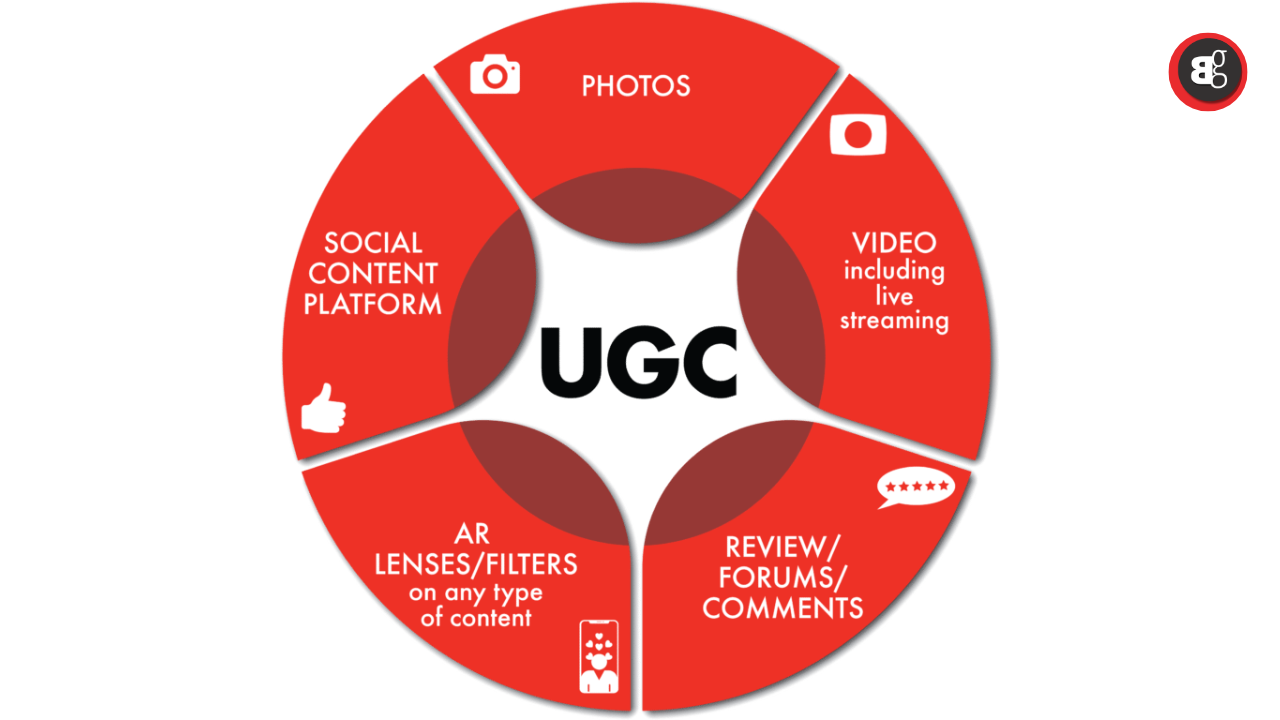
In essence, user-generated content is what your customers are doing for you in terms of marketing. Customers use it to tag, mention, or highlight your company in social media posts. Consider unboxing videos that are filmed in a person’s home room rather in a studio, product evaluations that leave people giddy with anticipation, and before-and-after pictures that leave you wondering, “Wait, is this the same person?” The content is created by actual individuals who actually purchase, use, and enjoy the products you sell.
From the beginning, GoPro mastered UGC. The company uses open challenge campaigns, where fans upload videos of themselves skydiving, surfing, and mountain riding, rather than paying expensive production teams. Those genuine moments turn into effective advertisements.
Take a look at Glossier as well. By encouraging consumers to share genuine experiences and write frank evaluations, Emily Weiss developed her multibillion-dollar beauty brand. Professionally applied makeup and ideal lighting didn’t matter to her. All she wanted was real individuals discussing items that worked in real restrooms.
The psychology is straightforward: You know you’re going to try your product when you see real people using and loving it, not just attractive models or buff actors. It’s like when your neighbor tells you about the face cream that really helped her wrinkles. The reason for this is that UGC provides a response to the query that all buyers have: “Will this actually work for someone like me?”
The problem is that different brands have different approaches to user-generated content. Some experiment, uploading a tagged video again or publishing a few customer images in the hopes of increasing engagement. Because they view UGC as a system rather than a side project, others are in control.
The data reveals the difference. By 2030, the industry is expected to have grown from $5.4 billion to $32.6 billion, with 86% of businesses currently using UGC marketing. We can tell that UGC isn’t a passing trend by that kind of momentum. The stakes are also raised. Since UGC doesn’t always equate to profitability, more businesses will enter the market, but not all of them will be successful.
That picture that has thousands of likes on Instagram? Your bottom line may be suffering as a result. People don’t want perfection, therefore a shaky kitchen video taken at six in the morning could subtly result in dozens of sales. They wish to see themselves. Evidence that your product is effective in real-world situations, including chaotic mornings.
What distinguishes the dabblers from the dominators is that mentality change from “does it look good?” to “Does it convert?” Additionally, one creator has made it his goal to assist brands in making that change.
How one business mastered user-generated content (UGC) marketing: From micro-influencers to millions.
Tadas Deksnys and Donatas Smailys understand what it’s like to toss marketing funds into a void. Every campaign seemed like a gamble when they were managing a micro influencer agency in the Baltics. “The whole space got very crowded, hard to measure and noisy,” said Smailys. “We weren’t capturing as much market as we thought we could.”
Is that something you’ve heard before? The same pain is shared by many entrepreneurs: You spend money on content and ads, then cross your fingers and hope something sticks.
The realization that Smailys and Deksnys had one day altered everything: The number of followers does not equate to sales. They found that you may spend thousands of dollars on a well-followed influencer and still fail to meet your sales targets. That insight served as the basis for the UGC platform Billo, which the two co-founded in 2020. Billo concentrated on making films that increase sales rather than stressing over follower counts and Instagram-perfect content.
That focus has paid off five years later.
According to Smailys, Billo has created over 200,000 user-generated content (UGC) films, and each year, marketers spend hundreds of millions of dollars on advertisements on the site. Billo is no longer referred to as a UGC platform by the Billos team.
“We’ve evolved into what we call a ‘full-scope creator marketing stack’ that turns UGC creators into a predictable sales channel for brands,” Smailys explains.
It turns out that the difference between businesses that experiment and those that dominate is that the former think differently, moving from content creation to systematic sales.
The UGC marketing platform that converts advertisements into sales
What I observe with numerous brand marketers and user-generated content is as follows: Like Jackson Pollock, they occasionally hurl random customer material at the wall in the hopes that something would stay. A picture there, a video here. If a customer’s video receives a lot of interaction, they might republish it. After that, they question why their UGC strategy seems to be more chaotic than fruitful.
Smailys and Deksnys came up with an alternative solution. Instead of producing content at random, they developed what they call a four-step loop: create, tag, assess, iterate. Instead of being a guessing game, it turns user-generated content (UGC) marketing into a system that gives you real facts to help you make better decisions.
This Is How it Operates
Step 1: UGC marketing: Choose UGC producers who genuinely sell goods
The majority of organizations begin UGC marketing by speculating about what they believe will work, such as a hook that “feels right” or a creative whose aesthetic aligns with the brand. It’s a guess, and it frequently results in costly misses. Billos adopts a different strategy.
“When someone drops a product URL into our system, our AI builds a brief and matches it to a creator who’s proved they can deliver results for similar products,” Smailys explains.
Notice what’s not taking place here? No saying things like, “Well, she just feels right for our brand,” when seated at a meeting table. Don’t choose creators based on their 100,000 followers or gorgeous hair.Based on information regarding which producers genuinely increased sales of comparable products, the matching process takes place.
Step 2 UGC marketing: Tag everything to determine which UGC is effective
The simple part is creating the video. Trying to figure out why it worked? The money is in there. All too frequently, brand marketers ignore user-generated content and hope for the best. In essence, you’re hurling spaghetti at the wall and hoping that something will stay.
Choosing to stop playing guessing games is the second step.
“We tag every video with the same elements: hook, angle, call-to-action, format and category,” Smailys explains. “That way, when we see what performs, we know exactly why it worked.”
Uncertain victories become lucid insights through tagging. Instead of stating, “That video did well,” you may state, “Videos with soft CTAs and problem-solution hooks in vertical format convert 40% better for this product category.”
Step 3 UGC Marketing: Examine the data
Likes, shares, and comments on this page entice most people. Don’t. Even though those goods might make you feel wonderful, they don’t cover your expenses. It’s a traditional trap. A video must be effective if it receives a lot of likes and comments. Not always. While a lesser video with 500 views can result in 50 new sales, a viral video might not convert a single buyer. You earned money from the 500-view video. Not the viral one.
A razor-sharp lens is what Billo demands. “We track return on ad spend, click through rates and hook rates, metrics that directly affect your bottom line,” Smailys explains. “Then we benchmark against past performance and industry standards.”
The creator of the social media management firm Daily Vertex, Syed Ali Salman Bokhari, has years of experience assisting brands in assessing the effectiveness of user generated content. His counsel? Keep tabs on the money made from every UGC asset. The majority of brands do not measure revenue at the post or video level; instead, they look at revenue per campaign.
After two weeks of tracking this stuff, you’ll see a pattern. According to Bokhari, “it will become clear which 10% of your content generates 80% of your revenue.” “That makes you concentrate on repeating and refining what already works rather than producing new content.”
Bokhari seen this firsthand when a fitness equipment business paid dozens of micro-creators to produce fashionable workout videos. Although sales remained unchanged, the videos looked fantastic. Only two artists, each with fewer than 5,000 followers, were found to be in charge of 70% of UGC-driven sales after the company included trackable links. “To turn those creators’ content into advertisements, the brand changed its budget,” Bokhari explains. “In just six months, revenue doubled.”
Step 4 UGC Marketing: Repeat what works
For the Billos team, converting content is the first step toward more intelligent variations, not the end goal. Studying what works, stealing it, and testing again are the keys. By recommending subsequent actions new hooks to test, adjustments to try, and variations to create Billo’s AI automates this stage. After that, it generates those iterations and returns them to the ad accounts.
In summary, you stop speculating and begin to understand what works.
Why UGC marketing requires humans in the front and AI in the back
Here’s the thing about AI. AI is used by Billo in the background, not in your feed. The faces, voices, and stories remain utterly human, even as the technology creates better briefs, pairs businesses with the best creators, and makes more intelligent edit suggestions.
Smailys claims that Billos would not work with computer generated avatars and “creators,” despite the fact that other platforms appear to be promoting them. “People trust people, which is why UGC works,” he explains. “Your grandmother will be incensed when she discovers that the individual discussing the supplements she purchased was created by a machine. And your brand will be directly targeted by that wrath.
Case Study: UGC marketing is a far better option than guesswork
Do you want to watch it in action? I learned about a skincare business that was losing money on Facebook ads via Smailys. They had tried everything, including celebrity endorsements, influencer collaborations, and professional picture sessions, but they were still experimenting without a plan. Their purchase costs continued to rise.
“They came to us spending $50 to acquire each customer,” said Smailys. “Within three months of implementing our create tag assess iterate system, they brought it down to $18.”
Neither a better product nor a larger budget made a difference. It was approaching UGC as a science rather than a guess.
From the creator’s point of view, UGC marketing
The pattern is obvious to the UGC creators who are doing the work. With over five years of expertise creating UGC material for companies, professional UGC creator Alexandra Zyrianova supports the Billos team’s philosophy. “The most powerful UGC combines emotion and tangible results,” she explains. “Honest reviews and before/after examples consistently outperform highly polished creative.”
She’s seen it many times. Despite brands’ obsession with ideal lighting and editing, basic, real testimonials captured on phones have been shown to perform better. “Video testimonials with product demos are the highest-return format they’re real, heartfelt, and full of evidence,” she explains.
The Big Query: Is it worth paying for user generated content?
When users first started writi ng because they appreciated a product, it was just word-of-mouth. It’s gold when that occurs for your brand. However, you cannot rely just on luck to develop a strategy or steady revenue.
0Zyrianova and other creators are not merely taking selfies for amusement. They are creating material, filming videos, and writing scripts. They are experts. This implies that you may have to pay them. Yes, a large number of people earn a living as professional developers of user-generated content. They can be seen searching for job on sites like Cohley, Insense, and Billo.
The good news? UGC is typically less expensive to pay for than traditional manufacturing.
Additionally, you may immediately determine whether those dollars are being converted into purchases by monitoring the effectiveness of individual posts. It is not a cost. Spending on media is what truly converts.
Start your UGC marketing system with these four steps.
You have a good starting point if you have read this far. Here are four easy steps to start using the system. You don’t need a fancy team or a huge budget.
First, keep a record of everything. Configure your tracking before anyone records a single video. Use UTM links, discount vouchers, or even a straightforward poll that asks how individuals found you. You will have content but no clarity if you don’t have that information.
Who has already mentioned you? Avoid beginning with strangers. Look for people who have already posted about your product. ”
Want to make it official?” is the message to send. You can start with that group of creators.
Here, adopt a scientific mindset. Let go of the “that looks nice” attitude. Conduct brief experiments with various hooks, viewpoints, and formats.
Keep the winners and discard the others.
Take advantage of whatever that works.
Keep converting videos in your feed alive. Make it into advertisements, train fresh artists to recreate the formula that worked, and keep going until the returns drop off. Next, take another test.
Conclusion
Your clients are prepared to become your most effective advertising agents. Whether or not consumers can produce content about your brand is not the question. They frequently do and can. Whether you will view that information as strategic growth material or as just another social media post is the actual question. Look, you can continue to hurl content against the wall in the hopes that something will stick. Alternately, you might begin to approach UGC marketing as the growth engine that it truly is. Thus, give up experimenting. Get the systematization process going. You will convert UGC into clients and conversions in this way.