Hassan Khan
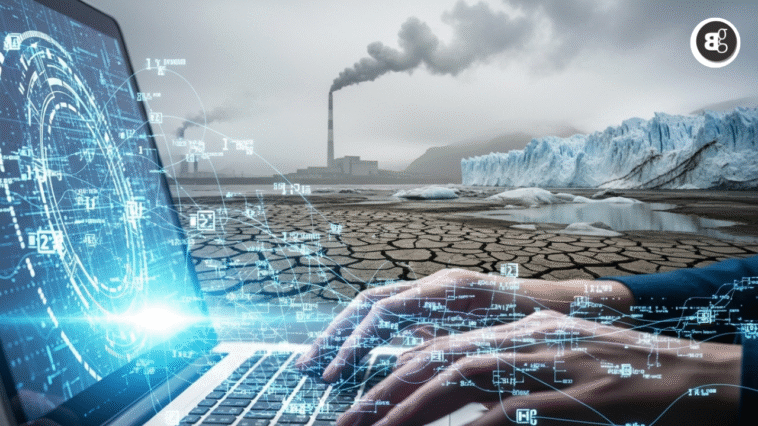
Artificial Intelligence feels so easy you type a question, and an answer pops up in seconds. But what we don’t see is the environmental impact behind that convenience. Every prompt we run takes energy, water, and resources most of us never think about.
Having knowledge is more important than placing blame on someone for utilizing AI. We can utilize technology to our advantage and to save our shared planet when we are aware of its hidden costs.

AI’s Environmental Impact We Often Overlook
I still remember the first time I tried an AI tool. It felt like magic type a sentence, and suddenly there’s an answer, an image, or even a whole essay staring back at me. Like most people, I didn’t think about what was happening behind the screen. Why would I? It looked effortless.
See More: Facing competition from Big Tech, states dangle incentives and loosen laws to attract power plants
But here’s the part no one told me: every single AI request runs through massive computers sitting in warehouses machines that need power, cooling, and constant upkeep. And that convenience we enjoy in seconds? It comes with a real cost to the planet.
The Hidden Energy Behind Every Prompt
When you search on Google, it’s like flipping through a book you already own. Quick and light. AI, on the other hand, is like asking someone to write a brand new book every single time you ask a question. Of course, that takes more effort.
One study showed that asking AI a simple question can use 20 times more energy than a regular search. And the more complicated your request say, asking it to generate a video the heavier the load gets. Imagine leaving an old bulb switched on for months. That’s how much power can go into a few seconds of “AI magic.”
The Water We Don’t See
Something else that rarely gets mentioned is water. These huge data centers heat up like ovens. To stop them from breaking down, millions of gallons of clean water are poured in every single day to keep things cool.
Think about that for a second: a single AI center might use the same amount of water as a whole town. While we scroll, chat, and generate pictures, entire communities nearby are dealing with tighter water supplies. It’s one of those hidden trade offs that never makes it into the glossy tech headlines.
AI and Climate Change
Most of this energy still comes from fossil fuels. That means more carbon emissions, more pressure on the climate. Yes, companies say they’re improving efficiency, but history has shown something: when things get cheaper and easier, we don’t use less we use more.
It’s the same pattern we saw when cars replaced horses. Instead of shorter commutes, people just started traveling farther. With AI, the same thing is happening. The easier it gets, the more we rely on it, and the bigger the environmental bill becomes.
Practical Ways to Reduce Your AI Footprint
I’m not saying anyone needs to ditch AI completely. Honestly, I’d be lying if I said I don’t use it myself. The key is to be a little smarter with it:
-
Instead of throwing a dozen small questions, take a moment, think, and send one good prompt.
-
If you don’t need an AI image, use a photo you already have.
-
Add “ai” at the end of a Google search if you just want the basics without an AI summary.
-
Try lighter, local tools that don’t depend on giant data centers.
It’s not about being perfect. It’s about being mindful. Every little bit helps.
Conclusion
Here’s the truth: technology has always changed the way we live, but it’s easy to forget that progress isn’t free. With AI, the cost just happens to be hidden behind screens and servers.
The good news? We don’t have to feel powerless. Small changes in the way we use tech choosing when to lean on AI and when not to can cut down the impact. And if enough of us do that, it matters.
The planet shouldn’t have to pay the price for our convenience. If we keep that in mind, maybe AI can truly be a tool for a better future without burning through the one home we all share.